Global Diesel Cracks Retreat As Refining Margins Cool In Early 2026
Softer gasoil and diesel values pulled refining margins lower across the US Gulf Coast and Asia in early February, cooling the crack-spread rally that had padded refiner profits since October.

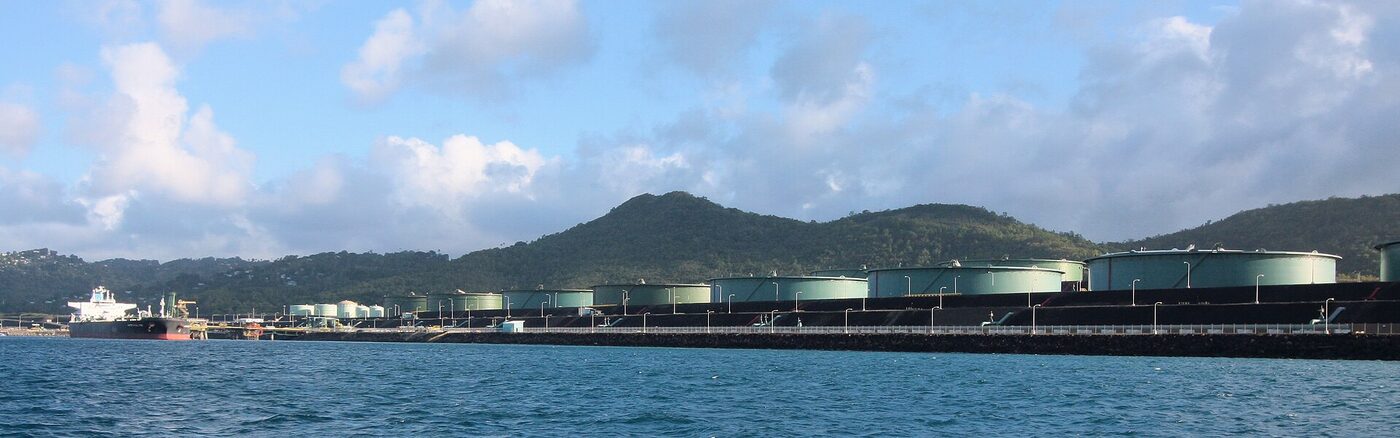
The distillate trade that made refiners rich through the back half of 2025 lost some of its punch in the first full week of February. US ultra-low-sulfur diesel cracks on the Gulf Coast fell roughly $3.75 a barrel week-over-week, a 13 percent drop excluding renewable volume obligations, and that decline dragged complex refining margins on the coast down about $1.75 a barrel, or 8 percent. Asia told a milder version of the same story. Singapore ULSD cracks eased about $0.71 a barrel, and coker margins east of Suez slid $1.54. After four months of a one-way move higher, the diesel rally finally exhaled.
None of this is a collapse. Margins came off a very high base, and refiners are still processing crude at economics they would have taken gladly a year ago. But the direction changed, and the reason it changed matters more than the size of the move.
What the numbers actually show
The clearest weakness sat in middle distillates. On the US Gulf Coast, jet fuel cracks dropped about $2.65 a barrel, or 8 percent, alongside the diesel slide. Gasoline went the other way, gaining roughly $0.55 a barrel as US gasoline production fell 820,000 barrels per day week-over-week and tightened the light end. High-sulfur fuel oil firmed by a similar amount, narrowing its discount. So the pressure on refining margins was concentrated where refiners had been making the most money: diesel and jet.
By configuration, Gulf Coast hydrocracker margins fell about $1.15 a barrel, FCC margins about $0.85, and simple margins about $0.55. In Singapore the pattern rhymed, with hydrocracker margins off $0.76 and FCC margins off $0.90, while 95 RON gasoline cracks there dropped $1.61. Europe was the outlier. Northwest European and Mediterranean gasoline cracks rose around $2.00 a barrel and the regrade widened, even as gasoil cracks in both regions fell about $2.50. In other words, the diesel softness was global, but only Europe got a gasoline offset large enough to matter.
Sanctions clarity took the fear premium out
The rally that peaked in late 2025 was built on fear of scarcity. Diesel cracks at New York Harbor, the Gulf Coast, and the Amsterdam-Rotterdam-Antwerp hub pushed above a dollar a gallon between mid-October and mid-November, driven by refinery outages in Russia and the Middle East and by fresh sanctions choking Russian barrels. Diesel and gasoline cracks hit their strongest levels in four years. Higher crude prices, rather than squeezing refiners, were more than covered by even stronger product values.
What cooled the market in early February was the slow drain of uncertainty around EU Article 3ma. On January 21 the European Union closed the last big loophole, banning refined products made in third countries from Russian-origin crude. That is the rule that had traders guessing whether Indian and Turkish diesel could still reach Europe at all. By early February some of that guesswork had started to resolve. The last Indian diesel cargo to clear an EU port had been the Lausanne Star, unloaded at Antwerp on January 14, and traders were watching for the next compliant barrel from India to prove the route still worked. An LR2 loaded with roughly 105,000 tonnes of Reliance Jamnagar diesel was already tracking toward Rotterdam. Once the market grew confident that compliant barrels could still flow west, the panic bid under gasoil started to leak away.
That is the mechanism worth holding onto. The late-2025 spike priced in a wall between Russian-linked diesel and Europe. The early-February retreat priced in the discovery that the wall has doors, provided a cargo can prove its crude pedigree.
Supply is still the wild card
Refinery outages did not disappear, and they are the reason this is a cooling rather than a rout. Lingering Middle East refinery downtime kept balances tighter than they would otherwise be, and that outage support propped up cracks even as demand-side signals softened. A rebound in Russian product exports capped how far Asian cracks could climb, but the East held up better than the West. The East-West gasoil spread was set to trade above its five-year average through February and March as Western fundamentals deteriorated faster than Eastern ones.
US inventory data pushed against the bearish read too. Implied diesel demand rose 240,000 barrels per day week-over-week, and US diesel stocks drew 5.6 million barrels. A draw that size in the depth of winter is not the signature of a glutted market. It says the physical barrel is still wanted even as the paper crack comes off. The read-through: this is a repricing of risk premium, not a demand cliff.
Crude and the margin math
Refiners spent the fourth quarter in the unusual position of watching crude climb without losing margin, because product values climbed faster. Early February started to unwind the second half of that equation. When diesel and jet cracks give back several dollars and gasoline only claws back a fraction of it, the complex refiner's blended margin has to come down. That is exactly what the Gulf Coast and Singapore prints showed.
There is a supply-of-crude footnote too. Venezuelan crude exports to the US more than doubled month-over-month to about 280,000 barrels per day in January, a heavier, cheaper feedstock that flatters coking margins when it lands. It did not reverse the distillate weakness, but it is a reminder that the crude slate feeding US refiners is shifting under the product story.
What to watch from here
The near-term signal points to more softness. Refinery outages are providing temporary support, but waning blending and cracking demand looks set to cap the upside and could bring renewed weakness in the second half of February. Watch three things. First, whether more Jamnagar-style cargoes clear into Europe and confirm that compliant diesel can move, which would keep pulling the risk premium out of gasoil. Second, whether Middle East outages return or extend, since that outage support is the main thing holding cracks up. Third, the diesel inventory trend, because another counter-seasonal draw would argue the physical market is tighter than the paper retreat suggests.
The four-year-high margins of late 2025 were always going to be hard to hold. Early February did not break the refining trade. It just reminded everyone that a rally built on fear unwinds the moment the fear gets a factual answer.
Sources
https://www.kpler.com/blog/softer-gasoil-diesel-values-drag-refining-margins-lower-in-the-us-and-asiahttps://www.eia.gov/todayinenergy/detail.php?id=66764https://rbnenergy.com/daily-posts/analyst-insight/refinery-crack-spreads-soar-tightening-global-diesel-supplieshttps://www.opis.com/resources/energy-market-news-from-opis/eu-resumes-imports-of-indian-diesel-after-sanction-hiatus/https://markets.financialcontent.com/stocks/article/marketminute-2026-1-30-fortress-europe-closes-the-laundering-loophole-market-turmoil-follows-eu-ban-on-russian-derived-fuelshttps://energyandcleanair.org/february-2026-monthly-analysis-of-russian-fossil-fuel-exports-and-sanctions/