Venezuela and US Complete Prisoner Swap That Preceded Chevron's License
Ten Americans came home, roughly 250 Venezuelans left a Salvadoran mega-prison, and within a week Washington quietly cleared Chevron to pump crude again.
Ten American citizens flew out of Caracas on Friday, the last known U.S. nationals held by Nicolas Maduro's government, in a three-country trade that sent about 250 Venezuelan men back home from El Salvador's largest prison. The deal closed on July 18. The sequencing matters: less than a week later, the Trump administration moved to restore Chevron's authorization to pump oil in Venezuela, a license Washington had stripped in February. U.S. officials insist the two events are unconnected. The calendar tells a tighter story.
What actually changed hands
The trade ran in three directions at once. Venezuela released the 10 Americans, whom Secretary of State Marco Rubio described as wrongfully detained. It also freed an undisclosed number of Venezuelan political prisoners. In return, El Salvador loaded roughly 250 Venezuelan men onto planes bound for Caracas. Those men had been sitting since March in CECOT, the counterterrorism mega-prison that President Nayib Bukele built to warehouse gang suspects.
Rubio put the American side plainly. \"Every wrongfully detained American in Venezuela is now free and back in our homeland,\" he said, adding that until Friday, \"more Americans were wrongfully held in Venezuela than any other country in the world.\" He credited Bukele with brokering the timing that let all three transfers land on the same day. A senior administration official told reporters the arrangement was \"essentially down to the wire.\"
How the Venezuelans ended up in a Salvadoran cell
The 250 men were not convicts. They were deportees. In March the administration invoked the Alien Enemies Act, a 1798 wartime statute, to remove Venezuelan nationals it accused of belonging to Tren de Aragua, the transnational gang the White House has designated a foreign terrorist organization. Rather than send them to Venezuela, the U.S. paid El Salvador to hold them in CECOT.
That maneuver drew immediate legal fire. Lawyers and relatives said many of the men had no gang ties and no criminal records, and that they were shipped abroad without hearings. Federal courts spent the spring fighting over whether the Alien Enemies Act could be used this way at all. The men themselves had no path to challenge their detention from a foreign prison. Friday's swap resolved their status in the crudest way possible: it simply moved them out of El Salvador and back to the country the administration had spent months trying to pressure.
The oil clock
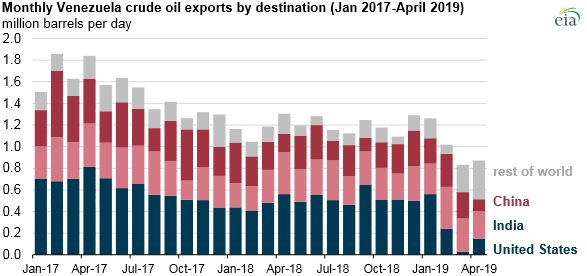
Here is where the story turns from hostages to hydrocarbons. On February 26, President Trump revoked Chevron's Biden-era license to operate in Venezuela, accusing Maduro of stalling on electoral reform and refusing to take back deportees. The State Department followed by ordering Chevron to wind down. Then came the swap. On or around July 24, Washington reversed course and cleared Chevron to resume production under a new, narrower authorization first reported by the Wall Street Journal.
The administration's line is that the license and the prisoner deal are separate tracks. Few people who watch this file believe the timing is coincidence. Maduro wanted the Chevron cash flow restored and his nationals out of CECOT. The White House wanted its citizens home and a lever over Caracas. The swap gave both governments a reason to keep talking, and the oil license was the payoff Maduro could bank.
Who gets paid
The open question is whether the new license actually funnels money to the Maduro government, and on that point the answers are deliberately vague. The State Department said it would impose guardrails so the regime would not profit from the sale of oil. That is a hard promise to keep. The prior license reportedly let Chevron make operational payments that translated into roughly \$300 million in taxes accrued to Venezuela.
Three Florida House Republicans, who have pushed a hard line on Caracas for years, insisted the regime \"will receive no benefits.\" Independent analysts are less certain. Francisco Monaldi of Rice University noted that Maduro \"might be willing to accept a relatively tough deal with the U.S., because it cannot be much worse than what he gets in China,\" where Venezuelan crude sells at a steep discount. Chevron, for its part, offered the standard non-answer: it \"conducts its business globally in compliance with laws and regulations applicable to its business.\"
What it signals for policy
Strip away the denials and a pattern emerges. The administration campaigned on maximum pressure toward Maduro, revoked the oil license as a punishment, then handed it back the moment Caracas delivered something Washington wanted more: American citizens and a public win. That is not sanctions policy. It is transactional bargaining, with crude as the currency.
For the oil market the practical effect is modest in the near term. Chevron's Venezuelan output is a rounding error against global supply, and the new license is narrower than the one it replaced. The strategic signal is louder. Any producer weighing Venezuelan exposure now knows the U.S. posture can flip inside a week on grounds that have nothing to do with barrels. Maduro learned the same lesson from the other side: he still holds cards, and Americans on his soil are among the most valuable.
The 10 who came home are the clean part of this story. The 250 who went the other way, deported under a wartime law and jailed abroad without trial, are the part Washington would rather not itemize. And the barrel of oil that quietly returned to the table the following week is the part everyone denies was ever part of the deal.
Sources
https://www.cnn.com/2025/07/18/politics/venezuela-us-prisoner-swap-trumphttps://www.axios.com/2025/07/18/venezuela-prisoner-swap-el-salvadorhttps://thehill.com/homenews/administration/5409285-trump-administration-venezuela-prisoner-swap/https://www.foxnews.com/politics/americans-detained-venezuela-freed-returning-home-after-prisoner-exchangehttps://www.foxbusiness.com/politics/trump-admin-allows-chevron-again-pump-oil-venezuela-reversing-banhttps://www.wlrn.org/americas/2025-07-26/chevron-cleared-to-pump-oil-in-venezuela-under-new-u-s-license-critics-say-maduro-regime-benefits