US Sanctions China's Hengli Teapot Refinery as a Top Iranian Oil Customer
Treasury named Hengli Petrochemical (Dalian) Refinery one of Tehran's most valued crude buyers, part of a widening squeeze on Iran's shadow-fleet oil trade.

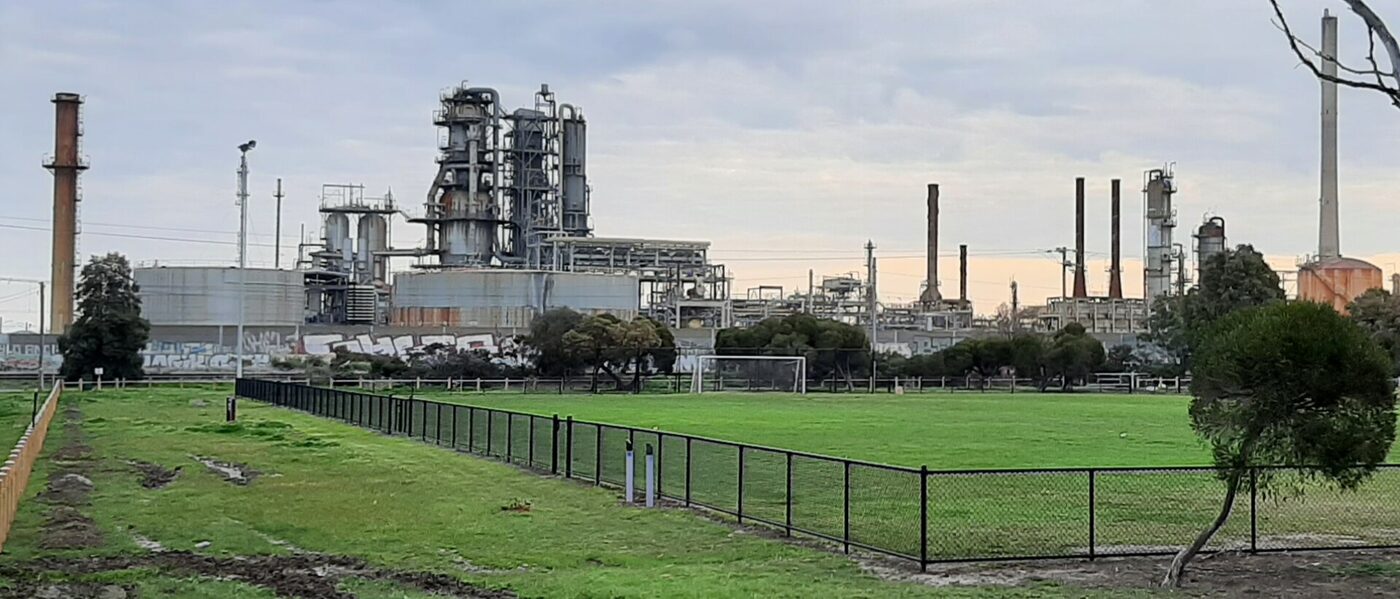
The US Treasury on Friday put one of China's biggest independent refiners on its sanctions list, naming Hengli Petrochemical (Dalian) Refinery Co., Ltd. as one of Tehran's most valued oil customers and accusing it of funneling hundreds of millions of dollars to Iran's armed forces through crude purchases. The action, taken by the Office of Foreign Assets Control on April 24, folds a marquee Chinese buyer into a campaign the administration calls Economic Fury, and it drags the murky world of Chinese teapot refining into the center of Washington's pressure on Iran.
Alongside Hengli, OFAC hit roughly 40 shipping companies and tankers that move Iranian barrels as part of what officials describe as a shadow fleet: aging vessels that switch off transponders, swap cargoes at sea, and disguise the origin of oil headed to Chinese ports. The refinery denied any dealings with Iran. Beijing objected within hours.
Why Hengli Matters
Teapots are the small-to-midsize independent refiners clustered mostly in China's Shandong province, outside the giant state majors. They run cheaper, sanctioned crude that the big state-owned processors will not touch, and over the past three years they have become the backbone of Iran's oil sales. Iran cannot move its barrels through the open, dollar-cleared market, so it sells at a discount to buyers willing to absorb the sanctions risk. The teapots are those buyers.
Hengli's Dalian plant is not a marginal player. It is one of the largest independent facilities in the country, which is exactly why Treasury singled it out. Going after a small, obscure refiner sends a limited signal. Going after a well-known name with real refining capacity is meant to make every other teapot recalculate the cost of the next Iranian cargo. Treasury said Hengli had generated hundreds of millions of dollars in revenue for the Iranian military through those purchases, tying the refinery's commercial appetite directly to the funding of the regime's armed forces.
What Economic Fury Is Trying to Do
Economic Fury is the label the administration has attached to its Iran oil crackdown, and the mechanics are straightforward even if the enforcement is not. The theory is that Iran's government runs on oil money, that most of that oil now goes to China, and that cutting the revenue starves the regime's military and nuclear programs. Sanctioning the tankers alone has proven insufficient, because vessels can be renamed and reflagged faster than they can be listed. So Treasury is now reaching further up the chain, to the refineries that actually write the checks.
"Economic Fury is imposing a financial stranglehold on the Iranian regime, hampering its aggression in the Middle East and helping to curtail its nuclear ambitions," Treasury Secretary Scott Bessent said in announcing the designations.
Bessent added that anyone facilitating these flows, through covert trade or finance, risks exposure to US sanctions. That warning is aimed less at Hengli, which is already listed, than at the banks, insurers, port operators, and other refiners watching to see whether Washington follows through.
How the Barrels Actually Move
The physical trade is deliberately hard to trace. Iranian crude often gets relabeled as Malaysian or another neutral origin before it reaches Chinese buyers. Tankers meet offshore to transfer cargo, so a vessel that loaded in Iranian waters never appears to have called there. Payment runs through channels built to avoid the US financial system entirely.
The scale is the part that is not in dispute. According to commodities data firm Kpler, China bought more than 80 percent of the oil Iran shipped in 2025. That concentration is why any serious effort to cut Iran's revenue eventually points at Chinese refiners, and why the teapots have become the pressure point. The 40-odd shipping entities named alongside Hengli are the logistics layer of that same system: the operators and vessels that keep discounted crude flowing to Shandong regardless of what is printed on the manifest.
The China Problem
Here is where the sanctions run into a wall. The United States can list a Chinese refinery, but it cannot force China to stop buying, and Beijing has made clear it will not. A spokesperson for the Chinese Embassy in Washington called on the US to stop politicizing trade and technology and using them as a weapon against Chinese firms. Hengli itself denied trading with Iran, which is the standard response and one that is difficult to disprove given how thoroughly the cargoes are laundered.
The practical bite of a designation like this is limited when the target does most of its business inside China's own financial system and sells refined products into a domestic market. What the sanction does do is raise the cost of everyone else's involvement. Foreign banks think twice before clearing a payment. Insurers pull back. Shipowners weigh whether an Iranian charter is worth losing access to Western markets. The point is friction, not a clean shutoff.
What Comes Next
The immediate question is whether this designation is a one-off or the template for a broader sweep of Shandong refiners. Treasury's language, and the choice to hit a large, named plant rather than a shell operator, points toward escalation. If Washington starts listing teapots regularly, the calculus for Chinese buyers shifts from "which cargo carries risk" to "which of us gets named next."
For the oil market, the near-term effect is modest. Iranian barrels do not vanish because a refinery is sanctioned; they get rerouted, rebranded, and often sold at a slightly steeper discount to compensate the next buyer for the added risk. That discount is the real signal to watch. If it widens, the pressure is working at the margins. If it holds, the shadow fleet has absorbed another blow and kept moving.
What is clear is that the fight over Iran's oil has moved onshore, from tankers on the water to refineries on the coast. Hengli is the first big name to feel it. It will not be the last if the administration means what it says.
Sources
https://home.treasury.gov/news/press-releases/sb0472https://www.cnbc.com/2026/04/25/us-china-sanctions-iran-oil.htmlhttps://www.aljazeera.com/news/2026/4/25/us-sanctions-chinas-teapot-refinery-for-buying-iranian-oilhttps://www.foxnews.com/world/us-targets-china-refinery-sweeping-iran-oil-crackdown-sanctions-shadow-fleet-tankershttps://www.scmp.com/news/world/united-states-canada/article/3351389/us-sanctions-china-based-oil-refinery-and-40-shippers-over-iran-oilhttps://www.aljazeera.com/economy/2026/5/3/china-blocks-us-sanctions-against-five-teapot-refineries