US Captures Maduro in Caracas Raid, Upending Venezuela's Oil Future
American special operators seized Nicolas Maduro and his wife on January 3, and now the world's largest crude reserves sit under a US military occupation, a naval blockade, and a president who wants Exxon and Chevron to spend $100 billion.

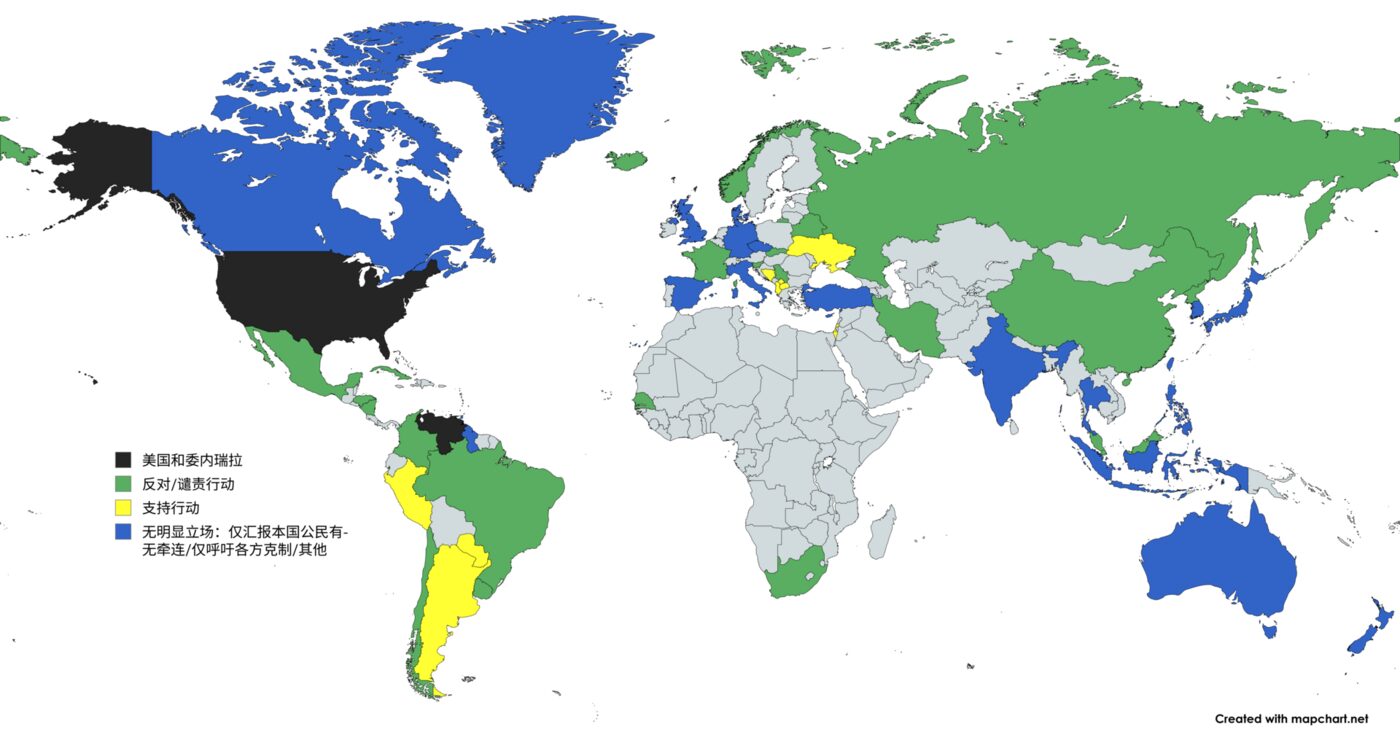
American forces took Nicolas Maduro out of Venezuela in the early hours of January 3. Delta Force operators, flown in by the Army's 160th Special Operations Aviation Regiment, pulled the Venezuelan president and his wife, Cilia Flores, out of the country as US strikes hit targets across the capital. Both were moved to the amphibious assault ship USS Iwo Jima and are now bound for New York, where Maduro faces narcoterrorism, drug-trafficking, and weapons charges that Washington has carried for years. Trump's message was blunt: "We are reasserting American power."
For anyone who reads this beat, the political shock is only half the story. The other half is sitting under the ground. Venezuela holds the largest proven oil reserves on the planet, and for the first time since Hugo Chavez nationalized the fields in 2007, the United States is talking openly about who gets to pump them.
What actually happened in Caracas
The operation was a raid, not a drawn-out ground campaign. Trump announced the capture the same day, saying US forces met few casualties. Maduro was removed from a residence tied to Fuerte Tiuna, the country's main military base, and flown to the Iwo Jima offshore. Vice President Delcy Rodriguez was sworn in as interim leader within hours.
Rodriguez is a weak hand and everyone knows it. She is constitutionally required to call elections within thirty days, and the July 2024 vote that opposition candidate Edmundo Gonzalez is widely held to have won still hangs over the process. Trump, for his part, said the US would "run the country until such time as we can do a safe, proper, and judicious transition," and floated the idea that Colombia and Cuba could be next. That is the frame oil traders are pricing against: not a clean handover, but an occupation with an uncertain end date.
The blockade is already choking output
The military operation did not start the squeeze on Venezuelan crude. The blockade did. Since December 10, US naval pressure has kept tankers from loading, and the numbers moved fast. Kpler tracked floating storage jumping to 23.6 million barrels from about 12.5 million as cargoes piled up with nowhere to go. December exports collapsed to roughly 300,000 barrels per day from 960,000 bpd at the start of the month.
Production follows exports when the barrels can't move. Venezuela was running near 800,000 bpd before the raid, down from about 870,000. Kpler's read is that if the blockade holds, output slides to 600,000 to 700,000 bpd by February. The darker case is worse: cut off the naphtha imports that PDVSA blends to move its heavy, tarry crude, and production could crater toward 200,000 bpd by the second quarter. That is the mechanism nobody outside the industry talks about. Venezuela's oil is thick enough that it needs imported diluent to flow, and diluent is exactly the kind of cargo a blockade stops.
One thing held steady, at least at first: Chevron's upstream flows to the US, roughly 145,000 bpd, appeared to keep moving under its existing license. That barrel count is the tell for how seriously to take any "US oil companies are ready" claim.
Trump's $100 billion pitch, and why the majors aren't biting
Trump's vision is expansive. "We're going to have our very large United States oil companies, the biggest anywhere in the world, go in, spend billions of dollars, fix the badly broken infrastructure, and start making money for the country," he said. He put a figure on it, $100 billion in investment, and added that the companies "will be reimbursed," hinting at federal subsidies to backstop the risk. He also claimed he had spoken with "all" US oil companies.
The companies tell a different story. Reuters reported that leaders at Chevron, ConocoPhillips, and ExxonMobil had not held conversations with the administration about Venezuela, which contradicts the president directly. ConocoPhillips called it "premature to speculate." The American Petroleum Institute said it is "closely watching." That is industry code for stay far away from the microphone.
The skepticism is rational. A petroleum engineering professor at the University of Texas at Austin put it plainly: "I do not see a compelling business case for any US-based company to invest billions." The obstacles are concrete. Venezuelan infrastructure has been starved of maintenance for a decade. Political stability is a coin flip. Oil prices are low. US shale drillers are pulling back rigs even at home, which means capital is scarce and disciplined. Asking Exxon to sink $100 billion into a country under military occupation, with an interim government that may not survive the month, is a hard sell no matter who signs the reimbursement check.
Who built the industry, and who broke it
Trump likes to say the US built Venezuela's oil industry, and there is truth in the long view. Exxon and Conoco were major operators until 2007, when Chavez nationalized the sector and forced them out. Chevron stayed and has been the only major US producer working consistently in the country since. So the knowledge and the equity claims are real. The problem is that rebuilding is not the same as remembering.
Venezuela once pumped well over 3 million bpd. Years of mismanagement, brain drain, corruption at PDVSA, and US sanctions dragged that down to under a million. Restarting flooded wells, corroded pipelines, and dead refineries is a multiyear capital project, not a switch. Kpler's own upside case, and this assumes sanctions come off and the country stabilizes, sees only 100,000 to 150,000 bpd of recovery within three months, maybe 1.1 to 1.2 million bpd by the end of 2026, and 1.7 to 1.8 million bpd by 2028. That is a long climb, and every step depends on a stable government that does not yet exist.
What to watch next
The near-term price signal is the blockade, not the boardroom. As long as US ships keep Venezuelan tankers pinned, the barrels come off the market and floating storage keeps building. If diluent imports get cut, February production could break below 700,000 bpd, and the second-quarter tail risk is genuinely ugly.
The medium-term signal is legal and political. Does Rodriguez hold elections? Does Washington recognize Gonzalez? Does the US lift the sanctions that would let anyone but Chevron operate? Until those questions have answers, no major will commit real money, reimbursement pledge or not. The reserves are the biggest in the world. Getting the oil out of the ground and onto the water is another matter entirely, and right now the US Navy is the main thing standing between Venezuela's crude and the market.
Sources
https://www.atlanticcouncil.org/dispatches/us-just-captured-maduro-whats-next-for-venezuela-and-the-region/https://www.kpler.com/blog/maduro-captured-venezuelas-oil-future-at-a-crossroadshttps://news.usni.org/2026/01/03/maduro-wife-captured-by-american-forces-u-s-to-oversee-venezuela-ahead-of-new-government-trump-sayshttps://www.congress.gov/crs-product/IN12618https://www.aljazeera.com/news/2026/1/7/fact-checking-trump-on-promised-us-oil-company-investment-in-venezuelahttps://www.nbcnews.com/business/energy/trump-venezuela-oil-companies-reimburse-rcna252434