ULSD and the Sulfur Revolution: How Diesel Went From Dirty to Nearly Clean
The mandated collapse of diesel sulfur from 500 ppm to 15 ppm rewrote refinery economics and, more importantly, made modern particulate filters and NOx controls physically possible.

Stand next to a mid-1990s highway truck at idle and you smelled it before you saw it: the acrid bite of sulfur dioxide in the exhaust. That smell was regulatory-legal. Until October 1993, on-road diesel in the United States could carry up to 0.5 percent sulfur by weight, and even the low-sulfur standard that replaced it capped out at 500 parts per million. Today the fuel in that same pump reads 15 ppm or lower. The difference is not cosmetic. It is the single change that made every diesel emissions control on modern trucks and cars work at all.
This is the story of how the industry took roughly 97 percent of the sulfur out of diesel in a little over a decade, what it cost the refiners who had to do it, and why a few hundred parts per million of a trace contaminant decides whether a $10,000 exhaust system survives or dies.
The regulatory ratchet: 500 to 15
The US timeline runs in two clean steps. In October 1993, alongside the 1994 heavy-duty engine standards, a 500 ppm sulfur cap replaced the old ASTM 0.5 percent spec for highway diesel. That fuel got the name low-sulfur diesel. It held for more than a decade.
The real cut came with EPA's 2007 heavy-duty program. Ultra-low-sulfur diesel, capped at 15 ppm, was required at the refinery gate starting June 1, 2006, at terminals by September 1, and at retail pumps by October 15, 2006. The changeover was phased so 80 percent of a major refiner's highway output had to meet 15 ppm first, with the full fleet of highway fuel required to comply by December 1, 2010. Off-road diesel followed on its own clock under the Tier 4 nonroad program: 500 ppm from June 1, 2007, then 15 ppm for nonroad fuel on June 1, 2010, and for locomotive and marine diesel on June 1, 2012.
Europe ran a parallel and slightly earlier ratchet. EU diesel dropped to a 350 ppm cap in 2000 and 50 ppm in 2005, and Directive 2002/80/EC pushed the type-approval fuel for Euro 4 vehicles down to 10 ppm. So-called sulfur-free diesel at 10 ppm became the mandatory on-road standard across the EU in 2009. The numbers differ by five parts per million between the two markets, but the intent was identical: get sulfur low enough that catalytic aftertreatment could live on a vehicle.
Why the engine people wrote the fuel rules
Note who drove this. EPA did not lower diesel sulfur because sulfur dioxide itself was the headline pollutant. It lowered sulfur to enable the engine standards it wanted. The 2007 heavy-duty rule set a particulate limit of 0.01 grams per brake-horsepower-hour and a NOx limit of 0.2 g/bhp-hr, the latter phased in from 2007 to full compliance in 2010. Those numbers are roughly a factor of ten below what a bare engine can achieve by combustion tuning alone. Meeting them required a diesel particulate filter on essentially all on-road heavy-duty engines and NOx control on a growing share.
Fuel and hardware were designed as one system. The 15 ppm cap was not a standalone air-quality win so much as the enabling condition for the filters and catalysts that would deliver the real reductions. That framing matters because it explains why the fuel spec is so aggressive: it was set by what the catalysts needed, not by what a smokestack model said was tolerable.
What it took at the refinery
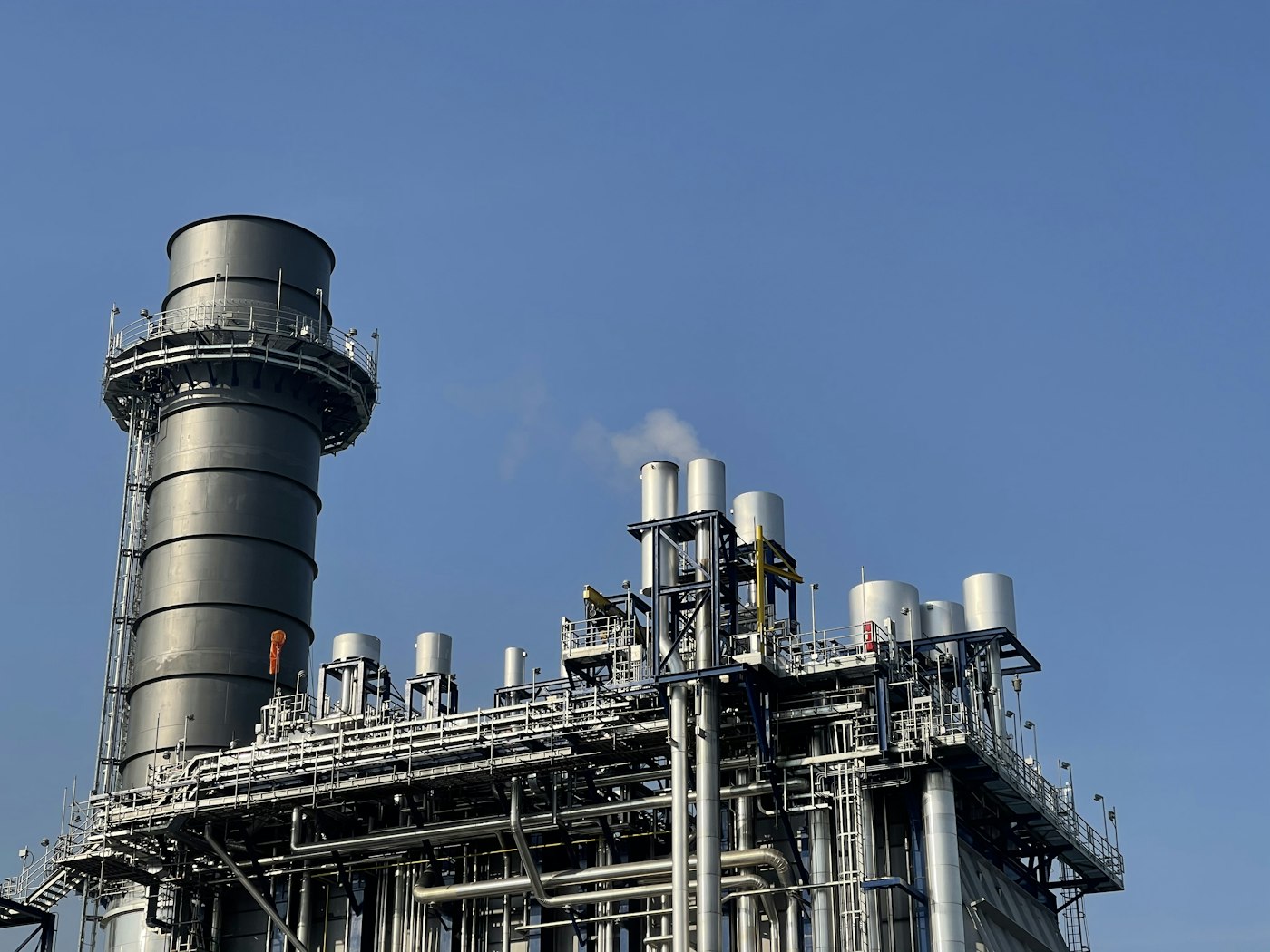
Getting to 15 ppm is a chemistry problem with a capital-budget answer. The workhorse process is catalytic hydrodesulfurization. Diesel is mixed with hydrogen and pushed over a base-metal catalyst, typically cobalt-molybdenum or nickel-molybdenum on alumina, at moderate pressure in the rough range of 700 to 950 psi and temperatures around 600 to 750 degrees Fahrenheit. The catalyst strips sulfur out of the hydrocarbon molecules and releases it as hydrogen sulfide, which is scrubbed out and sent to a sulfur recovery unit that turns it into elemental sulfur.
The trouble is the last few parts per million. Easy sulfur comes off readily, but the sulfur that survives into the low double digits is locked in stubborn ring compounds, the dibenzothiophenes, that are sterically shielded from the catalyst. Removing those demands more severe conditions: higher pressure, more active catalyst, more hydrogen, and longer contact time. Refiners had three broad paths to ULSD, add a new hydrotreater, expand existing sulfur units, or revamp what they had, and every path carried supporting spend on hydrogen production, sulfur recovery, and storage segregation to keep ULSD from cross-contaminating.
The cost signature is distinctive. For sulfur control, the bulk of the annual burden is capital charge on the equipment, on the order of 70 to 80 percent of total annual cost, rather than day-to-day operating expense. In plain terms: the pain was building the units, not running them. Hydrogen is the other constraint that has only tightened since. Deep desulfurization is hydrogen-hungry, and refineries leaning on heavy, hydrogen-deficient feedstocks such as Canadian bitumen have to weigh where scarce hydrogen goes, into the ULSD unit or the FCC pretreater.
Why sulfur is poison to the aftertreatment
Here is the mechanism that justifies the whole exercise. Modern diesel exhaust systems rely on precious-metal and washcoat catalysts, and sulfur is a catalyst poison in the most literal sense.
During combustion the sulfur in fuel becomes sulfur dioxide. A platinum diesel oxidation catalyst then oxidizes some of that SO2 to SO3, which binds strongly to catalyst surfaces and is an extremely effective poison, blocking the active sites the system needs.
Walk it through the box. The diesel oxidation catalyst up front loses activity as sulfur occupies its platinum sites. The diesel particulate filter suffers twice: sulfur-derived sulfate itself forms particulate mass, so high-sulfur fuel makes more of the soot the filter is supposed to trap, and the upstream sulfate load fouls the catalyzed filter surface. Selective catalytic reduction, the AdBlue systems that inject urea to convert NOx to nitrogen, degrades as sulfur cuts the catalyst's ammonia storage capacity, drops transient NOx conversion, and causes ammonia to slip through unreacted. NOx adsorber traps are the most sensitive of all; sulfur blocks the NO2 adsorption the trap depends on, and the technology was only ever viable on 10-to-15 ppm fuel. Even at that level, sulfur accumulates and forces periodic high-temperature desulfation to bake it back off.
Feed any of these systems 500 ppm fuel and you do not get gradual decline, you get rapid, sometimes irreversible failure. The fuel spec and the hardware are not two policies. They are one.
What the sulfur revolution actually bought
The payoff is not the sulfur reduction on its own, though ambient SO2 from diesel did fall sharply. The payoff is everything ULSD unlocked. Particulate filters that routinely capture well over 90 percent of soot mass, SCR systems that knock NOx down toward the 0.2 g/bhp-hr line, and oxidation catalysts that clean up carbon monoxide and hydrocarbons all became durable, warrantable equipment only because the fuel stopped poisoning them.
That is the trade the industry made. Refiners absorbed a capital-heavy build-out of hydrotreating, hydrogen, and sulfur recovery capacity, and in exchange the engine makers got a fuel clean enough to hang a catalyst on. The next squeeze is already visible in the hydrogen ledger, as heavier crudes and any future tightening of specs compete for the same molecule that deep desulfurization consumes. But the core problem, the one that made diesel exhaust smell the way it used to, is solved. Fifteen parts per million did it.
Sources
https://dieselnet.com/standards/us/fuel_diesel.phphttps://www.meca.org/regulation/us-epa-20072010-heavyduty-engine-and-vehicle-standards-and-highway-diesel-fuel-sulfur-control-requirements/https://www.transportpolicy.net/standard/eu-fuels-diesel-and-gasoline/https://theicct.org/sites/default/files/publications/Hart_Mathpro_ULSFstudy_final6nov2012_opt.pdfhttps://dieselnet.com/tech/cat_doc.phphttps://theicct.org/wp-content/uploads/2021/06/50ppm-diesel-sulfur-05222020.pdf