Sustainable Aviation Fuel: The Chemistry, the Cost Gap, and the Blend Wall
SAF burns in the engines flying today with no modification, but a paraffinic chemistry that caps it at half the tank, a thin bench of feedstocks, and a price several times Jet A-1 keep it a rounding error in global supply.

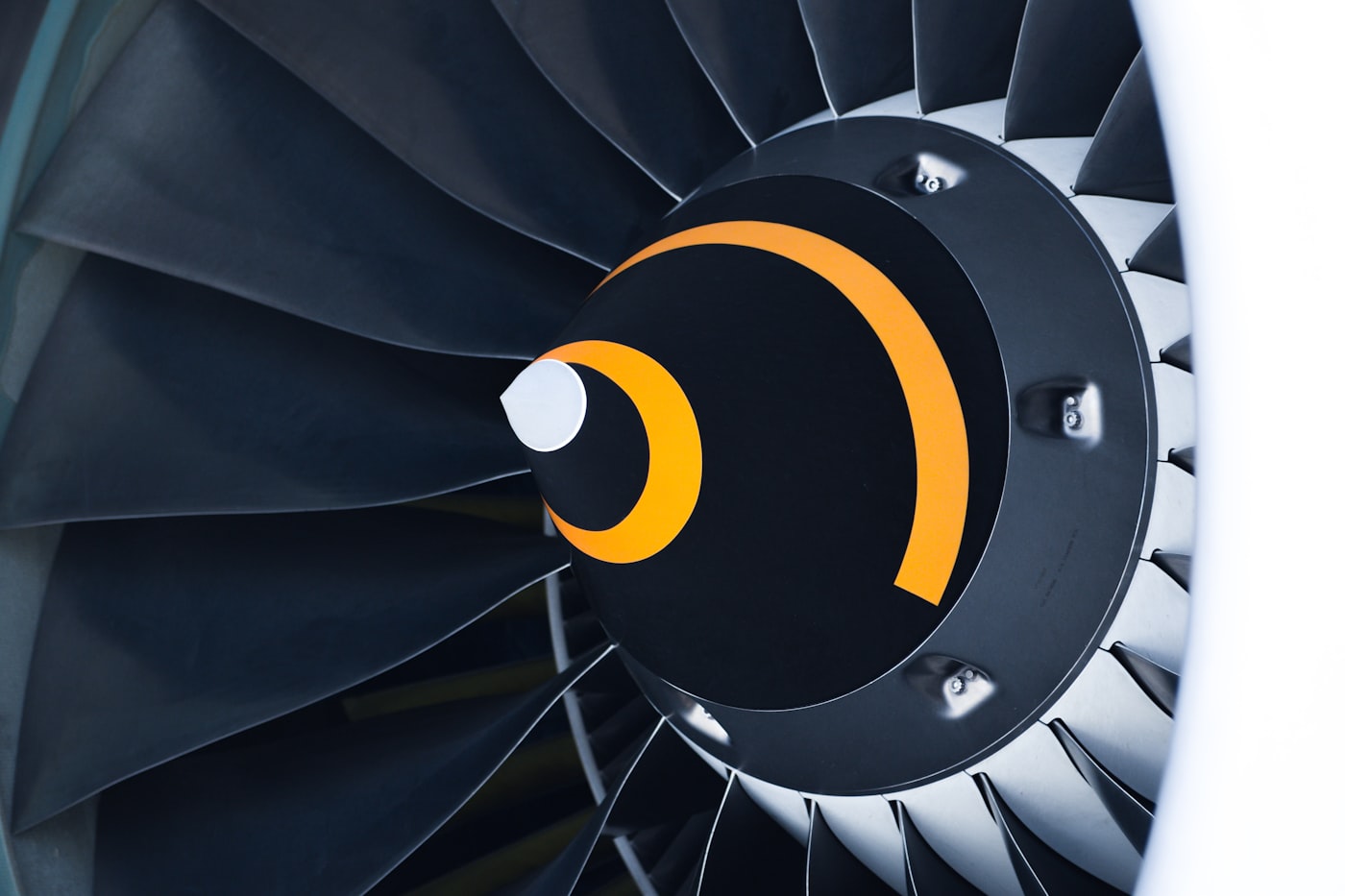
A gallon of sustainable aviation fuel and a gallon of Jet A-1 are, molecule for molecule, close cousins. Both are kerosene: chains of hydrogen and carbon in roughly the C8-to-C16 range, cut to the same flash point, the same freeze point, the same energy density. That is the whole point. SAF is a drop-in fuel. It moves through the same pipelines, sits in the same wing tanks, and burns in the same turbine as fossil kerosene. No engine change, no new airport plumbing, no separate fuel truck. And yet in 2025, SAF made up roughly 0.6 percent of the jet fuel the world's airlines burned. The reason that number is so small is not that the chemistry fails. It is that the chemistry works only up to a point, the feedstocks are scarce, and the fuel costs several times what it replaces.
Three ways to build a kerosene molecule
There is no single SAF. There is a short list of ASTM-approved production routes, each starting from a different feedstock and each ending at the same target: synthetic paraffinic kerosene that meets jet spec.
The workhorse today is HEFA, short for hydroprocessed esters and fatty acids. You take a lipid feedstock, used cooking oil, waste animal fats, tallow, some vegetable oils, and hydrotreat it: add hydrogen, strip out the oxygen, crack and isomerize the chains until they land in the kerosene range. HEFA is the most commercially mature route by a wide margin, and nearly all the SAF flying today comes from it. Its ceiling is the feedstock. There is only so much used cooking oil and slaughterhouse fat on the planet, and aviation is competing for those same molecules with renewable diesel, which uses an almost identical process.
The second route is Fischer-Tropsch, a century-old technology. Gasify biomass or municipal waste into synthesis gas, carbon monoxide plus hydrogen, then run FT synthesis to grow that syngas into liquid hydrocarbons that get refined into jet. FT can eat feedstocks HEFA cannot touch, including agricultural residue and trash, but the gasification plants are capital-heavy and slow to build.
The third is alcohol-to-jet, or AtJ. Start with an alcohol, ethanol or iso-butanol, dehydrate it, oligomerize the pieces into longer chains, then hydrogenate. That opens the door to the enormous existing ethanol supply chain. A fourth family, power-to-liquid or e-SAF, makes synthetic kerosene from captured CO2 and green-hydrogen electrolysis. It is the most scalable in theory, because its inputs are effectively unlimited, and the least built out in practice, because it is the most expensive.
Why the tank is only half full
Here is the constraint most passengers never hear about. Under the ASTM D7566 specification, every one of these approved SAF pathways is capped at a 50 percent blend with conventional jet fuel. Fill the other half of the tank with fossil Jet A-1, and you are certified to fly. Try to run the SAF neat, and you are not.
The reason is aromatics, and it is a genuine chemistry problem, not regulatory timidity. Conventional jet fuel contains aromatic compounds, ring-structured hydrocarbons that make up somewhere in the range of 8 to 25 percent of the fuel by volume. Those aromatics do unglamorous but essential work. They cause the elastomer O-rings and seals throughout an aircraft and engine fuel system to swell slightly and stay tight. The synthetic paraffinic kerosene that comes out of HEFA, FT, and AtJ is almost purely paraffinic: it contains essentially no aromatics. Run 100 percent of it through a system designed around aromatic-swollen seals, and those seals can shrink and leak. Aromatics also carry a share of the fuel's lubricity. Cap the blend at 50 percent and you guarantee enough aromatic content from the fossil half to keep seals seated and pumps happy.
That is the blend wall. It means even a plant running flat out, selling every drop, can displace at most half the fuel in any given tank under current spec. Getting to 100 percent SAF is an active engineering program, not a paperwork fix, and it runs along two tracks. One is qualifying bio-derived aromatics that can be added back into an otherwise synthetic fuel. The other is testing and certifying aircraft and engines to run fully on paraffinic fuel with seal materials that do not need aromatics. Both are underway. Neither is finished at commercial scale.
The feedstock ceiling
Stack the pathways up and a pattern emerges: the cheapest, most mature route has the smallest feedstock pool, and the biggest feedstock pools sit behind the most expensive processes. HEFA is ready now but rides on a finite supply of waste oils and fats. FT and AtJ reach into far larger biomass and alcohol streams but demand heavy capital and years of construction. E-SAF has near-limitless inputs and the highest cost per gallon of all.
This is why SAF's tiny share of supply is not simply a matter of waiting for more plants. The waste-oil bench that HEFA depends on is already contested by renewable diesel, and much of it is thin, hard to collect, and geographically scattered. Scaling meaningfully means moving weight onto FT, AtJ, and eventually power-to-liquid, exactly the routes that are hardest to finance and slowest to build. IATA has warned that SAF production growth is slowing, not accelerating, heading into the tighter mandates ahead.
The mandate stick and the cost gap
If economics alone governed, almost no one would buy SAF, because it is expensive. IATA's figures put the average global cost of SAF at roughly 4.2 times conventional jet fuel in 2025, up from about 3.1 times in 2024. In mandated markets the effective multiple can run higher once compliance fees are stacked on top. By IATA's accounting, airlines were on track to pay around 2.9 billion dollars extra for the 1.9 million tonnes of SAF available in 2025, and a large slice of that premium was regulatory compliance and surcharges rather than the raw fuel spread.
Two policy engines are pushing against that gap from opposite directions. In Europe, ReFuelEU Aviation is the stick. As of January 1, 2025, fuel suppliers must ensure that 2 percent of the fuel made available at covered EU airports is SAF. That share steps up to 6 percent in 2030, 20 percent in 2035, and climbs toward 70 percent by 2050, with a carve-out sub-mandate for synthetic e-SAF that starts at 1.2 percent in 2030 and rises to 35 percent by mid-century. It is a demand floor written into law, and it does not care what the fuel costs.
In the United States the lever has been the carrot, and it just got shorter. The Inflation Reduction Act created a SAF-specific tax credit worth up to 1.75 dollars per gallon, scaled by how much a given batch cut lifecycle greenhouse emissions. Starting in 2025 that credit folded into the broader 45Z clean fuel production credit while keeping the SAF premium. Then H.R. 1, enacted July 4, 2025, stripped the special SAF rate and dropped it to 1.00 dollar per gallon, the same rate as every other clean fuel, through the credit's extended 2029 expiration. Producers who had underwritten plants on the higher number saw their margins compress, and analysts warned some planned SAF investment could migrate abroad.
What actually scales
Strip away the noise and SAF sits in a specific, honest position. The molecule is real. It flies today, in the engines already on the wing, with no modification. It is not vaporware and it is not a talking point; airlines burned nearly two million tonnes of it last year. But it is boxed in by three hard limits at once. The blend wall caps it at half the tank until neat-SAF certification and bio-aromatics mature. The feedstock ceiling means the cheap route runs on scraps and the abundant routes are expensive to build. And the cost gap, four-plus times fossil kerosene, means it moves only where a mandate forces it or a credit pays for it.
None of those walls is permanent. Fischer-Tropsch and alcohol-to-jet widen the feedstock base. Power-to-liquid removes the feedstock ceiling entirely, if the price of green hydrogen falls far enough. Seal qualification and bio-aromatics chip at the 50 percent cap. But every one of those fixes is a capital-heavy, decade-scale program, and the policy signals meant to underwrite them are pulling in different directions across the Atlantic. SAF will scale. It will scale slower than the 2050 target lines suggest, and the ceiling in 2025 was set by chemistry and feedstock, not by a lack of will.
Sources
https://aerospaceglobalnews.com/news/sustainable-aviation-fuel-saf-production-pathways-explained/https://www.greenairnews.com/?p=2460https://www.iata.org/en/pressroom/2025-releases/2025-12-09-04/https://www.catf.us/2025/10/h-r-1-expands-45z-clean-fuel-production-credit-for-conventional-biofuels-while-cutting-sustainable-aviation-fuel-tax-credit/https://www.easa.europa.eu/en/domains/environment/eaer/sustainable-aviation-fuels/saf-policy-actionshttps://afdc.energy.gov/fuels/sustainable-aviation-fuel