The Strait of Hormuz Premium: Pricing the Unthinkable
Roughly a fifth of the world's oil crosses a 21-mile-wide channel Iran can menace but has never fully closed, and the gap between the threat and the follow-through is where the market prices its fear.

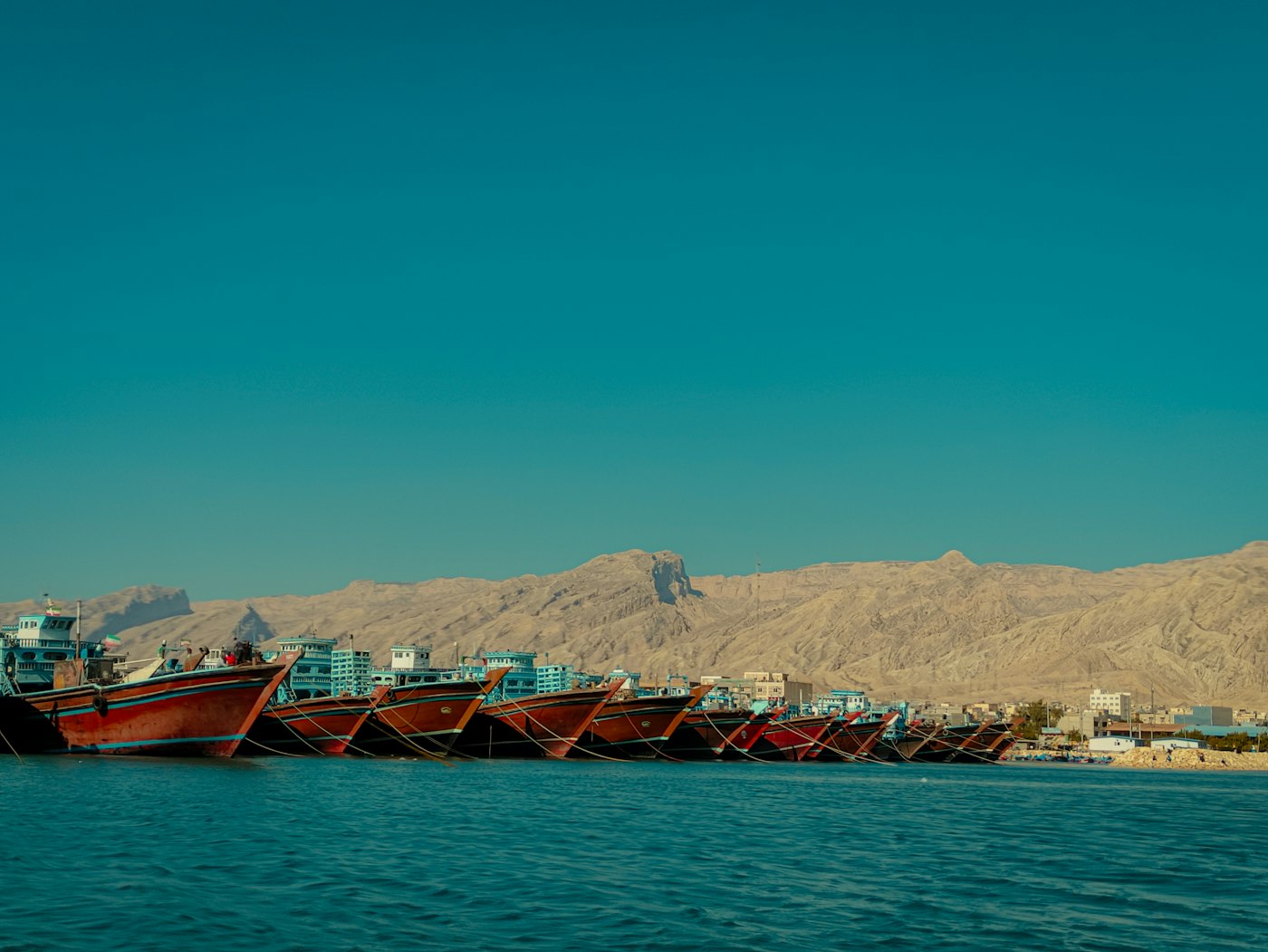
On June 13, 2025, Israeli jets hit targets across Iran and Brent crude jumped from $69.36 the day before to $74.23 by the close. Intraday it briefly ran up more than 13 percent, the sharpest single-day move since March 2022. By June 17 Brent touched $76.45. Then Iran and Israel agreed to a ceasefire, and within days the price fell straight back through the pre-war level, Brent sliding roughly 6 percent to the mid-$60s. The Strait of Hormuz never closed. Not one tanker was turned back. What moved was not supply. It was the premium the market pays to insure against a closure that keeps not happening.
Twenty million barrels through a 21-mile door
The physical stakes are not in dispute. In 2022 the U.S. Energy Information Administration put flows through Hormuz at about 21 million barrels a day of petroleum liquids, roughly 21 percent of global consumption and more than a quarter of all seaborne traded oil. By 2024 the figure had settled near 20 million barrels a day, split between close to 15 million barrels of crude and condensate and around 5 million barrels of refined products. Alongside the oil, about a fifth of the world's liquefied natural gas moves through the same channel, and almost all of it is Qatari.
The choke point is genuinely narrow. The shipping lanes run inside a strait about 21 miles wide at its tightest, with the inbound and outbound lanes each only two miles across and a two-mile buffer between them. There is no bypass that carries anything like this volume. Saudi Arabia's East-West pipeline and the UAE's line to Fujairah can move a few million barrels a day between them, useful at the margin, nowhere near enough to replace the strait.
Where the barrels actually go
The destination map is the reason this is Asia's problem before it is anyone else's. In 2022 the EIA estimated 82 percent of the crude and condensate crossing Hormuz went to Asian buyers, with China, India, Japan and South Korea alone taking 67 percent of the flow. That share has held. When analysts say a Hormuz closure would be a global shock, what they mean in the first instance is a shock to Chinese refiners, Indian import bills, and Japanese and Korean utilities.
The United States is a bystander by comparison. American crude and condensate imports from Persian Gulf countries through the strait run under a million barrels a day, roughly a tenth of U.S. crude imports and a low single-digit share of what the country actually burns. That asymmetry shapes the politics: Washington feels a Hormuz crisis through the global price, not through empty terminals, while Beijing feels it directly.
Why Iran does not pull the trigger
Iran talks about closing Hormuz the way a cornered man talks about a gun he has decided not to use. The threat is real enough to move markets and empty enough that it has survived four decades without being carried out. The reason is that the door swings both ways.
Iran's own oil goes out through Hormuz. Analysts estimate the great majority of Iranian crude exports, on the order of 90-plus percent, load from a single complex at Kharg Island and sail through the same channel Iran would be mining or blockading. Closing the strait means closing Iran's own export tap, cutting the revenue that keeps the government solvent. One estimate puts the hit to Tehran's revenues from a self-imposed closure at around 35 percent. It would also throttle imports the country depends on, including grain.
Iran has no meaningful alternative export corridor. Saudi Arabia and the UAE can route around the strait. Iran cannot. The weapon it points at the world is bolted to its own foot.
Then there is China. Beijing is the buyer of last resort for sanctioned Iranian barrels and the closest thing Tehran has to a strategic patron. A blockade that spikes the price of every cargo China lifts from the Gulf, Iranian and Saudi alike, is a direct provocation of the one government Iran cannot afford to alienate. As Foreign Affairs framed it, for Iran, Hormuz is more a weakness than a weapon. The leverage is in the threat. Spend it, and it is gone, along with the exports and the patron.
What the record actually shows
The one time the Gulf came close to a real shooting war over shipping, nobody closed the strait either. During the Tanker War of the 1980s, spun out of the Iran-Iraq conflict, both sides attacked commercial vessels and Iran laid mines. In July 1987 the reflagged supertanker Bridgeton, first in a U.S.-escorted convoy of Kuwaiti tankers under Operation Earnest Will, struck an Iranian mine near Farsi Island. It tore a hole in the hull, and the ship completed its voyage anyway. In April 1988 the frigate USS Samuel B. Roberts hit a contact mine that broke its keel and opened a 15-foot hole, triggering the largest U.S. naval surface action since World War II. Through all of it, oil kept moving. Traffic was harassed, insured at a higher rate, and rerouted, but it flowed.
That is the historical template the market keeps pricing against. Disruption in the Gulf has meant higher war-risk insurance premiums, slower transits, GPS interference and occasional seizures, not a sealed strait. The risk premium is the market's memory of exactly this pattern: a genuine capacity to inflict pain, repeatedly not exercised to its limit.
How the premium behaves
Because the closure is unthinkable in the literal sense that it has never been thought through to completion, the premium behaves like an option, not like a supply cut. It inflates fast on a triggering event and deflates faster on de-escalation. June 2025 is the clean case study: a double-digit intraday spike on the outbreak of fighting, a run to the mid-$70s Brent as traders priced the tail risk of a blockade, then a near-complete unwind inside a week once a ceasefire held and the tankers kept sailing. The barrels themselves barely twitched.
The lesson for anyone reading the tape is to separate two questions that headlines conflate. One is whether the strait is physically at risk, which the mines, the seizures and the missile inventory make plausible. The other is whether Iran has an incentive to follow through to full closure, which its own export dependence and its relationship with China make very unlikely. The premium lives entirely in the space between those two answers.
So the Hormuz premium is real, and it is also, most of the time, a fear that gets refunded. Traders pay it because the low-probability, high-severity outcome would be catastrophic, and 20 million barrels a day is not a number you shrug at. But the structure of Iran's own interests means the base case, again and again, is that the strait stays open, the escort convoys sail, and the premium bleeds back out of the price within days. The unthinkable is priced precisely because it stays unthinkable to the one actor who would have to do it.
Sources
https://www.eia.gov/todayinenergy/detail.php?id=61002https://www.iea.org/about/oil-security-and-emergency-response/strait-of-hormuzhttps://www.foreignaffairs.com/iran/iran-hormuz-more-weakness-weaponhttps://besacenter.org/irans-strait-of-hormuz-strategy-leverage-limits-and-regional-implications/https://en.wikipedia.org/wiki/Bridgeton_incidenthttps://www.cnn.com/2025/06/24/business/oil-prices-fall-iran-israel-ceasefire-intl