Hormuz Reopening Edges Closer as a Houthi Missile Strike Drags Brent Back Above 80
A draft Iran-Oman deal would restart tanker traffic through the world's most important oil chokepoint, but a fresh Red Sea attack on a Saudi tanker shows why the market is buying the disruption and selling the promise.

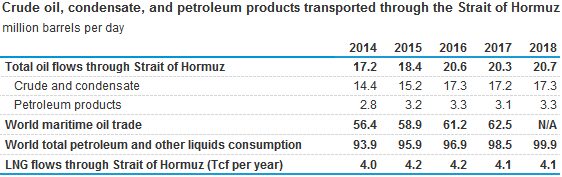
President Donald Trump said on Tuesday that a deal to reopen the Strait of Hormuz could come "tomorrow or the next day," and by Wednesday morning Iranian and Omani negotiators had a draft arrangement on the table that would route tankers back through the world's most important oil chokepoint for the first time since late February. Then the Houthis put a set of ballistic missiles into a Saudi crude tanker in the Red Sea, and the market remembered why it has learned not to trust the calm. Brent, which had been sliding on the reopening talk, snapped back above 80 dollars a barrel.
That whipsaw is the story of the oil market right now. Two of the three seaborne gateways that carry Gulf crude to the world are contested at the same time, and every headline that points toward relief on one is met by a fresh disruption on the other. For traders, the question on Wednesday was not whether Hormuz reopens, but whether a piece of paper signed in Muscat can hold when the shooting has not stopped.
The draft deal on Hormuz
The outline that emerged this week is narrow and practical rather than grand. Regional officials briefed on the talks said Iranian and Omani negotiators had finalized a draft under which ships would enter the Persian Gulf through Iranian-controlled routes and exit through Omani-controlled routes, with a security service fee charged for passage. Both sides described it as a temporary fix, tied to the June understanding between Washington and Tehran that broke down within weeks.
Trump framed it his way. "It could happen. Tomorrow or the next day. A lot of progress has been made," he told reporters, and he made clear he did not intend to let anyone turn the strait into a tollbooth: "I'm not going to let them charge. Anybody's going to charge, we'll charge." Iran, for its part, denied the American characterization that broader nuclear or sanctions talks had restarted, saying its only active discussions were with Oman on reopening the waterway. That gap between what Washington is selling and what Tehran will admit to is exactly the sort of thing that has sunk previous ceasefires.
Why Hormuz matters more than any other number
The Strait of Hormuz is not one chokepoint among many. In normal times roughly 20 million barrels a day of crude and refined products move through it, close to a fifth of global consumption and about a quarter of the world's seaborne oil trade, along with a fifth of internationally traded liquefied natural gas. There is no meaningful way around it for Saudi Arabia, Iraq, Kuwait, Qatar, and the United Arab Emirates. Pipelines that bypass the strait can carry only a fraction of the volume that normally sails through it.
When Iran effectively closed the strait after the February airstrikes, the price reaction was violent. Brent pushed above 100 dollars on March 8 for the first time in four years and ran to roughly 126 dollars at the peak, the largest monthly price jump the market has recorded. War-risk insurance premiums for a single transit multiplied several times over in the space of a week. Ship-tracking data showed traffic collapsing toward zero, and by late April thousands of vessels and tens of thousands of mariners were effectively trapped inside the Gulf. The prospect of that trade restarting is worth real money on the downside, which is why Brent had been drifting lower on the reopening chatter before Wednesday's attack.
The Wafa attack, and the second front
The Red Sea is the second front, and it is not quiet. On Wednesday the Houthis said they had struck the Saudi tanker Wafa off the port of Yanbu with several ballistic missiles. Their spokesman, Yahya Saree, called the strike "precise" but offered no evidence of damage. The UK Maritime Trade Operations center said the crew were accounted for and safe and that no environmental impact had been reported, with authorities investigating.
By the Houthis' own count the Wafa was the eighth Saudi tanker they have targeted since they declared a blockade of the kingdom's shipping on July 22. The group says it is escalating specifically into the northern Red Sea because Saudi Arabia has been diverting cargoes there to avoid the southern approaches near Yemen. That is the trap in a maritime insurgency: reroute to dodge the threat and the threat follows the reroute. The market took the point. Brent settled up about 1.5 percent near 80.54 dollars a barrel, and West Texas Intermediate rose close to 1 percent to about 76.46 dollars, erasing part of the decline that the Hormuz talk had produced earlier in the week.
Why the market is not celebrating
A reopening of Hormuz, if it holds, would be the single most bearish event available to this market, and yet prices went up on the day the draft deal appeared. The reason is credibility. This is not the first announcement of a breakthrough. Washington and Tehran signed a memorandum in June to end the blockade; within days Iran reimposed restrictions, citing alleged ceasefire violations, and an interim truce in July collapsed when Iranian forces again attacked commercial ships. One risk consultancy watching the file warned that escalation still "risks a genuine supply shock" and pointed to the recurring pattern of strikes continuing after pauses are declared.
So traders are pricing two things at once. They will mark crude lower on genuine, verifiable Hormuz transits, the way they did earlier in the week, but they are not willing to sell the deal until tankers are actually moving under it. And every Red Sea missile is a reminder that even a reopened Hormuz would deliver crude into a shipping lane the Houthis are still contesting. Cheaper oil requires both gates to stay open, and right now only one of them is even close.
What to watch next
The near-term tells are concrete. First, whether the Iran-Oman draft is actually signed and, more importantly, whether ship-tracking data shows loaded tankers transiting Hormuz under it rather than another announcement that dies on contact with reality. Second, the security fee: who collects it, how large it is, and whether Trump's objection to any charge becomes a sticking point that Tehran uses to walk away. Third, the Red Sea, where Saudi Arabia has now lost eight tankers to Houthi fire in two weeks and where any hit that causes casualties or a spill would reprice risk instantly. For now the barrel is caught between a plausible peace and a live war, and until the first cargoes move safely through both waterways, the market will keep buying the disruption and selling the promise.
Sources
https://www.cnn.com/2026/08/05/world/live-news/iran-war-trumphttps://fortune.com/2026/08/05/trump-claims-yet-again-that-a-deal-to-reopen-hormuz-is-close/https://www.thenationalnews.com/business/energy/2026/08/05/brent-oil-back-above-80-after-houthi-attack-on-saudi-tanker/https://www.bloomberg.com/news/articles/2026-08-05/yemen-s-houthis-say-they-ll-target-tankers-in-northern-red-seahttps://www.bloomberg.com/news/articles/2026-08-05/iran-says-agreement-on-hormuz-shipping-route-reached-with-omanhttps://en.wikipedia.org/wiki/2026_Strait_of_Hormuz_crisis