The Strait of Hormuz: Anatomy of the World's Most Important Oil Chokepoint
About a fifth of the world's oil squeezes through a 21-mile gap between Iran and Oman every day, and the pipelines built to route around it can carry only a fraction of that load.

In June 2025, as Israeli and American strikes hit Iranian nuclear sites, Iran's parliament voted to close the Strait of Hormuz. Brent crude, trading near 69 dollars a barrel on June 12, jumped past 76 within days. Then a ceasefire took hold and prices slid back below 70. The strait was never actually closed. That short episode is the whole story of Hormuz in miniature: the threat alone is worth several dollars a barrel, the closure almost never arrives, and everyone who trades oil burns enormous effort handicapping the odds anyway.
What actually moves through the gap
The numbers are the reason anyone cares. According to the U.S. Energy Information Administration, roughly 20.9 million barrels of oil per day passed through the Strait of Hormuz in the first half of 2025, split between about 14.7 million barrels of crude oil and condensate and 6.1 million barrels of refined products. That is close to a fifth of the petroleum liquids the world consumes, and about a quarter of all oil that moves by sea. On the gas side, roughly 11.4 billion cubic feet per day of liquefied natural gas transited the strait, over a fifth of global LNG trade, almost all of it Qatari.
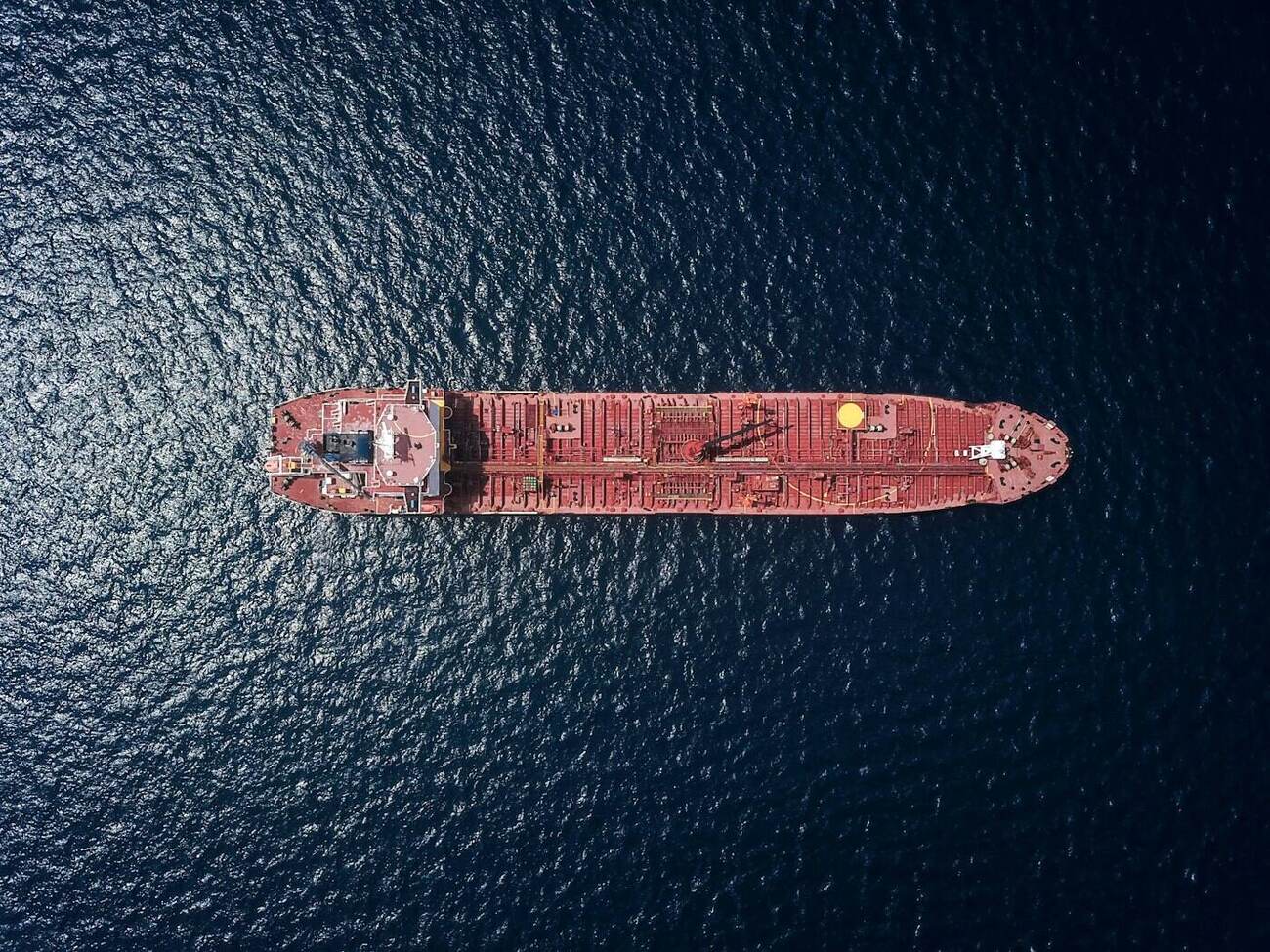
The physical geography is what makes those flows fragile. At its narrowest, Hormuz is about 21 miles wide, and the usable shipping lanes are narrower still: two channels of roughly two miles each, one inbound and one outbound, separated by a buffer. Every loaded supertanker leaving Saudi Arabia, Kuwait, Iraq, Qatar, Bahrain and most of the United Arab Emirates has to thread that needle. There is no meaningful detour by water. A ship in the Gulf either exits through Hormuz or it does not exit at all.
Who is actually exposed
The instinct in Washington and London is to treat a Hormuz crisis as an American problem. It mostly is not. The oil that leaves the Gulf goes east. By EIA's accounting, Asia takes the overwhelming majority of the crude and LNG that passes through the strait, with China, India, Japan and South Korea the largest buyers. Beijing in particular has spent two decades sourcing crude from the Gulf, which makes any Iranian threat to the strait partly a threat against China, Iran's biggest customer and diplomatic patron. That is one of several reasons a full closure has never made much sense for Tehran.
The other reason is that Iran uses the strait too. Its own crude exports, the ones that keep the government solvent under sanctions, sail out through the same water. Mining Hormuz or sinking tankers in it would choke off Iran's own revenue and hand a casus belli to the United States Fifth Fleet, based in Bahrain precisely to keep the strait open. Closing Hormuz is the geopolitical equivalent of holding a grenade in a crowded room. You can do it. You will not enjoy the aftermath.
The bypass pipelines, and their limits
Two Gulf states have built physical insurance against the chokepoint, and only two. Saudi Arabia runs the East-West pipeline, or Petroline, which carries crude from the Eastern Province fields across the country to Yanbu on the Red Sea, sidestepping the Gulf entirely. The UAE runs the Abu Dhabi Crude Oil Pipeline from Habshan to the port of Fujairah, which sits on the Gulf of Oman side of the strait. Between them, the EIA puts effective bypass capacity at about 4.7 million barrels per day.
Set that against the 20-plus million barrels that transit daily and the arithmetic is brutal. Even running the bypass lines flat out, the Gulf could reroute only a fraction of its exports. The EIA's own read is blunt: the existing alternatives could move only a portion of the oil currently going through the strait. Iran's Goreh-Jask line, meant to give Tehran its own escape hatch on the Gulf of Oman, adds perhaps 0.3 million barrels of effective capacity and has barely been used.
More capacity is coming, but slowly. The UAE is pushing a new Jebel Dhanna-to-Fujairah link that would add on the order of 1.5 million barrels per day, targeted for around 2027, and Abu Dhabi has spoken about roughly doubling its total bypass capacity by that year. Saudi Arabia has floated expanding Petroline further. Add it all up and the region might reach something like 6.5 million barrels per day of bypass capacity later this decade. That would blunt a disruption. It would not replace the strait. And the countries with no coastline outside the Gulf, Kuwait, Qatar, Iraq and Bahrain, have no bypass at all.
What a threat is worth, and what a closure would cost
Because a real closure is close to unthinkable and the bypass math is so unforgiving, the market prices Hormuz mostly as a probability, not an event. The June 2025 pattern is the template. Prices rose on the risk of disruption, not on any actual loss of barrels, and unwound the moment the shooting stopped. Analysts quoted through that crisis floated numbers well above 100 dollars a barrel for a genuine disruption, with some scenarios running toward 120 or 130, but those were conditional on the strait actually going dark for a sustained stretch, which it did not.
The honest way to think about it is in tiers. Harassment of shipping, a few days of missed cargoes, higher war-risk insurance premiums: that is the routine case, and it moves Brent by single digits and fades. A partial, contested closure lasting weeks, with tankers refusing to sail and the Fifth Fleet clearing mines under fire, would be a real supply shock and could push crude well past 100 dollars until traffic resumed. A total, sustained closure is the tail scenario nobody has actually lived through, and it would be measured not in dollars per barrel but in whether the global economy tips into recession. It has never happened, not even during the tanker war of the 1980s, when both Iran and Iraq were attacking ships and oil still flowed.
The uncomfortable bottom line
Hormuz is the most important piece of oil infrastructure on earth that no single country controls and no amount of pipeline can replace. The bypass lines are real and worth building, but they are a partial hedge, not a solution, and the barrels that have nowhere else to go still have to make the transit. The reason the strait rarely closes is not that it cannot be closed. It is that closing it hurts the closer as much as anyone. That logic has held through four decades of Gulf conflict. The market's job is to keep pricing the small but real chance that, one day, it does not.
Sources
https://www.eia.gov/international/content/analysis/special_topics/World_Oil_Transit_Chokepointshttps://www.eia.gov/todayinenergy/detail.php?id=61002https://www.aljazeera.com/news/2026/2/22/iran-us-tensions-what-would-blocking-strait-of-hormuz-mean-for-oil-lnghttps://www.cnbc.com/2026/03/12/strait-of-hormuz-oil-pipelines-iran-war-saudi-arabia-uae.htmlhttps://www.kpler.com/blog/new-pipelines-bypassing-the-strait-of-hormuz-could-come-online-in-1-2-yearshttps://databoks.katadata.co.id/en/market/statistics/68522e0225e53/israel-iran-war-spurs-global-oil-price-hike