OPEC+ Reaffirms Q1 Output Pause, Citing Low Inventories and a Balanced Market
Eight OPEC+ producers held the line on supply for February and March, betting that lean global inventories vindicate a strategy that a year of falling prices has repeatedly tested.

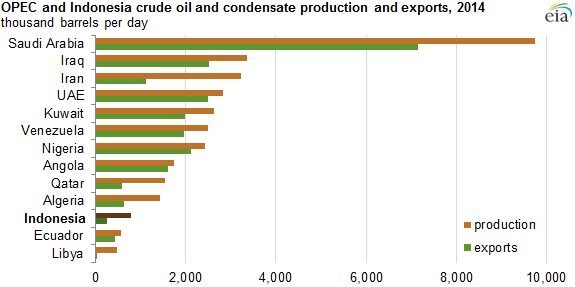
The eight OPEC+ countries that steer the group's voluntary supply cuts met by video on January 4 and did what most of the market expected: nothing new. They reaffirmed the decision, first taken in November, to pause any further output increases through February and March. In the statement that followed, Saudi Arabia, Russia, Iraq, the UAE, Kuwait, Kazakhstan, Algeria and Oman leaned on a single argument to justify sitting still. Global oil inventories, they said, remain low, and low stocks are the group's preferred evidence that the market is balanced rather than oversupplied.
That framing matters because the price tape spent 2025 arguing the opposite. Crude fell roughly 19 percent over the year, the steepest annual drop since the pandemic crash of 2020, as new barrels from inside and outside the group outran demand growth. The producers are effectively telling the market to trust the stock data over the price chart.
What the eight actually agreed to
The pause covers the 1.65 million barrels per day of voluntary cuts this subgroup layered on top of the wider OPEC+ deal. Those reductions had been coming back into the market through most of 2025. Between April and December, the eight unwound about 2.88 million b/d of earlier cuts, and their combined output rose by roughly 2.25 million b/d from March through November, according to Argus estimates. Around 1.24 million b/d of curbs remain eligible to be restored.
What January 4 confirmed is that none of that remaining volume comes back in February or March. The group repeated its standard escape clause: the 1.65 million b/d can be returned in part or in full, but only gradually and only if market conditions support it. The individual quotas for the first quarter were set alongside the decision.
- Saudi Arabia: 10.103 million b/d
- Russia: 9.574 million b/d
- Iraq: 4.273 million b/d
- UAE: 3.411 million b/d
- Kuwait: 2.580 million b/d
- Kazakhstan: 1.569 million b/d
- Algeria: 971,000 b/d
- Oman: 811,000 b/d
Separately, the group's older 2.2 million b/d tranche of voluntary adjustments, first announced in November 2023, stays in place. Compliance stays under the Joint Ministerial Monitoring Committee, and members that have pumped above quota since the start of 2024 are still on the hook to compensate with future cuts. The eight will meet again on February 1.
The inventory argument, and its weak spot
The case OPEC+ is making is straightforward. If the world were drowning in oil, tanks would be filling. Instead, observed inventories in the OECD and on the water have stayed on the lean side of the five-year range for much of the past year. To the group, that is the tell: refiners and traders are drawing on barrels as fast as they arrive, which is the signature of a balanced market, not a glut.
The public statement dressed this up in the language of "seasonality," a nod to the soft demand that typically shows up in the first quarter after the winter heating pull fades and before summer driving begins. Pausing into a seasonally weak stretch is defensible on its own terms. It also happens to be the least provocative way to explain a decision the group would probably have made regardless.
The weak spot is that inventories are a lagging, and heavily estimated, indicator. A lot of crude sits in places that are hard to count, including Chinese storage and floating cargoes that can be reclassified overnight. Forecasters continue to model a sizeable surplus building through 2026. The International Energy Agency has projected global supply growing by around 2.4 million b/d against demand growth closer to 860,000 b/d. If that gap is real, the low-inventory story is a snapshot that curdles as the year goes on.
Why the group is holding, not adding
For most of 2025 the strategy ran the other way. OPEC+ chose to claw back market share, accepting lower prices as the cost of putting barrels back and squeezing higher-cost producers, US shale among them. The pace of those additions is a big part of why prices fell. Pausing now is a course correction that stops short of a full reversal.
The logic is defensive. Adding barrels into a market already braced for a surplus would hand the bears their thesis and risk another leg down in price. Cutting outright would be an admission that the share-grab failed and would invite everyone else to pump into the vacuum. Holding steady is the middle path: it defends a price floor without conceding the ground taken in 2025. Analysts read it the same way. Frank Walbaum of Naga warned that a projected global supply surplus "could outweigh geopolitical developments" and keep the market under pressure. Naeem Assam of Zaye Capital Markets described oil as range-bound, with "macroeconomic weakness outweighing geopolitical risk."
The wild cards outside the spreadsheet
Two things could break the balance the group is banking on. The first is Venezuela, where political turmoil has attention on whether the country's roughly 1 million b/d of output holds or slips. A disruption there would tighten the market and make the pause look prescient. Renewed flows, or sanctions relief, would do the reverse.
The second is compliance. The quota table only means something if members respect it. Kazakhstan in particular has run persistently above its target, and the compensation mechanism has a mixed record of actually pulling those extra barrels back. Every barrel of overproduction chips away at the credibility of the pause, which is ultimately the product OPEC+ is selling here: not just a number, but the belief that the group will defend it.
What to watch before February 1
The next test is the February 1 meeting, when the same eight will decide whether April brings the first of the paused barrels back. Between now and then, watch the inventory reports the group is staking its argument on. If stocks keep drawing, the low-inventory case strengthens and a spring restart becomes plausible. If they start building, the surplus forecasts gain teeth and the pause may have to stretch deeper into 2026.
For now the group has bought itself a quarter of quiet. It reaffirmed a decision it had already made, wrapped it in the most defensible reasoning available, and set a date to revisit. The market did not get a surprise on January 4. It got confirmation that OPEC+ intends to manage 2026 the way it ended 2025: cautiously, and with one eye on tanks that are harder to read than anyone would like.
Sources
https://www.opec.org/pr-detail/1574587-4-january-2026.htmlhttps://www.rigzone.com/news/opec_8_reaffirm_decision_to_pause_production_hikes-05-jan-2026-182684-article/?rss=truehttps://www.argusmedia.com/en/news-and-insights/latest-market-news/2771730-opec-8-reconfirm-decision-to-keep-output-steady-in-q1https://oilprice.com/Latest-Energy-News/World-News/OPEC-Reaffirms-Output-Pause-as-Eight-Producers-Cite-Market-Stability.htmlhttps://english.aawsat.com/business/5226430-opec-confirms-suspension-oil-output-increase-first-quarter-2026