OPEC+ Ends the Pause with a 206,000 bpd April Hike as Middle East Tensions Simmer
Eight OPEC+ producers agreed on March 1 to add 206,000 barrels a day in April, restarting the wind-down of their 1.65 million bpd cut even as fighting between Iran, Israel and the United States rattles Gulf supply routes.

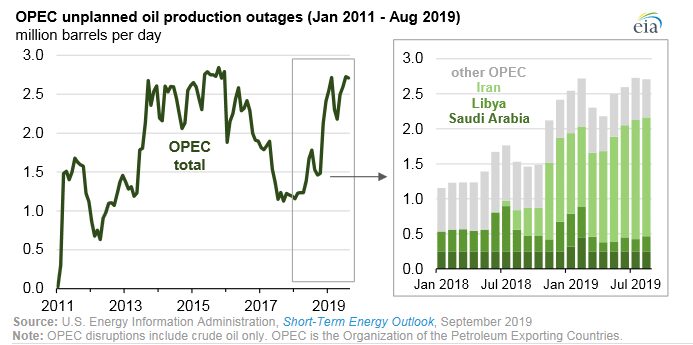
OPEC+ is pumping again. On Sunday, March 1, the eight producers steering the group's voluntary supply cuts agreed to raise output by 206,000 barrels a day in April, ending a three-month freeze and restarting the slow return of 1.65 million barrels a day they had held off the market since April 2023. The number matters as much as the decision. Analysts had penciled in something closer to 137,000 barrels a day, the size of the group's earlier monthly increments. A few had floated far bigger increases of 400,000 to 500,000. OPEC+ split the difference and leaned to the high side.
The eight are Saudi Arabia, Russia, Iraq, the United Arab Emirates, Kuwait, Kazakhstan, Algeria and Oman. They met virtually, reviewed the market, and put out a statement pointing to a "stable global economic outlook and current healthy market fundamentals, as reflected in the low oil inventories." What they did not dwell on, at least not in writing, is the war that hangs over every barrel they ship.
The numbers behind the headline
The 206,000-barrel figure is a group total, and it does not spread evenly. Under the April targets, Saudi Arabia moves to 10.2 million barrels a day, up about 62,000. Russia climbs by roughly the same amount to 9.6 million. Iraq adds about 26,000 to reach 4.3 million. The UAE gains around 18,000 to hit 3.4 million, Kuwait adds 16,000 to 2.6 million, Kazakhstan 10,000 to 1.6 million, Algeria 6,000 to 977,000, and Oman 5,000 to 816,000.
Those are quotas, not necessarily what shows up at the loading terminal. Kazakhstan has run over its allocation for the better part of two years, and the group's compliance table remains more of an aspiration than a ledger for several members. Still, the direction is clear. After pausing hikes across January, February and March for what the group called seasonal reasons, OPEC+ has decided the demand picture and its own thin inventory cushion give it room to add supply.
Why bigger than expected
Read the decision two ways and both make sense. The first is straightforward market management. Global stocks are low, refining margins have held, and the group would rather claw back market share it ceded to US shale and other non-OPEC producers than sit on idle capacity forever. Every month those barrels stay in the ground is revenue that Riyadh, Moscow and the rest are choosing not to collect.
The second read is political. A larger-than-forecast increase is a signal to consumers, and to Washington, that OPEC+ intends to keep the physical market supplied even as the Middle East burns. Prices had already climbed more than $10 a barrel across January and February as the confrontation with Iran escalated, according to S&P Global Commodity Insights, and a fatter supply number is one way to lean against a fear-driven rally without formally acknowledging the fear.
The war in the background
This was one of the alliance's more consequential meetings in years, and the reason is not the barrel count. It is the map. US and Israeli strikes on Iran, followed by Iranian missile and drone retaliation against Gulf states, have disrupted tanker traffic through the Strait of Hormuz, the chokepoint that carries roughly a fifth of the world's seaborne oil. Nearly all of the eight countries adding barrels this month ship a large share of their crude through or near that water.
That is the contradiction at the center of Sunday's decision. OPEC+ is promising more oil at the same moment the route it travels on has become the most dangerous stretch of water in the trade. If Hormuz stays open, the extra 206,000 barrels help cap prices and cool the risk premium. If it closes, or even narrows meaningfully, the added quota is academic. You cannot deliver a barrel you cannot sail.
What it means for prices
Do not expect the hike to break the market. At 206,000 barrels a day it is a fraction of the 1.65 million still parked offshore in cut form, and it is small against daily global demand north of 100 million barrels. The near-term price direction runs through Tehran, Tel Aviv and the Pentagon far more than through this quota table.
The risk is asymmetric, and traders know it. On the downside, if the conflict cools, the market suddenly has to price in both this increase and the much larger volume OPEC+ has signaled it wants to bring back over the coming months. That is a lot of latent supply. On the upside, a physical loss at Hormuz would swamp anything the group can add. S&P analysts made the point plainly: further gains remain likely as long as no actual barrels are lost, but the moment the flow is interrupted, the math changes entirely.
The escape hatch
OPEC+ kept its exit built in. The statement reiterated that the eight can "increase, pause or reverse the phase out of the voluntary production adjustments" as conditions warrant. That flexibility has been the group's defining feature through this whole unwinding. It paused when winter demand looked soft. It is adding now because inventories are lean. And it can slam the door shut in a single monthly call if a shooting war turns into a supply war.
The next of those calls is already on the calendar. The eight meet again on April 5 to set May output. By then the market will have a better sense of whether the Hormuz threat is a spike or a plateau, and whether OPEC+ has the appetite to keep the taps opening. For now the group has made its bet: supply the world, watch the Gulf, and keep one hand on the valve.
Sources
https://www.enerdata.net/publications/daily-energy-news/opec-raise-output-206-kbd-april-2026-amid-middle-east-tensions.htmlhttps://www.aa.com.tr/en/energy/oil/opec-eight-members-to-raise-output-by-206-000-bpd-in-april/55046https://www.thenationalnews.com/business/energy/2026/03/01/opec-agrees-206000-bpd-increase-as-iran-conflict-tests-supply-routes/https://economymiddleeast.com/news/opec-production-increase-april-2026-market-impact/