Iraq Ramps Basra Crude Exports Toward Multi-Year Highs as Iran Sanctions Squeeze Tehran's Trade
Baghdad pushed August crude sales to roughly 3.38 million b/d and kept southern flows near their strongest levels in years, gaining ground as U.S. sanctions choked Iranian energy exports.

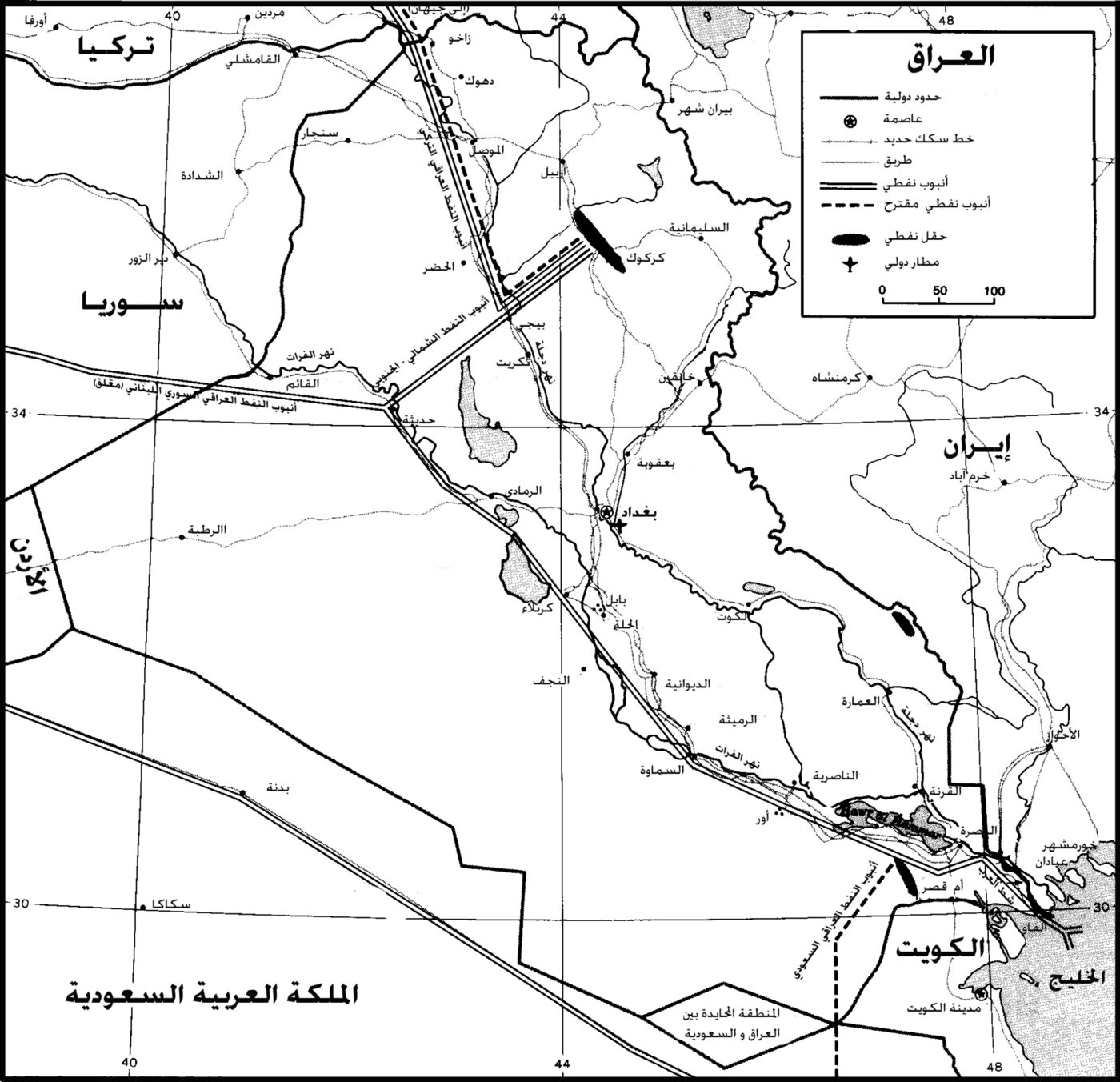
Iraq sold about 3.38 million barrels of crude a day in August, the oil ministry's figures show, with the bulk of that volume moving through the southern Basra terminals on the Gulf. That is not a fresh all-time record, but it is a deliberate push higher, and it lands at a moment when Baghdad's biggest regional rival is losing energy revenue to Washington's sanctions. The State Oil Marketing Organization, known as SOMO, has been unwinding the voluntary cuts it carried through the first half of the year, and southern exports are running close to the top of their historical range as the taps open.
The math is straightforward. Iraq is OPEC's second-largest producer, and the south does the heavy lifting: Basra Light and Basra Heavy loaded at the Gulf terminals account for the clear majority of national exports. When SOMO wants to move the export number, it moves it in the south. Through August the marketer was adding barrels, and it signaled more to come in September.
What the August numbers actually say
Total exports of roughly 3.38 million b/d in August marked a step up from Iraq's restrained spring, when the country was trimming volumes to answer OPEC-plus pressure over quota compliance. SOMO guided September exports to a range of 3.4 million to 3.45 million b/d, which would put shipments at their firmest in more than a year. The oil ministry later reported September exports averaging about 3.4 million b/d and generating close to 6.9 billion dollars, at an average realized price near 68 dollars a barrel, down from about 7.1 billion dollars in August.
Those are strong volumes, but a word of caution on the record talk. Iraq's genuine monthly peak for southern flows was set years ago, when Gulf loadings brushed above 3.5 million b/d. The August 2025 total sits below that mark. What is accurate is the direction: Iraq is climbing back toward the upper end of its export band after a period of restraint, and it is doing so faster than most of its OPEC-plus partners.
OPEC-plus opens the door
The room to grow came from the group itself. Eight OPEC-plus members agreed in early September to raise output by 137,000 b/d starting in October, extending a policy of unwinding cuts that began in April. Iraq, which leaned on its southern terminals to comply during the restraint phase, has been quick to use the reopened headroom.
SOMO's director general, Ali Nizar al-Shatari, framed the payoff in blunt fiscal terms. He said an additional 200,000 b/d of production would deliver a meaningful lift to government revenue, and that the export increase already underway was worth hundreds of millions of dollars at prevailing prices. He did not put a precise figure on the size of the rise, which fits Baghdad's habit of guiding ranges rather than pinning exact monthly targets before the loadings are complete.
Iraq's compliance record with OPEC-plus has always been shaky, and the country's dependence on crude revenue is the reason. Oil funds the vast majority of the federal budget. When the group loosens, Iraq loosens first and hardest, because every extra barrel is money the state needs.
Where the sanctions come in
The other half of this story sits across the border. Washington's maximum-pressure campaign against Tehran, reinstated in February, has been squeezing Iran's energy trade all year. In March the Trump administration revoked the long-standing waiver that had let Iraq pay Iran for electricity and gas without tripping U.S. sanctions. The effect on the cross-border flow was immediate and measurable.
Iran's natural gas exports to Iraq fell about 40 percent between April and August. Tehran's own trade officials put the revenue hit plainly: gas sales to Iraq over the first five months of the year dropped from roughly 1.6 billion dollars a year earlier to about 950 million dollars, a decline of some 41 percent. That is Iranian gas, not Iranian crude, and it matters to Iraq mostly because it forces Baghdad to burn more of its own resources for power instead of importing them.
The crude-market channel is looser but real. As U.S. pressure crimps Iranian barrels reaching buyers, particularly in Asia, refiners hunting for reliable medium-sour grades have every reason to lean harder on Basra. Iraq offers scale, Gulf loading, and none of the sanctions risk that attaches to an Iranian cargo. Baghdad does not need to advertise a strategy here. When a sanctioned competitor's barrels get harder to move, the unsanctioned neighbor with spare export capacity picks up share by default.
The bottleneck that still caps the upside
Iraq's ceiling has never really been the oil in the ground. It is the plumbing between the fields and the water. Limited storage in the south means SOMO tends to allocate more crude to shipments than it strictly has on hand, a way of keeping production from backing up when a loading slips. Analysts have flagged for years that the constraint is the connective tissue, the lines and tank farms and berths tying the fields to the export points, rather than reservoir capacity.
That is why the record-versus-near-record distinction is more than pedantry. Pushing past the old high would require the export infrastructure to run flat out with no slack, month after month. Iraq can touch the top of its range in a strong month. Holding there consistently is a different engineering problem, and it is the one Baghdad has been trying to solve with terminal and pipeline investment for the better part of a decade.
What to watch next
Three things. First, the October loadings: SOMO guided higher into the fourth quarter, and the OPEC-plus increase gives it cover, so watch whether Basra exports hold above 3.4 million b/d or slip back toward compliance. Second, the discount to marker grades: if Iraq is genuinely taking share from displaced Iranian barrels, that should show up in narrower differentials on Basra cargoes into Asia. Third, the power problem at home. With Iranian gas curtailed, Iraq faces pressure to divert associated gas and crude into domestic generation, and every barrel burned for electricity is a barrel that does not load at the Gulf.
The headline number is real and the direction is clear: Iraq is exporting hard, it is doing it through the south, and it is benefiting from a rival hemmed in by sanctions. Just don't mistake a strong month for a record one. The old peak still stands, and the pipes still set the limit.
Sources
https://www.zawya.com/en/markets/iraqs-southern-oil-exports-approach-record-high-in-sept-sources-mrbccjq1https://oilprice.com/Latest-Energy-News/World-News/Iraq-Oil-Exports-From-South-Close-To-Record-High.htmlhttps://energynow.com/2025/09/iraq-increases-oil-exports-sees-extra-revenues-state-oil-marketer-says/https://www.rudaw.net/english/business/261020251https://www.iranintl.com/en/202509227841https://www.iraqoilreport.com/news/september-exports-fall-as-iraq-claims-opec-quota-compliance-46698/