IEA's 2026 EV Outlook: Electric Vehicles Now Displacing More Than a Million Barrels a Day
The IEA says the global electric-vehicle fleet knocked about 1.7 million barrels a day off oil demand in 2025, with China alone accounting for a full million of that.

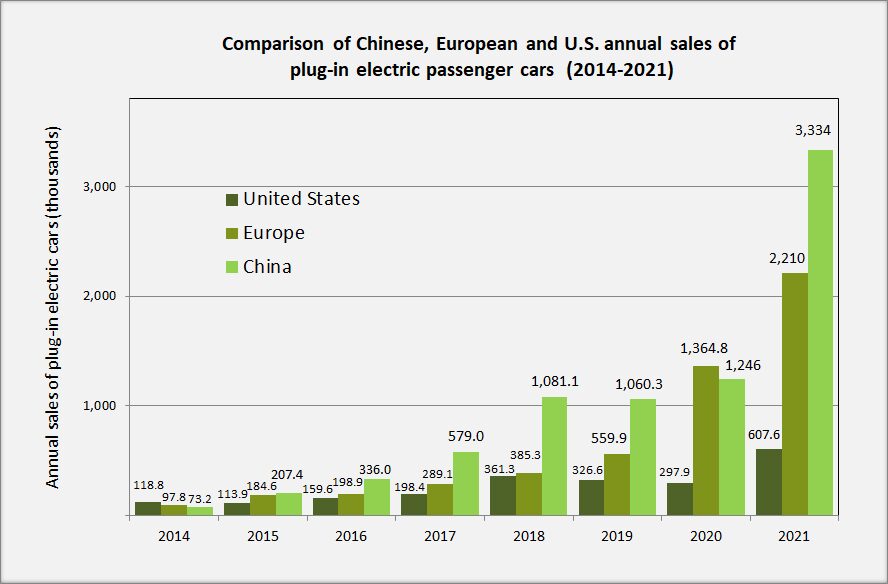
The International Energy Agency published its Global EV Outlook 2026 on May 20, and buried in the numbers is the figure that should concern anyone selling gasoline for a living: the world's electric cars, buses, vans and trucks avoided burning roughly 1.7 million barrels of oil per day in 2025. That is not a forecast. That is oil demand that already did not show up at the pump last year. China accounted for about a million barrels a day of it on its own.
For context, 1.7 million barrels a day is more than the daily crude output of a mid-sized OPEC producer. It is the kind of volume that used to move markets when a pipeline went down. Now it is quietly missing from the demand side, and the IEA expects the hole to keep widening.
What the report actually found
Global EV sales topped 20 million units in 2025, which works out to roughly one in four new cars sold worldwide. The IEA projects about 23 million sales in 2026, or 28 percent of the market. Production climbed too, to nearly 22 million electric cars, up about 25 percent year over year.
The oil displacement number is the one that matters for this beat. The agency puts avoided oil consumption from the EV fleet at around 1.7 mb/d for 2025 and says that on current trends the figure reaches roughly 5 mb/d by 2030. Electric two- and three-wheelers and buses, heavily concentrated in Asia, do a lot of the early work here because they run so many hours a day and displace some of the least efficient combustion engines on the road.
China is the story
Strip out China and the picture changes completely. Chinese drivers bought electric for nearly 55 percent of new car purchases in 2025. Chinese factories built close to 75 percent of the world's electric cars and supplied about 60 percent of global EV sales. And China alone displaced about 1 mb/d of oil demand last year, a number the IEA sees rising to 2.7 mb/d by the end of the decade.
That concentration is why the displacement is real and durable rather than a policy artifact that could vanish with the next election. China's EV adoption is being driven by price. Domestic models undercut gasoline equivalents outright, and the charging network is dense enough that range anxiety has stopped being the deciding factor for most urban buyers. When the cheaper option is also the electric one, the oil demand does not come back.
The United States is going the other way
The American market is the outlier, and not in a flattering direction. EVs held at just under 10 percent of U.S. car sales in 2025. Worse for the technology's momentum here, new EV sales in the last quarter of the year ran about 45 percent below the same quarter of 2024, according to reporting on the IEA data by Rest of World.
The reasons are policy, not physics. The federal EV purchase tax credit expired after September 2025. The Trump administration used an executive order to scrap the 2032 electrification target, and the One Big Beautiful Bill Act stripped out the penalties automakers faced for missing fuel-economy standards. A proposed annual fee on EV owners is on the table. Add a 100 percent tariff wall that keeps cheap Chinese models out entirely, and the U.S. is left with a lineup where more than 85 percent of available EVs are SUVs or large vehicles, the highest such share of any major market. Big electric vehicles are expensive electric vehicles, and without subsidies the math stops working for a lot of buyers.
So the American gasoline market gets a reprieve that most of the rest of the world does not. For domestic refiners and marketers, that is a genuine tailwind. But it is a national exception to a global trend, and it does nothing to bring back the barrels China is already not burning.
What it means for oil demand
The oil industry has long argued that EVs displace only the marginal barrel and that petrochemicals, aviation and heavy freight keep crude demand growing regardless. That case still holds for now. But road fuel is the biggest single slice of oil demand, and 1.7 mb/d is no longer a rounding error. If the IEA's 5 mb/d figure for 2030 lands anywhere close, it becomes a structural drag that grows every year the global fleet turns over.
There is a real risk baked in for producers here. Every new electric car that replaces a gasoline one removes barrels of demand for the fifteen-plus years that vehicle stays on the road. That is not demand you win back with a price cut. It is gone. The displacement compounds as the installed base grows, which is exactly why the annual figure keeps climbing even in years when new-sales growth cools.
The bottom line
Read past the sales records and the Global EV Outlook 2026 is a demand-destruction report. A million-plus barrels a day are already gone, most of it in China, and the trajectory points up. The United States is buying the oil industry time by slowing its own transition, but time is all it is. For anyone whose business depends on gasoline demand, the number to watch is not next quarter's EV sales figure. It is the barrels-per-day of displacement, and that meter only runs one direction.
Sources
https://www.iea.org/reports/global-ev-outlook-2026/executive-summaryhttps://www.iea.org/reports/global-ev-outlook-2026https://restofworld.org/2026/iea-global-ev-outlook-us-sales-drop/https://www.iea.org/reports/global-ev-outlook-2026/trends-in-electric-carshttps://www.downtoearth.org.in/air/electric-vehicle-sales-projected-to-reach-23-million-globally-in-2026-iea-report