Henry Hub and the Peculiar Physics of the American Gas Price
US natural gas swings harder than oil and occasionally sells for less than nothing in West Texas, and the reason comes down to a single Louisiana junction, a stranded glut of associated gas, and a molecule that hates being stored.

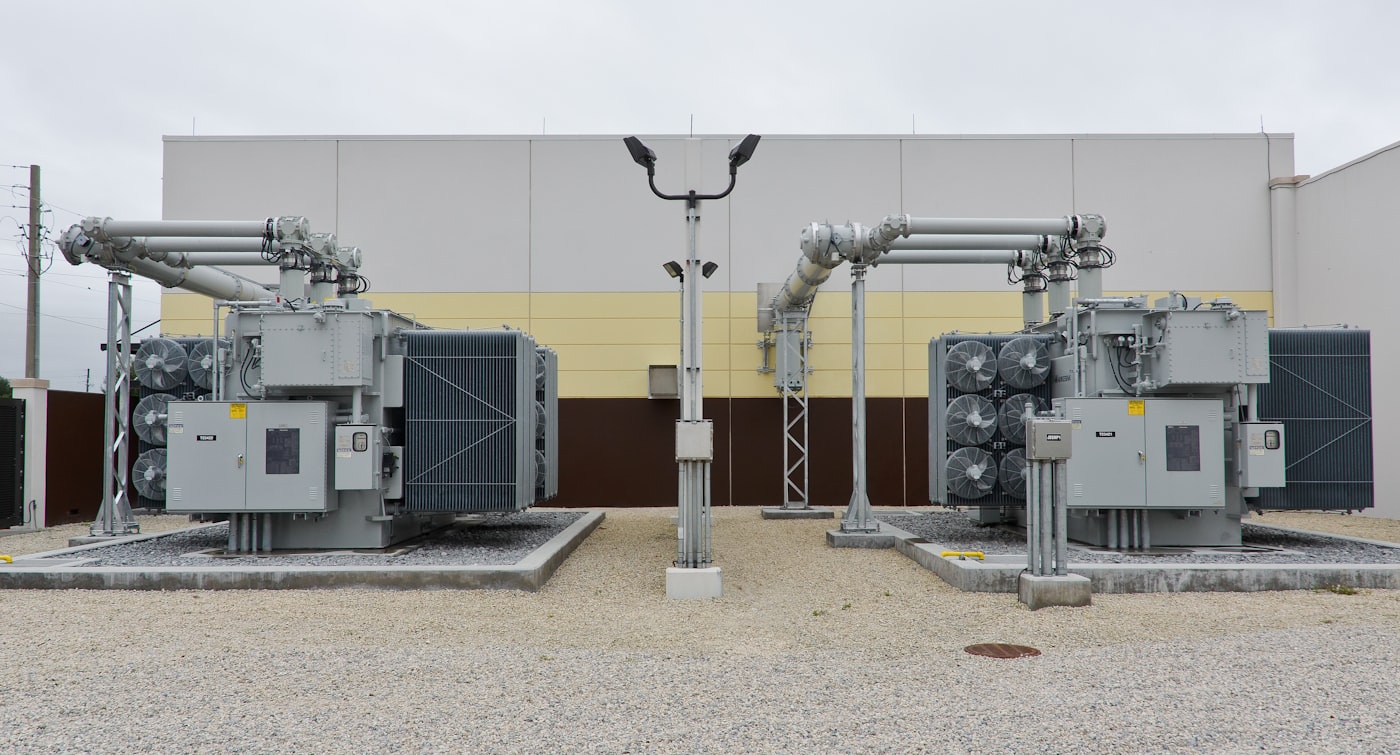
In April of last year, producers in West Texas were paying people to take their natural gas. Not metaphorically. Spot prices at the Waha hub, the reference point for the Permian Basin, averaged roughly negative $5.66 per MMBtu for the month, which means a driller with gas coming out of the ground had to hand over cash to whoever would haul it away. This March, Waha printed negative for 25 straight days. Nothing like that happens to crude. You will never see a barrel of West Texas Intermediate trade at minus five dollars for a month at a stretch except in the freak collapse of April 2020, and even that was a one-day settlement artifact. Gas does it on a schedule. The reason is not economics gone mad. It is the physics of the molecule, and the map of the pipes.
Why one junction in Louisiana runs the whole market
The American gas price starts at a place most Americans have never heard of: Erath, Louisiana, a dot on the Gulf Coast where Sabine Pipe Line runs a facility called the Henry Hub. It is owned today by a subsidiary of EnLink Midstream, which bought it from Chevron in 2014. Physically it is unremarkable, two compressor stations and about 1.8 billion cubic feet a day of throughput. What makes it the benchmark is connectivity. Henry Hub interconnects with nine interstate pipelines and four intrastate ones, including big trunk lines like Transcontinental, Gulf South, and Columbia Gulf. That density of interconnection is the whole point. Gas arriving at Henry can move in a lot of directions, which means a price set there reflects something close to a real regional clearing price rather than a local quirk.
The CME (formerly NYMEX) launched its natural gas futures contract at Henry Hub in April 1990, and physical delivery of that contract still happens there. Because unregulated wellhead prices across North America track closely to Henry, the hub became the number everyone quotes. It now anchors far more than the domestic market. US LNG export contracts are routinely priced as a formula off Henry Hub, so a junction in Cajun country has become a reference for cargoes landing in Rotterdam and Tokyo. One hub, one liquid futures market, one number the whole continent hedges against.
The molecule that refuses to sit still
Here is the difference that drives everything else. Crude oil is easy to hold and easy to move. You can put it in a steel tank, a salt cavern, a rail car, a truck, a barge, or a supertanker, and it will wait for you. If the price is bad today, you store it and sell it next month. Oil is, in effect, storable money.
Natural gas is not. At ambient conditions it is a diffuse gas, so to store or ship it you either keep it under pressure in specialized underground formations such as depleted reservoirs, aquifers, and salt caverns, or you chill it to liquid at minus 161 degrees Celsius and hold it in cryogenic tanks. Both are expensive, capacity-limited, and geographically fixed. You cannot conjure a new salt cavern in West Texas in a bad week. So when gas comes out of the ground and there is no pipe with room and no cavern nearby, the producer has three options: flare it, increasingly restricted; shut in the oil well that is producing it, economically painful; or pay someone to take the gas. That last option is what a negative price is. It is the cost of disposal showing up on a screen.
Because gas cannot easily wait and cannot easily travel, its price is far more sensitive to the state of the pipe on any given day. Oil arbitrages away regional gaps because barrels flow to wherever pays best. Gas often physically cannot, so the gaps persist and sometimes blow wide open.
Waha, associated gas, and the trap in West Texas
The Permian is an oil basin. Nobody there is drilling for methane. But oil wells produce gas alongside the crude, so-called associated gas, and the operator does not get to decide how much. As long as oil is profitable, the associated gas keeps coming whether the gas price is five dollars or minus five. That is the crucial asymmetry: Permian gas supply is nearly price-insensitive on the downside because it is a byproduct of an oil decision.
Now stack the growth on top. Over the five years ending December 2025, Permian gas production grew at roughly a 15.9% compound annual rate, well ahead of the basin's 9.0% oil growth. The gas volumes have consistently outrun the pipes built to carry them east and south. When takeaway capacity fills up, especially during pipeline maintenance windows, that byproduct gas has nowhere to go and Waha collapses through zero. It is not an occasional accident. In 2024, Waha averaged about $0.17 per MMBtu for the whole year and traded at or below zero on a large share of days, with some counts putting negative pricing near 47% of trading days.
New steel helps, for a while. The Matterhorn Express Pipeline came online in September 2024 and drained some of the glut. But the underlying dynamic reasserts itself: production keeps growing with oil output, the new capacity fills, and the basin runs tight again into the next maintenance season or the next surge. Matterhorn narrowed the wound. It did not close it, which is why Waha was back underwater for weeks this spring.
Why the American gas map is a patchwork, not a pool
Waha is the loudest example of a general truth: US gas is not one price, it is dozens of regional prices stitched together by whatever pipeline capacity happens to exist. The EIA tracks how widely hubs diverge, and the pattern is consistent. Appalachian gas at Eastern Gas South trades at a discount to Henry Hub because the region produces far more than it consumes and the takeaway lines are full. New England's Algonquin Citygate does the opposite, spiking violently in winter because the region sits at the end of a constrained pipe and cannot pull in more molecules when a cold snap hits. Transco Zone 6 in New York shows the same peak-demand fragility. Southern California's SoCal Citygate has its own local logic tied to storage levels and solar generation.
Compare that to oil, which behaves as one roughly integrated global market with modest, transport-explained spreads between grades and locations. Gas cannot integrate the same way because moving it long distance means the full LNG chain: liquefaction at the source, cryogenic ships, regasification at the destination, all of it capital-intensive and slow to build. That is why global gas splits into distinct regional markets, with Asian LNG buyers often paying premiums to European prices, and why domestic US hubs can sit hundreds of miles apart with wildly different prints on the same afternoon.
What the swings are actually telling you
The lesson for anyone pricing risk in this market is to stop thinking of American gas as a single commodity with a single number. Henry Hub is the benchmark because its plumbing lets it clear a real regional price and because the futures market there is deep and liquid. It is not, however, the price a Permian producer receives, and the gap between the two, the basis, is where the money and the danger live. A producer hedged flat to Henry Hub who is actually selling at Waha discovered exactly that when the basis blew out past five dollars.
Gas swings harder than oil because it cannot be stored cheaply, cannot be moved freely, and in the Permian arrives whether anyone wants it or not. The negative prints are not the market breaking. They are the market working correctly on a molecule that refuses to wait for a better day. Until the pipes catch up with the oil-driven gas that keeps flowing out of West Texas, expect Waha to keep doing the thing crude never will, and expect Henry Hub to keep being the calm number that hides how fragmented the real picture is underneath.
Sources
https://en.wikipedia.org/wiki/Henry_Hubhttps://www.cmegroup.com/articles/whitepapers/henry-hub-natural-gas-futures-global-benchmark.htmlhttps://naturalgasintel.com/news/permian-natural-gas-prices-sink-deeper-into-negative-territory-amid-pipeline-constraints/https://www.vaneck.com/us/en/blogs/natural-resources/waha-no-longer-just-giving-natural-gas-away/https://pgjonline.com/news/2026/march/permian-pipeline-constraints-push-waha-gas-prices-negative-for-25th-straight-dayhttps://www.eia.gov/todayinenergy/detail.php?id=63504