Chokepoints: The Five Straits That Hold the Oil Market Hostage
Roughly a third of the world's seaborne oil squeezes through five narrow lanes, and the detours around them cost weeks, miles, and money every day.

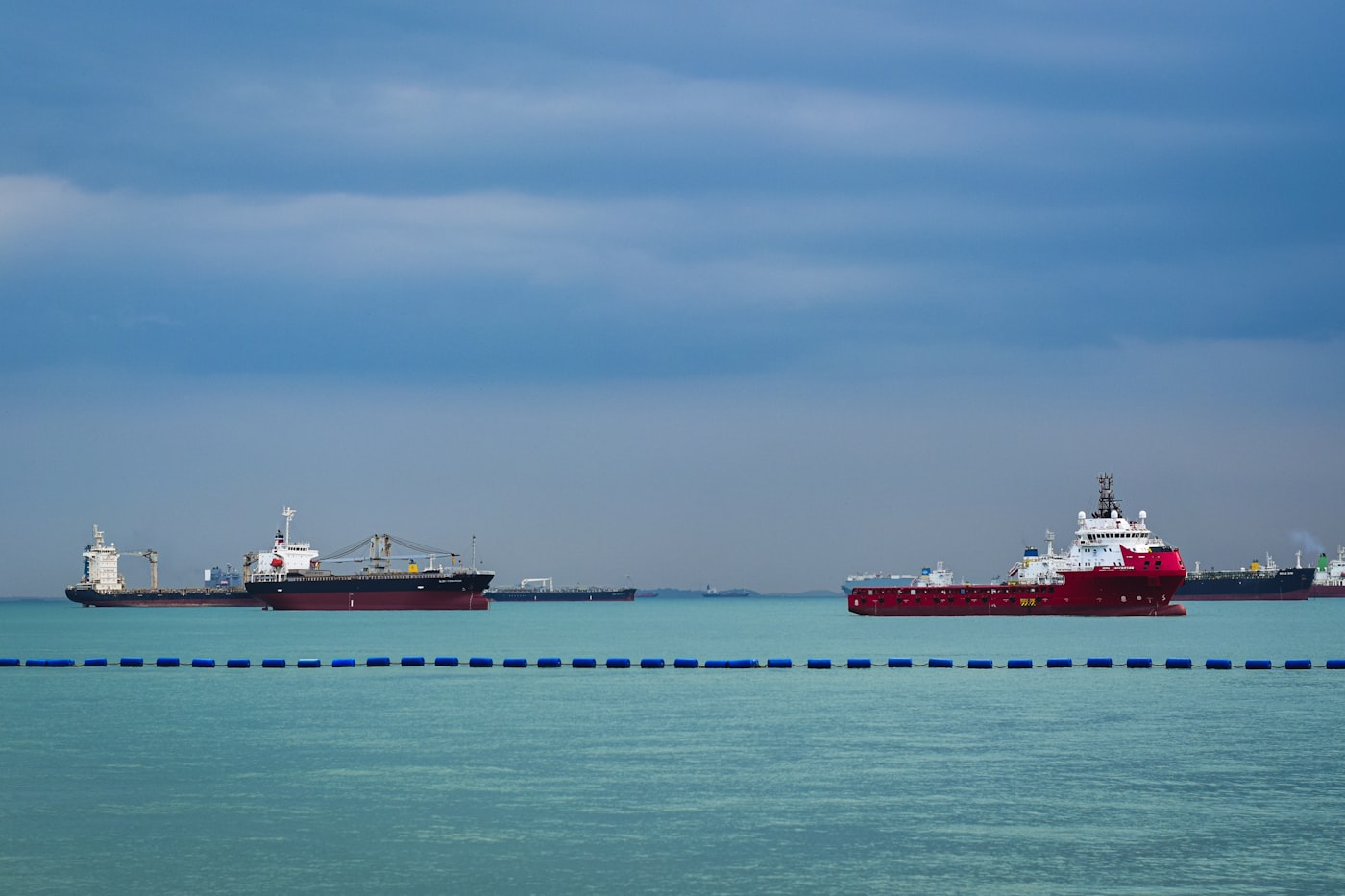
Look at a chart of global crude flows and the eye goes not to the open ocean but to five pinch points where the sea narrows to a few miles across. In the first half of 2025, the Strait of Malacca carried 23.2 million barrels a day and the Strait of Hormuz carried 20.9 million. Together those two lanes move more than half of all seaborne oil. Add Suez, Bab el-Mandeb, and the Turkish Straits and you have most of the tanker business on Earth funneling through water you could cross in an afternoon. That concentration is the whole story. It is also the whole vulnerability.
Hormuz: the one nobody can replace
The Strait of Hormuz is the chokepoint that keeps traders awake. In 1H25 it moved 20.9 million barrels a day, 14.7 million of that crude and condensate, the rest refined products, according to the U.S. Energy Information Administration. Every barrel Saudi Arabia, Iraq, Kuwait, Qatar, and the UAE sends to Asia by sea starts here. There is a partial escape hatch. Saudi and Emirati pipelines can route roughly 4.7 million barrels a day around the strait, and Iran's Goreh-Jask line adds about 0.3 million. Do the arithmetic and it is obvious: bypass capacity covers a quarter of the flow at best. Close Hormuz and no combination of pipelines makes up the difference. That is why a single missile scare in the Gulf moves Brent before anyone confirms a hull was hit.
Malacca: the biggest lane, the quietest headlines
Malacca carries more oil than Hormuz, 23.2 million barrels a day in 1H25, yet it rarely lands on the front page. The reason is demand geography. This is the door to China, Japan, and South Korea, so most of what crosses Hormuz crosses Malacca a few days later. The strait narrows to under two miles at its tightest near Singapore, and traffic is dense enough that piracy and grounding, not geopolitics, are the recurring worries. The theoretical detour is the Lombok or Sunda strait to the south, which adds days and cannot absorb the full volume. China has spent two decades building pipelines from Myanmar and Central Asia partly to shave its exposure here. It has not moved the needle much. The tankers still come through the front door.
Suez, SUMED, and the long way around Africa
Suez is where the map has already been rewritten. The canal and the parallel SUMED pipeline together moved 4.9 million barrels a day in 1H25, well down from the years before. The reason sits a few hundred miles south, at Bab el-Mandeb, and I will come to it. What matters here is the alternative. SUMED can push about 2.5 million barrels a day of crude across Egypt when the canal is congested or a tanker is too large to transit fully laden. Beyond that, the fallback is the Cape of Good Hope, and shippers have leaned on it hard. EIA data show Cape of Good Hope volumes reaching 9.1 million barrels a day in 1H25, a figure that would have looked absurd before late 2023. A Persian Gulf cargo bound for Rotterdam runs about 19 days through Suez and nearly 35 around Africa. That gap is the tax the market has been paying.
Bab el-Mandeb: the strait that broke the pattern
Bab el-Mandeb is only 4.2 million barrels a day, small next to Hormuz or Malacca. It punches far above that weight because it is the southern gate to the Red Sea and therefore to Suez. When Houthi forces began attacking ships in the strait after November 2023, the response was not a slow adjustment. It was a stampede to the Cape. EIA reported crude flows through Bab el-Mandeb fell about 18 percent in December 2023 alone, with clean product volumes down roughly 30 percent and global LNG trade off 24 percent versus the rest of that year. Clean tanker rates across the Red Sea jumped about 20 percent month over month, with the India-to-UK long-range trade up 23 percent.
The deeper cost is in ton-miles, the metric that actually drives a tanker's earnings. Kpler's analysis of the disruption laid it out plainly: sending Yanbu crude around Africa instead of through the Red Sea nearly triples ton-miles, stretching a Yanbu-to-South-Korea run from 24 days to 54. As of March 2026, Kpler noted at least 60 percent of the affected UK and Continent volumes bound for markets east of Suez were still taking the long route. More ton-miles with the same fleet means fewer available ships, and that is why Suezmaxes and Atlantic VLCCs firmed even as the physical barrel count barely changed.
A strait that carries four million barrels a day rewrote freight economics for the whole Atlantic basin. Volume is not the only thing that measures a chokepoint's power.
The Turkish Straits: narrow, crowded, and Russian
The Bosphorus and Dardanelles moved 3.7 million barrels a day in 1H25, most of it crude and product leaving the Black Sea. The Bosphorus is the tightest of them all, under a kilometer across at points, threading through the middle of Istanbul. There is no pipeline that fully substitutes for it and no southern detour at all; the Black Sea has one maritime exit and this is it. Weather closures and tanker inspection backlogs routinely stack ships for days. Since 2022 the added wrinkle is cargo origin. A large share of what transits now is Russian crude rerouted toward buyers in Asia, which layers insurance and sanctions checks onto an already congested passage. Congestion here does not spike Brent the way a Hormuz threat does, but it quietly raises the cost of moving Black Sea barrels every week.
What the five lanes teach
The chokepoints do not fail the way people imagine, with a strait slammed shut and prices doubling overnight. They fail at the margins. A reroute adds 6,000 to 11,000 nautical miles and 10 to 14 days, and that time comes straight out of fleet capacity. Bab el-Mandeb proved the mechanism: a modest lane, disrupted, dragged a fifth of the world's tanker economics the long way around Africa and kept it there for more than two years. Hormuz remains the one that could actually break the market, because no set of pipelines covers even a third of its flow. The rest are pressure valves that leak cost slowly rather than blowing all at once. For anyone trading the physical barrel, the lesson is the same one the charts have shown all along. The oil is not stranded by distance. It is held hostage by geography, and the ransom is paid in miles.
Sources
https://www.eia.gov/international/content/analysis/special_topics/World_Oil_Transit_Chokepointshttps://www.eia.gov/todayinenergy/detail.php?id=61363https://www.eia.gov/todayinenergy/detail.php?id=18991https://www.kpler.com/blog/growing-houthi-risk-could-amplify-inefficiencies-across-tanker-trade-flowshttps://www.visualcapitalist.com/mapped-the-worlds-oil-chokepoints/