Why Refiners Don't Want Too Much Condensate: The Naphtha Glut Problem
Ultra-light condensate is cheap crude that yields the wrong barrel, which is why it ends up in dedicated splitters, petrochemical crackers, and Alberta's bitumen instead of a conventional refinery's crude unit.

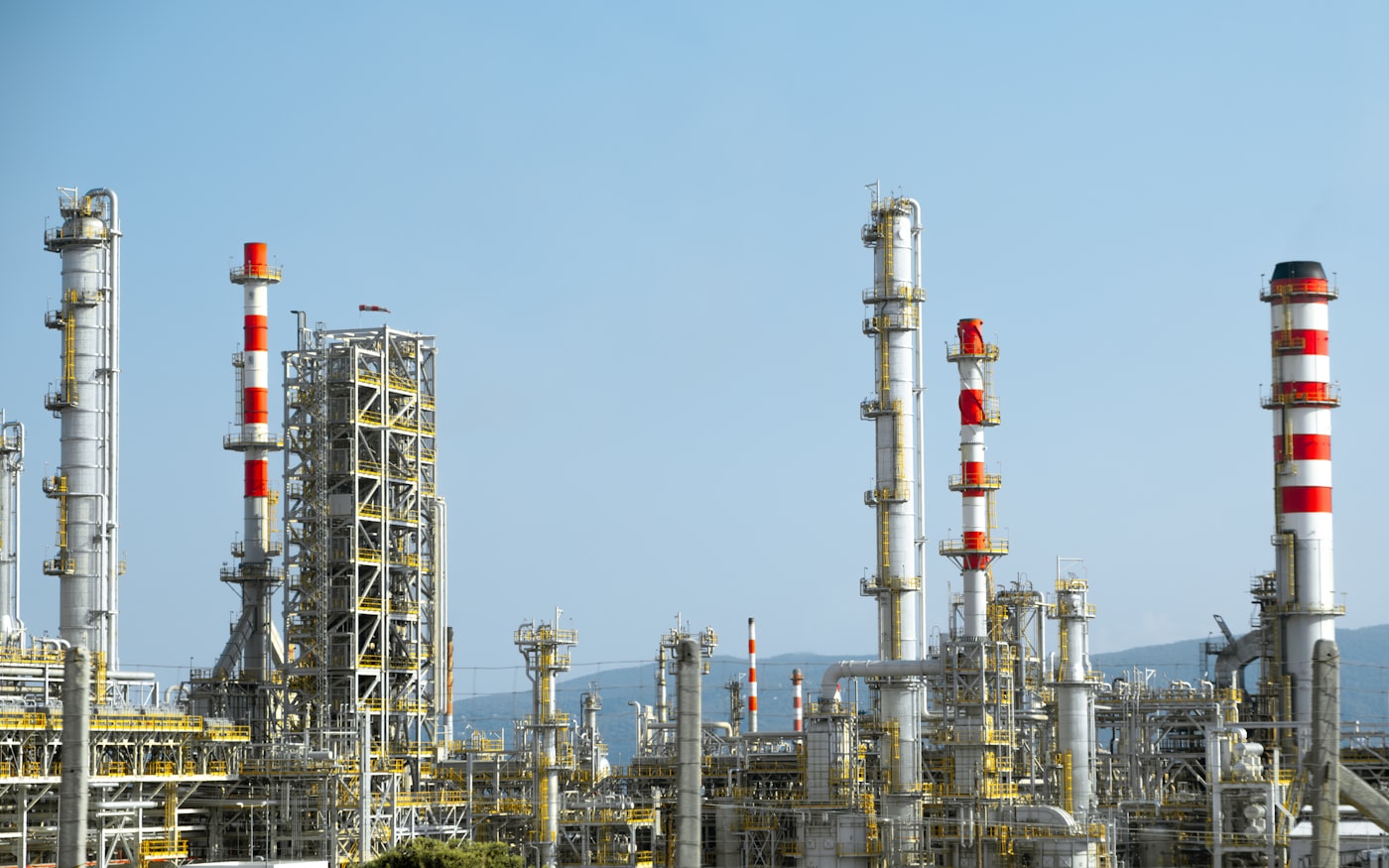
Ask a refinery scheduler what happens when you push condensate past about 20 percent of the crude slate and the answer gets specific fast: the overhead systems flood, the heat input to the bottom of the tower goes short, and the whole unit loses the flexibility it was built for. OPEC drew the line at 50 degrees API to separate light crude from condensate for quota purposes, and that number tells you most of what you need to know. Condensate is barely a crude at all. It is a barrel that boils away into gasoline-range molecules before a conventional refinery gets a chance to make money on it.
That is the core of the naphtha glut problem, and it explains why a stream that looks like a bargain at the wellhead is a headache in the crude unit.
The barrel comes out the wrong end of the tower
A refinery makes its margin on the middle of the barrel: diesel, jet, and gasoline. Condensate does not give you much of that. A typical condensate distillation breaks down to roughly 65 percent naphtha, about 30 percent middle distillates, and around 5 percent LPG. Run a medium sour like Dubai through the same tower and you get a very different split, with the light components closer to 57 percent and the rest heavier material that a coker or hydrocracker can upgrade into distillate.
The condensate cut is the opposite problem. There is almost nothing heavy to upgrade and far too much light naphtha to place. Industry analysis has described condensate bluntly as having too much light material and too little heavy fuel oil. That is not a flaw you can catalyst your way out of. It comes from where the stuff is born: condensate drops out of gas reservoirs, so it is skewed toward light ends before it ever sees a pipe.
Why you can't just feed it to a complex refinery
A high-conversion refinery is a machine tuned for a heavier diet. Its cokers, hydrocrackers, and FCC units exist to break big molecules into gasoline and diesel. Feed those units a barrel that is already two-thirds naphtha and you starve them. The expensive conversion capacity sits underused while the front-end distillation tower gets overwhelmed by light vapor it was never sized to handle.
That is why condensate typically goes into a conventional refinery only as a blend component, on the order of 10 to 20 percent of feed. Push higher and, as one Oil and Gas Journal analysis put it, you overload the overhead systems and end up with inadequate heat input at the base of the tower. You also tie up tankage and lose slate flexibility. The refiner is paying for a cathedral of conversion units and asking them to process a feed that barely needs them.
The case for a dumb tower
The answer the industry landed on is deliberately unsophisticated: the condensate splitter. A splitter is essentially a standalone atmospheric distillation unit, the same first step used in nearly every refinery, with light treating bolted on. No coker, no hydrocracker, no FCC. It costs a fraction of a full conversion refinery, which runs into the billions. You are buying a tower, not a plant.
The economics rest on two legs. The first is the raw-material discount. Condensate has historically priced below regular crude, so a splitter that buys cheap light feed and sells the cuts can capture that spread without carrying the capital of a complex refinery. The second leg is the catch: a standalone splitter has almost no flexibility in feedstock or product mix. Splitters along the US Gulf Coast run more than 60 percent of their output out as naphtha. That means the whole model lives or dies on one question.
Who buys all that naphtha
The splitter's fate is tied to naphtha demand, and naphtha does not clear in the transport-fuel market the way diesel or jet does. It clears in two other places.
The first is petrochemicals. Naphtha is the dominant steam-cracker feedstock in Asia and Europe, where crackers turn it into ethylene and the aromatics chain. That is the natural home for splitter naphtha. The problem is that the US Gulf Coast, where a lot of splitter capacity got built, is ethane country. Gulf crackers run cheap ethane out of shale gas and enjoy a structural cost edge estimated in the range of a couple hundred dollars a ton over naphtha-based crackers abroad. So Gulf splitter naphtha often has to find a home overseas rather than next door, and its value is set by petrochemical margins in another hemisphere.
The second outlet is diluent for heavy crude. Canadian oil sands bitumen is too thick to move by pipeline on its own, so it gets cut with a light hydrocarbon, usually condensate, into a blend called dilbit that runs roughly 70 percent bitumen to 30 percent diluent. That demand is large and it has outrun local Canadian supply. US diluent shipments north exceeded 150,000 barrels a day in 2013 and were projected to climb toward 460,000 barrels a day by 2018, before Western Canadian production and new intra-Alberta pipelines began filling more of the gap. Either way, the point stands: a big slice of North American condensate never becomes fuel. It becomes the thinner that lets bitumen flow.
What it means for the margin
Put the pieces together and the naphtha glut problem is really a placement problem. Condensate is cheap because it yields a barrel the transport-fuel system does not want much of, and rich in a cut whose value is set by petrochemical crackers in Asia and by bitumen blenders in Alberta rather than by the diesel and gasoline crack spreads that drive a normal refinery.
For a refiner, the discipline is straightforward. Treat condensate as a blend component inside its 10-to-20 percent comfort band and it can lift the light end of the slate cheaply. Build a standalone splitter and you have made a leveraged bet on naphtha demand, not a diversified refinery. When petrochemical margins are strong and Canadian diluent is short, splitters print money. When naphtha backs up, the same simplicity that made them cheap to build leaves them with nowhere to send the barrel. Too much condensate is not a supply gift. It is a bet on someone else's cracker.
Sources
https://www.ogj.com/general-interest/companies/article/17228457/special-report-middle-east-condensate-production-will-complicate-refining-operationshttps://rbnenergy.com/daily-posts/blog/market-us-gulf-naphtha-condensate-splittershttps://rbnenergy.com/daily-posts/blog/growing-need-diluent-albertas-oil-sandshttps://www.oilsandsmagazine.com/news/2022/5/6/crude-products-diluted-bitumen-dilbit-synthetic-crude-scohttps://ibinterviewquestions.com/guides/energy-investment-banking/petrochemicals-ethylene-cracker-economics-ethanehttps://en.wikipedia.org/wiki/Dilbit