Aramco Starts Up Jafurah, the Kingdom's Giant Unconventional Gas Play
Saudi Aramco has begun output from the first phase of Jafurah, the largest non-associated gas development the kingdom has ever attempted.

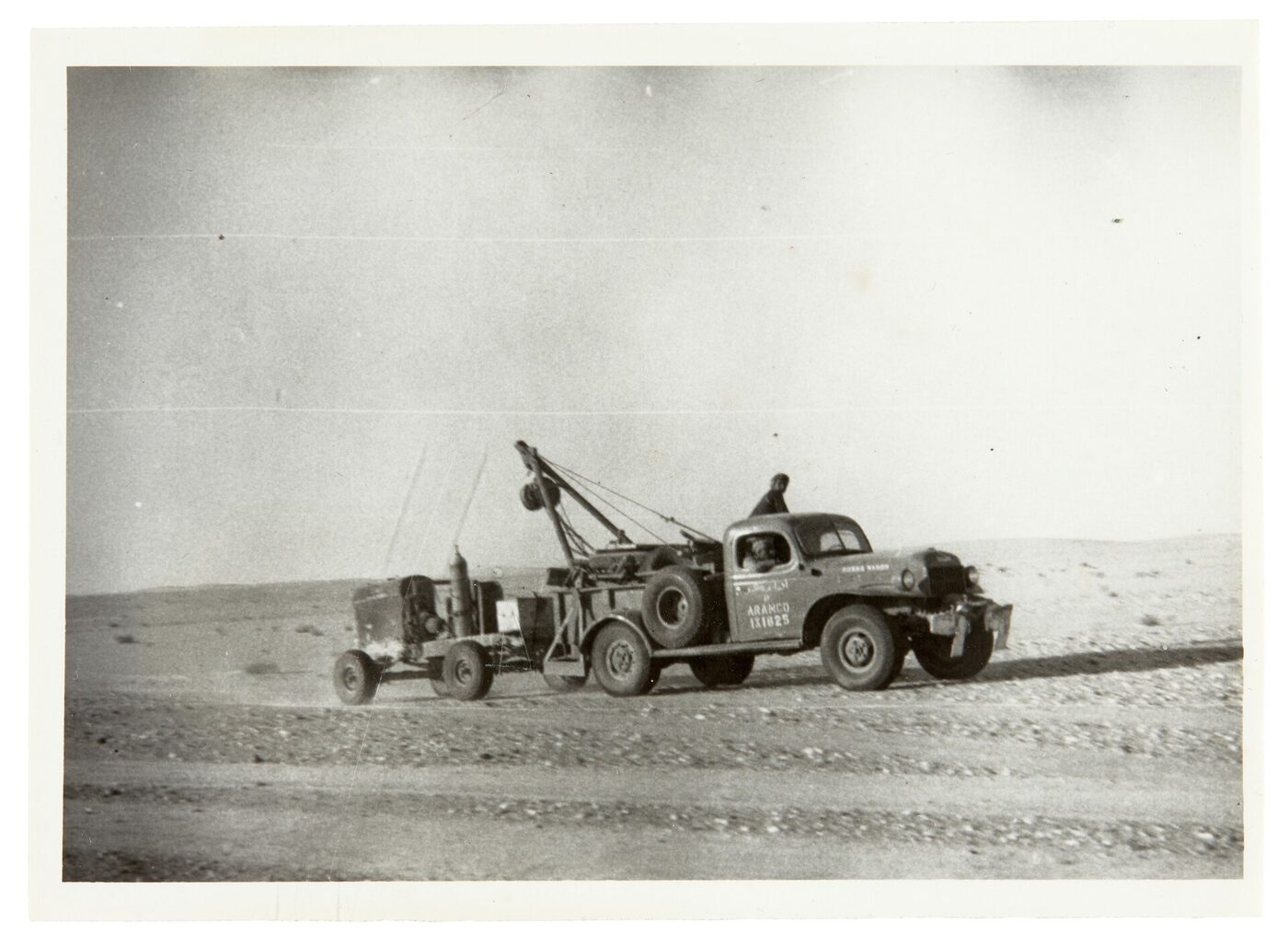
Saudi Aramco has turned on the first phase of its Jafurah gas plant, starting production from the biggest unconventional gas field the kingdom has ever drilled. Saudi Arabia's finance ministry disclosed the milestone this week in its 2026 budget statement, listing the plant's completion among the government's achievements for 2025. The first phase is running at roughly 450 million cubic feet a day of gas. That is a small number against what Jafurah is meant to become, but it marks the moment Saudi Arabia moved from talking about shale to actually selling it.
For a company that built its name on oil, this is a different kind of project. Jafurah is non-associated gas, which means the gas is the point, not a byproduct of pumping crude. It is also unconventional, sourced from tight rock that has to be fractured to flow. Outside the United States, nothing else at this scale is producing. Aramco chief executive Amin Nasser has called Jafurah a "crown jewel" of the company's portfolio, and on the last earnings call he said the first phase was on track for a year-end start. It made the deadline.
What actually came online
The number to anchor on is 450 million cubic feet per day. That is the initial sales-gas capacity of the phase that just started. The target Aramco keeps repeating is about 2 billion cubic feet per day of sustainable production by 2030, alongside 420 million cubic feet a day of ethane and roughly 630,000 barrels a day of condensate and natural gas liquids. Add it up and the field is designed to deliver on the order of 6 million barrels of oil equivalent a day in gas and associated liquids once it is fully built out.
Getting from 450 million to 2 billion cubic feet a day in five years is the whole challenge. Tight-gas fields decline fast per well, so you keep production flat by drilling constantly. Aramco will need a lot of rigs, a lot of hydraulic fracturing, and a lot of water handling in a place that does not have spare water. The company has spent years staging this, and the first-phase startup is the proof that the surface plant, the wells, and the processing all line up. The plant that just started is the front end of a build-out that runs well into the next decade.
The field itself
Jafurah sits in the Eastern Province and covers about 17,000 square kilometers. Aramco puts the raw gas in place at 229 trillion standard cubic feet, with an estimated 75 billion barrels of condensate. Those are large figures by any measure, and they are why the company describes Jafurah as the largest liquids-rich unconventional gas development in the Middle East.
The word "liquids-rich" matters. Dry-gas shale is a low-margin business almost everywhere. Jafurah's gas comes with condensate and NGLs that sell at oil-linked prices and feed petrochemicals, which changes the economics. Ethane in particular is feedstock for the kingdom's plastics industry. The gas keeps power plants and industry running; the liquids help pay for it.
Why this is really about oil
Here is the part that gets underplayed. Saudi Arabia still burns a large volume of its own crude and oil products to generate electricity and run desalination, especially in the summer. Every cubic foot of gas that displaces that burned oil is a barrel Aramco can sell abroad instead. The company has said that at peak unconventional gas production the program could displace the equivalent of around 500,000 barrels a day of domestic fuel use, freeing those barrels for export.
That is the strategic logic. Jafurah is a gas project on paper and a crude-export project in practice. It also underpins Aramco's push to lift its overall sales-gas production capacity by about 80 percent by 2030 against 2021 levels. Gas is the growth story now; oil capacity was already capped by government order at 12 million barrels a day.
The money
Jafurah is a roughly $100 billion program across its full development, one of the largest single energy investments anywhere. Aramco is not carrying all of that on its own balance sheet. In 2025 it raised about $11 billion through a lease-and-leaseback deal with a consortium led by Global Infrastructure Partners, the BlackRock-owned infrastructure investor, using the Jafurah gas processing facilities as the asset. Aramco keeps operating control and books the deal as financing rather than a sale.
The company has pointed to incremental cash flow from the gas growth program of roughly $12 billion to $15 billion a year by 2030, subject to market conditions. That is the return it is underwriting, and it is why the financing structures matter. Spreading the capital cost across outside investors lets Aramco fund the drilling treadmill without starving its dividend, which the Saudi state depends on.
What to watch next
Startup is the easy headline. The hard part is the ramp. Between now and 2030, watch the rig count at Jafurah, the pace of the next development phases, and whether Aramco holds its cost per well as it scales fracturing across the field. American shale operators spent a decade learning to do this efficiently; Aramco is compressing that learning curve and doing it in a harsher operating environment.
Also watch Tanajib. Aramco started up its Tanajib gas plant in the same window, which processes associated gas from the offshore Marjan and Zuluf fields and is expected to reach 2.6 billion cubic feet a day of raw-gas capacity in 2026. Jafurah gets the attention because it is unconventional and enormous, but the two projects together are what move the kingdom's gas numbers.
For now, the fact stands on its own. Saudi Arabia is producing shale gas at commercial scale, something only the United States could claim before. The first 450 million cubic feet a day is modest. The intent behind it is not.
Sources
https://english.alarabiya.net/News/saudi-arabia/2025/12/02/aramco-s-jafurah-gas-plant-begins-outputhttps://www.worldoil.com/news/2025/12/3/aramco-begins-gas-production-at-jafurah-world-s-largest-shale-project-outside-u-s/https://www.agbi.com/oil-and-gas/2025/12/aramcos-jafurah-gas-plant-begins-output/https://worldoil.com/news/2026/2/26/aramco-starts-up-jafurah-eyes-80-gas-capacity-growth-by-2030/https://www.aramco.com/en/news-media/news/2026/aramcos-gas-strategy-builds-momentum-with-major-progress-towards-growth-target