USS Gerald R. Ford Redirected From Mediterranean Toward Venezuela
Hegseth has ordered the Navy's largest carrier out of the Mediterranean and into the Caribbean, the biggest American military concentration off Venezuela in three decades.

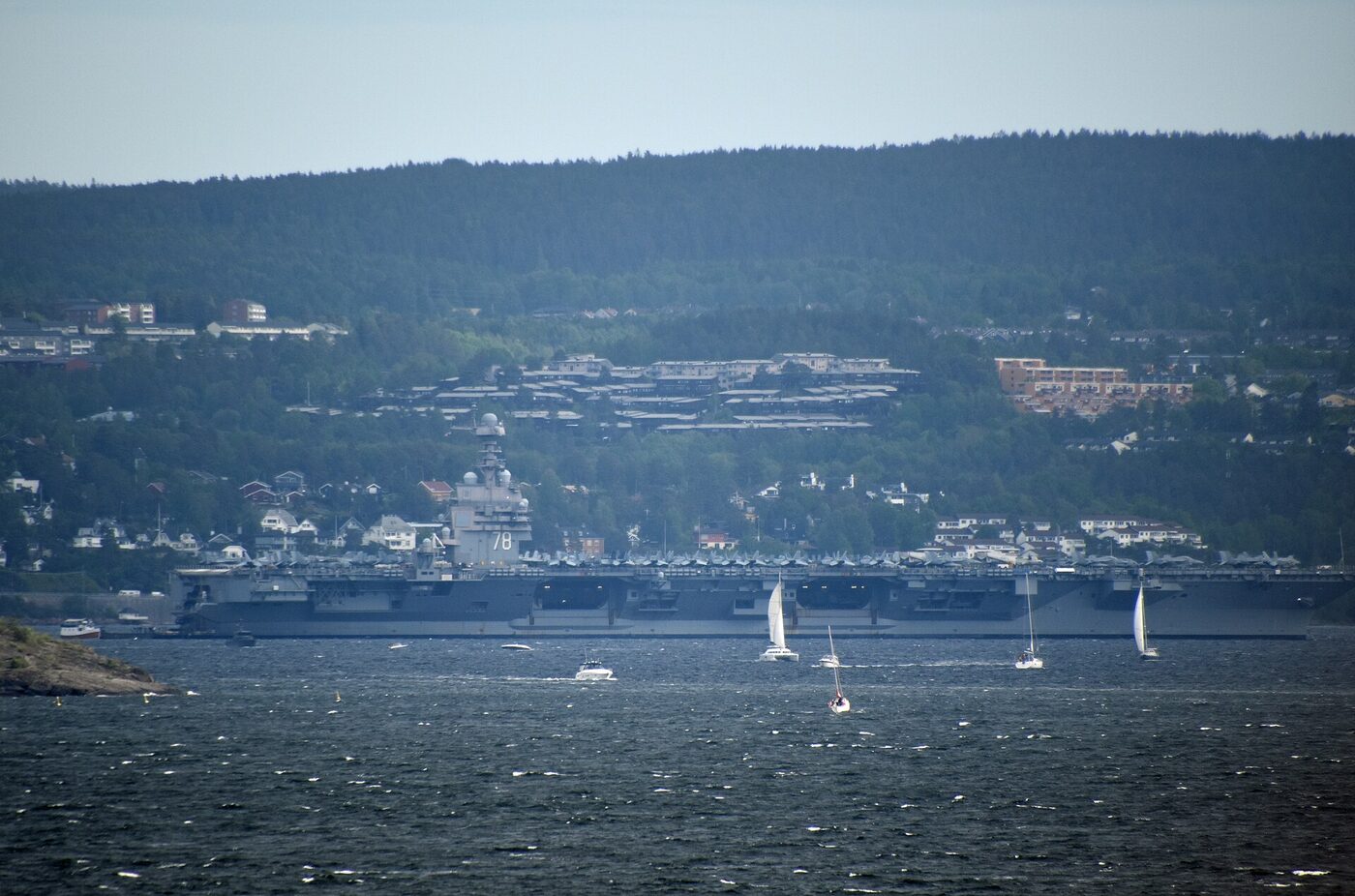
Defense Secretary Pete Hegseth on Friday ordered the USS Gerald R. Ford, the largest warship the United States operates, to break off its Mediterranean deployment and steam toward the Caribbean. The carrier was sitting in port in Croatia, on the Adriatic, when the order came down. Now it and its strike group are pointed at the waters off Venezuela, where American forces have spent the past seven weeks blowing up boats the administration says are hauling drugs.
This is not a small adjustment. The Ford brings roughly 4,500 sailors, nine aircraft squadrons and five destroyers. It joins a force that was already unusually large for the region: eight warships, P-8 maritime patrol planes, MQ-9 Reaper drones, an F-35 fighter squadron and more than 6,000 sailors and Marines. Add the carrier group and the Pentagon will have assembled the heaviest concentration of American firepower in the Caribbean since the early 1990s.
What the order actually does
Pentagon spokesman Sean Parnell framed the move in the same language the department has used since the summer. The added presence, he said, will "bolster U.S. capacity to detect, monitor, and disrupt illicit actors" and "enhance and augment existing capabilities to disrupt narcotics trafficking." That is the official mission: counter-narcotics, aimed at what the administration calls transnational criminal organizations.
A carrier is a strange tool for chasing drug runners. Fast boats and low-slung go-fasts do not require nine squadrons of naval aviation to find. What the Ford provides is reach and options. Its air wing can hold targets across northern Venezuela at risk, fly persistent patrols and give commanders the ability to strike ashore if a president decides to. You do not send the Ford to interdict cocaine. You send it to change the calculus of a government.
The boat strikes that set the stage
Since the first strike on September 1, the U.S. military has hit boats it identifies as trafficking vessels in the Southern Command area. As of this week there had been at least 10 known strikes and at least 43 people killed. The Pentagon has released grainy video of several of the hits and asserted, without publishing the underlying intelligence, that the targets were carrying narcotics and were tied to designated criminal groups.
That mechanism is the part that deserves scrutiny. These are not boardings, seizures or arrests. They are lethal strikes on vessels in international and regional waters, carried out on the government's own say-so about who is aboard and what they are doing. Lawmakers from both parties have asked for the legal basis and the evidence. So far the administration has offered assertions and short clips, not the standard it would need to meet in any court.
Why the Caribbean, and why now
The carrier order lands in the middle of a broader pressure campaign against Nicolas Maduro. Trump has tightened sanctions enforcement, kept bombers and submarines moving near Venezuela, and repeatedly signaled that Maduro's continued rule is the real target. Maduro, for his part, has accused Washington of engineering regime change and has staged mobilizations of Venezuela's militia in response.
Moving the Ford makes the pressure physical. A carrier off your coast is a message every navy in the world understands. It says the option to escalate is now within a few hours' flying time rather than an ocean away. Whether the administration intends to use that option or simply wants Maduro to believe it might, the effect is the same: the threshold for a larger conflict just dropped.
What it costs elsewhere
Carriers are finite. The Ford was in the Mediterranean for a reason, and pulling it means whatever it was covering there is now uncovered or covered by something smaller. Sending the fleet's newest and most capable carrier to hunt drug boats and lean on Caracas is a real bet with the rest of the map, from the eastern Mediterranean to any crisis that flares while the ship is tied up in the Caribbean. The Navy has been stretched for years. Every deployment of this size is a choice about what not to do somewhere else.
There is also the matter of the crew. The 22nd Marine Expeditionary Unit and thousands of sailors were already working the region hard. A carrier deployment that was supposed to wind down in Europe now extends, with a new and open-ended mission attached to it.
What to watch next
The Ford will take days to reach the Caribbean, so the immediate change is signaling, not capability. The questions that matter come after it arrives. Does the administration publish any legal justification for the boat strikes, or does it keep operating on assertion alone? Do the strikes stay confined to vessels at sea, or does the presence of an air wing lead to targets on Venezuelan soil? And does Congress do anything beyond writing letters?
For now the facts are plain. The largest carrier in the fleet is heading to Venezuela's doorstep, joining a force built up quietly since August, on the back of a strike campaign that has already killed dozens of people the public cannot independently identify. The administration calls it counter-narcotics. The hardware says something bigger is on the table.
Sources
https://www.stripes.com/branches/navy/2025-10-24/aircraft-carrier-ford-deploy-latin-america-19531254.htmlhttps://www.npr.org/2025/11/12/nx-s1-5606005/uss-gerald-r-ford-heads-to-caribbean-amid-major-u-s-military-buildup-near-venezuelahttps://www.defensenews.com/news/your-military/2025/11/16/us-aircraft-carrier-arrives-in-the-caribbean-in-buildup-near-venezuela/https://en.wikipedia.org/wiki/2025_United_States_strikes_on_Venezuelan_boatshttps://www.cbsnews.com/news/uss-gerald-ford-aircraft-carrier-arrives-caribbean-buildup-venezuela/