ULSD and the 15-ppm Sulfur Cliff That Rebuilt Global Diesel
The move to ultra-low-sulfur diesel forced refiners into a decade of hydrotreating and hydrogen spending that still decides which crudes they can afford to run and where the dirty barrels go.

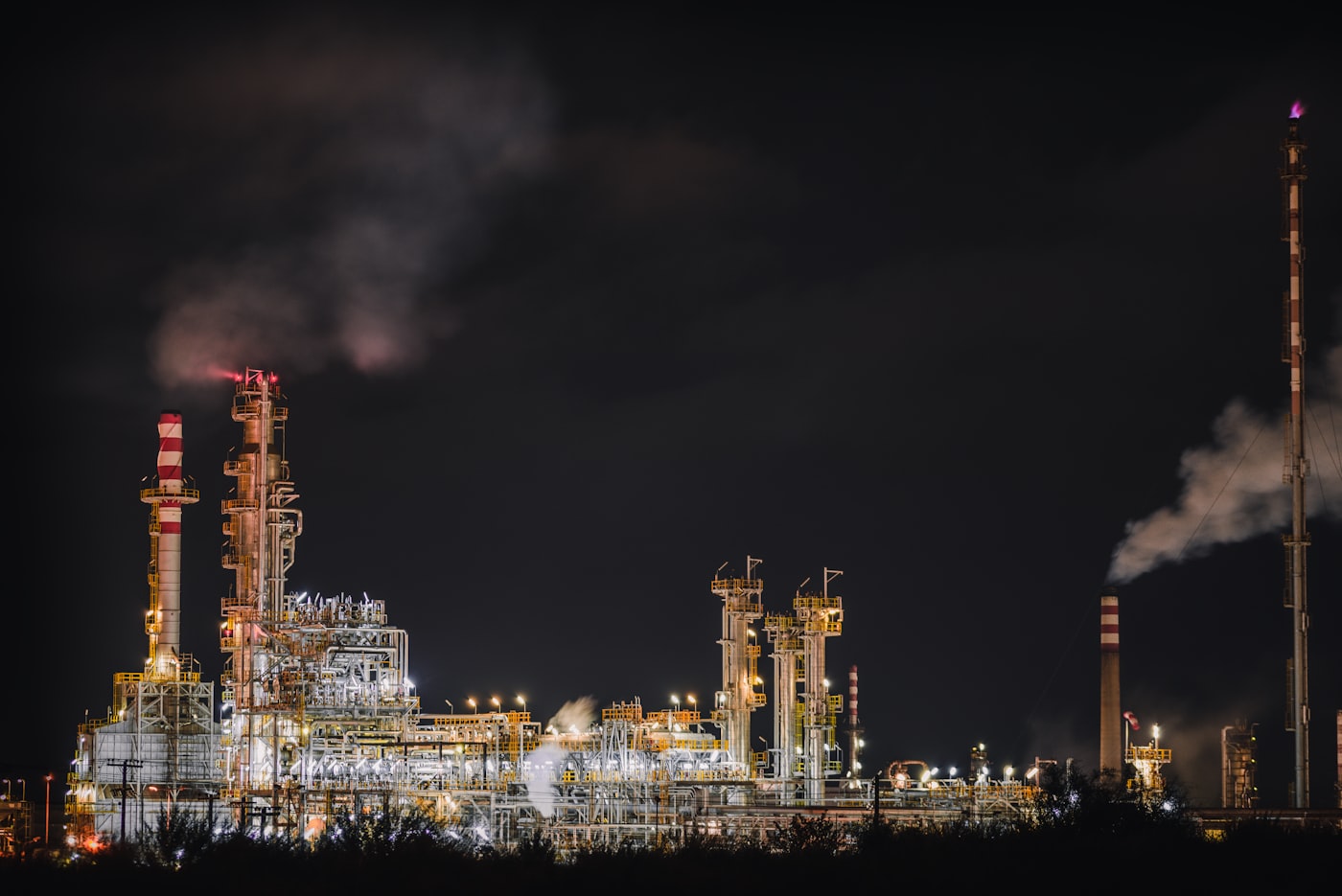
On June 1, 2006, the sulfur ceiling for on-road diesel in the United States dropped from 500 parts per million to 15. That is a 97 percent cut, and it did not happen with a valve turn. It happened because refiners had already spent years and billions of dollars building and retrofitting hydrotreaters to hit a number that older units physically could not reach. The 15-ppm line was a cliff, and the whole diesel pool had to climb it at once.
Twenty years on, that cliff still explains a lot about how refineries behave: which crude they bid for, how much hydrogen they burn, and why a barrel of 3,000-ppm diesel that was ordinary in 2005 now has almost nowhere legal to go in the developed world.
What the rule actually demanded of a refinery
Diesel comes off the crude distillation tower as a middle distillate cut carrying sulfur bound inside the hydrocarbon molecules. You cannot filter it out. You have to break the carbon-sulfur bonds chemically, and the industrial method for that is hydrodesulfurization: mix the distillate with hydrogen, push it through a fixed bed of catalyst at high temperature and pressure, and strip the sulfur off as hydrogen sulfide.
Getting from 500 ppm to 15 ppm is not a linear tightening. The easy sulfur leaves first. What remains at the low end are stubborn, sterically hindered compounds like the substituted dibenzothiophenes, and clearing those requires far more severe conditions. In practice that meant either building new high-pressure hydrotreating units or substantially rebuilding existing ones with more reactor volume, hotter and higher-pressure operation, and better catalyst. Older low-pressure units simply could not reach 15 ppm on a normal feed slate, and continuing to run them was not an option once the standard bit.
The mandate was staged so the whole supply chain moved together. Refineries had to make the switch by June 1, 2006, terminals by September 1, and retail by mid-October. The EPA structured the first phase so that 80 percent of highway diesel volume met the 15-ppm spec, with the balance following. Nonroad, locomotive, and marine fuels came behind on their own clock under the Tier 4 program: 500 ppm in June 2007, 15 ppm for nonroad in June 2010, and 15 ppm for locomotive and marine in June 2012.
Why hydrogen became the constraint
Deep desulfurization is hydrogen-hungry, and the more you tighten the spec the more hydrogen you consume per barrel. That turned hydrogen from a background utility into a hard operating limit at a lot of plants.
The feed you choose changes the bill dramatically. Highly aromatic streams, the kind that come off a fluid catalytic cracker or a coker, can consume several times more hydrogen than a clean, virgin distillate straight off the crude tower when you drive them down to 15 ppm. Refiners running heavy, sour, hydrogen-deficient crudes such as Canadian bitumen feel this twice: those barrels produce more cracked, aromatic material that itself needs more hydrogen in the hydrotreater. Hydrogen supply and compression became a recurring bottleneck across the US refining fleet as the heavy-crude diet grew.
Many refiners answered by building steam methane reformers to make hydrogen on purpose, rather than scavenging it as a byproduct of the catalytic reformer. That is another capital line, another gas bill, and another reason the 15-ppm rule reshaped plant economics well beyond a single hydrotreater.
The quiet bid for sweet crude
Here is the part that still moves markets. If your desulfurization capacity and your hydrogen supply are both finite, then the sulfur content of the crude you buy is not an abstraction. It is a throughput limit. A sweeter crude arrives with less sulfur to strip, which means less hydrogen burned, less catalyst deactivated, and more room to run the unit hard on the barrels that need it most.
That is why the ULSD transition, alongside the parallel tightening of gasoline sulfur, put a structural premium under light sweet grades and pushed the sweet-sour price spread around. Light sweet crude is favored precisely because it is easier and cheaper to turn into on-spec fuel. Refiners with deep, high-pressure hydroprocessing and ample hydrogen can eat heavy sour crude at a discount and make money on the spread. Refiners without that kit are stuck reaching for the sweeter, pricier barrel. The specification wrote itself into the crude slate, and it stayed there.
Europe went further, and faster
The United States was not alone, and Europe arguably pushed harder. The EU cut its automotive diesel sulfur limit to 50 ppm in January 2005 and then to 10 ppm in January 2009 under the Euro 5 fuel specification, codified in the EN 590 standard and Directive 2009/30/EC. Ten parts per million is even tighter than the US 15, and it demanded the same medicine: new high-pressure hydrotreating or heavy retrofits of older units, plus the hydrogen to feed them.
The result on both sides of the Atlantic was a decade-long capital wave concentrated in hydroprocessing. Once a refiner has sunk that money into deep-desulfurization capacity, the plant's whole logic bends around keeping those units full and fed with hydrogen. That is a sunk-cost gravity that outlives any single fuel cycle.
The stranded barrel problem
Cleaning up the developed-world diesel pool did not make high-sulfur diesel disappear. It made it homeless. As the US and Europe moved to 10 and 15 ppm, the high-sulfur material that refineries and blenders could still produce needed a buyer, and the buyers were in markets with weak standards.
For years, much of West and sub-Saharan Africa ran diesel with sulfur far above developed-world limits, in some cases in the range of 3,000 ppm and higher, against a US and EU norm near 10 to 15. A 2016 investigation by the Swiss NGO Public Eye documented trading houses blending and exporting so-called African Quality fuels with sulfur levels many times European limits, taking advantage of lax national specs. The economics were straightforward: a barrel that is illegal in Rotterdam is saleable in a market that never set a low ceiling.
That arbitrage is now closing, unevenly. Several African economies have tightened their own diesel specifications, and countries including Nigeria moved to ban imports of high-sulfur fuel and push toward cleaner grades. Botswana phased high-sulfur diesel out of its market. As those doors shut one by one, the stranded high-sulfur barrel loses its last easy home, which loops right back to the front of the plant: fewer outlets for dirty product means more pressure to run cleaner crude and desulfurize deeper everywhere.
The line that is still load-bearing
The 15-ppm cliff was sold as an emissions rule, and it was one. Low-sulfur fuel was the enabling condition for the catalyzed particulate filters and NOx aftertreatment that made modern diesel engines clean. But the deeper legacy is industrial. A single number on a fuel spec sheet forced a global buildout of hydrotreating and hydrogen capacity, rewired the premium on sweet crude, and split the world into markets that could take the clean barrel and markets that had to swallow the dirty one.
Watch the crack spread on ultra-low-sulfur diesel and you are watching the return on all that steel. Watch the sweet-sour differential and you are watching who got to skip the bill. Neither makes sense without the cliff that came before them.
Sources
https://dieselnet.com/standards/us/fuel_diesel.phphttps://www.epa.gov/diesel-fuel-standards/diesel-fuel-standards-and-rulemakingshttps://dieselnet.com/standards/eu/fuel_automotive.phphttps://www.afpm.org/data-reports/technical-papers/qa-search/question-19-limited-hydrogen-availability-desulfurizationhttps://www.ogj.com/general-interest/government/article/17224206/refiners-have-many-options-to-convert-high-aromatic-streams-into-ulsdhttps://www.unep.org/news-and-stories/story/exporting-pollution-dumping-dirty-fuels-and-vehicles-africa