Pemex Signs First Mixed Contracts With Private Firms to Reverse Output Decline
Mexico's state oil company opened its onshore fields to private partners for the first time under President Sheinbaum's energy overhaul, betting that outside cash and expertise can arrest two decades of falling crude output.

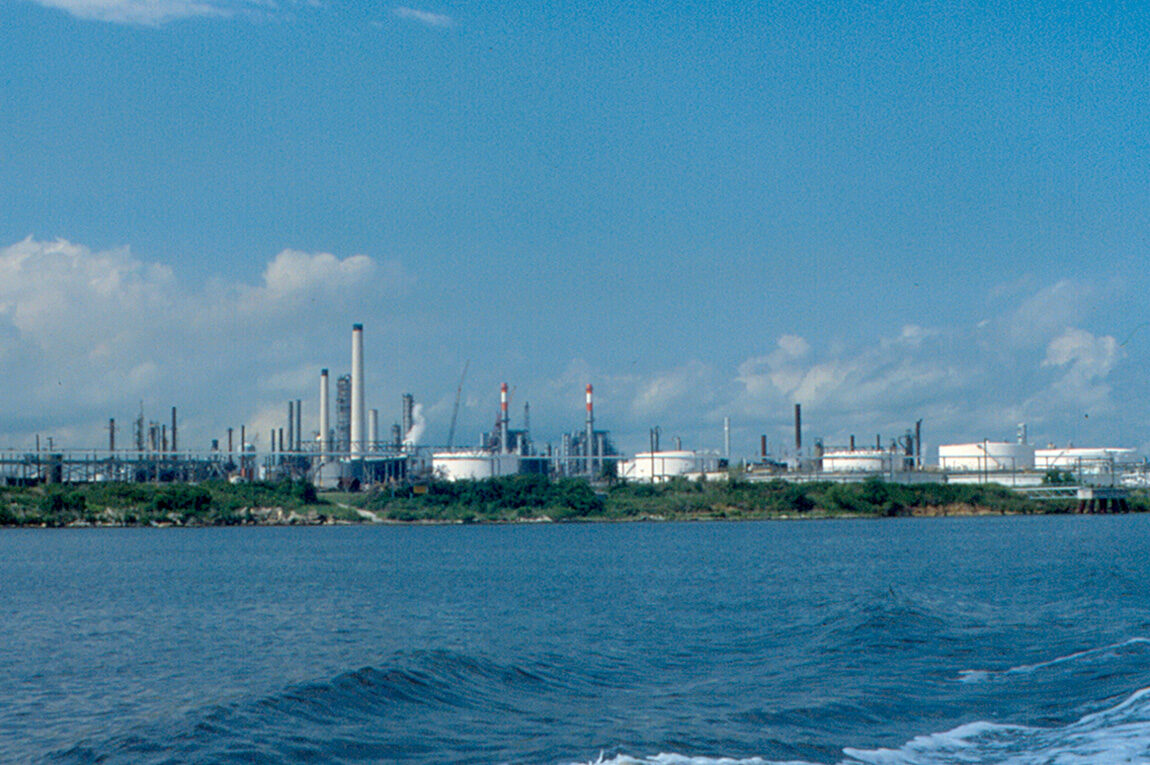
Pemex signed its first batch of mixed contracts with private companies this week, handing outside operators a stake in aging Mexican oil and gas fields for the first time under the contractual framework created by President Claudia Sheinbaum's energy reform. The move, which Sheinbaum highlighted in her State of the Nation report to Congress on September 1, marks the sharpest reversal yet of the resource nationalism that defined her predecessor's tenure, and it puts private capital back into Mexican upstream work that had been effectively off-limits.
The state company reported 11 agreements signed in the opening round, the first tranche of a planned 21 deals it wants to close before the end of 2025. Pemex says the full slate could add up to 450,000 barrels per day of peak crude output by 2033. That is the number to watch. Everything else in this story is about whether Pemex can actually get there.
What the contracts are, and what they are not
These are not the profit-sharing and license contracts of the 2013-2014 reform that Andres Manuel Lopez Obrador spent six years dismantling. The new instruments are branded "mixed development" contracts, and the design is deliberate: Pemex keeps a controlling stake in every field while a private partner brings money, rigs and technical help. In the first awards, Pemex retained interests ranging from roughly 46 percent to 84 percent, depending on the block. The state stays the majority owner. The private firm carries a chunk of the cost and the risk in exchange for a share of the output and cash flow.
That structure is the political price of the deal. Sheinbaum inherited a company that Lopez Obrador had walled off from private operators, and she has had to thread a needle: bring in the investment Pemex cannot fund on its own without conceding that the state should not run the show. Mixed contracts are how she squared it. Pemex commands, partners pay.
Who signed, and which fields
The first competitively bid awards went to a set of Mexican service and exploration firms rather than the international majors. Named winners include CESIGSA, Geolis, Consorcio Petrolero 5M del Golfo and Petrolera Miahuapan. The fields are onshore and conventional, spread across the mature basins that have carried Mexican production for generations: Tampico-Misantla, Burgos, Veracruz-Puebla and Tabasco.
- Tamaulipas-Constituciones, in the Tampico-Misantla basin, holds roughly 125 million barrels of heavy oil reserves plus about 144 billion cubic feet of gas.
- Cuervito, in the Burgos gas basin, carries around 280 billion cubic feet of gas.
- Sini-Caparroso sits in the Veracruz-Puebla basin.
- Agua Fria and Tupilco Terciario are both in Tabasco.
That the first winners are domestic service and exploration houses rather than international majors is itself part of the story. Pemex did not draw the big global operators to these opening blocks, a sign of how much the terms and the counterparty risk still weigh on outside interest. It is Mexican capital, for now, betting that the scheme is real and worth bidding on.
The signing bonuses from the first competitive round came to about 49.5 million dollars, which Pemex described as the highest share of cash flow bid among the opening agreements. Pemex has said it expects the broader initiative, across all 11 signed deals, to raise on the order of 8 billion dollars.
The production math is tight
Here is where the confidence and the arithmetic diverge. The 11 contracts signed so far are expected to add roughly 70,000 barrels per day of crude and about 610 million cubic feet per day of natural gas. That is a useful increment, but it is a fraction of the 450,000 b/d peak that the full 21-deal program is supposed to deliver by 2033, and a smaller fraction still of the government's stated goal of lifting national output back to 1.8 million barrels per day.
Mexican crude production has been sliding for two decades, down from a peak above 3.4 million b/d in 2004 to around 1.6 million b/d now. Reversing that curve with onshore, conventional fields that were passed over for a reason is a heavy lift. These are not new discoveries. They are known reservoirs, many of them depleted or heavy, that Pemex either could not fund or could not work efficiently on its own. The bet is that private operators can wring more out of them faster and cheaper. That is plausible for some blocks and optimistic for others.
Why Pemex needs this now
The financial backdrop explains the urgency. Pemex carries close to 100 billion dollars in financial debt, the largest of any oil company in the world, plus roughly 22 billion dollars in overdue obligations to contractors and suppliers. It cannot spend its way back to 1.8 million b/d, and the federal budget can only backstop so much. Mixed contracts are a way to get capital and equipment onto the fields without adding directly to the debt stack, while keeping the barrels and the political optics under state control.
Director General Victor Rodriguez Padilla framed the awards as a strategy to pull in private investment and technical capacity for conventional onshore production. That is the honest version of the pitch. Pemex is not opening the deepwater or the shale; it is trying to squeeze more out of the fields it already holds, with someone else helping to pay for the work.
What to watch next
Pemex says a second group of allocations under the same scheme is already being formalized, with closing expected before the end of the year, which is how it intends to get from 11 deals to 21. The questions that will decide whether this works are not about the signing ceremony. They are about execution: whether the smaller Mexican firms winning these blocks have the balance sheets and the crews to raise output on schedule, whether the 46-to-84 percent state stakes leave partners enough upside to keep investing, and whether Pemex pays its bills to the contractors already working its fields.
The 450,000 b/d figure is a 2033 target built on 21 contracts, most of which are not yet signed, worked by companies that in several cases are unproven at this scale. It is a credible direction and a genuine break from the last administration's posture. It is not yet production. The barrels will tell the real story, and the first ones are still a couple of years out.
Sources
https://www.worldenergynews.com/news/mexico-pemex-signs-the-first-mixed-contract-764993https://brazilenergyinsight.com/2025/09/03/mexicos-pemex-signs-up-private-firms-to-bolster-oil-output/https://mexicobusiness.news/oilandgas/news/pemex-signs-first-mixed-contractshttps://mexicobusiness.news/oilandgas/news/pemex-awards-first-five-mixed-contracts-new-upstream-drivehttps://www.hellenicshippingnews.com/mexicos-pemex-signs-first-mixed-contracts-with-private-firms-to-boost-oil-output/