Pemex Crude Output Sinks to 46-Year Low in 2025 Despite Rescue Push
Mexico's state oil company pumped about 1.635 million barrels a day last year, down roughly 7% and the weakest annual figure since 1979, even as the Sheinbaum government threw money and a new strategic plan at the problem.

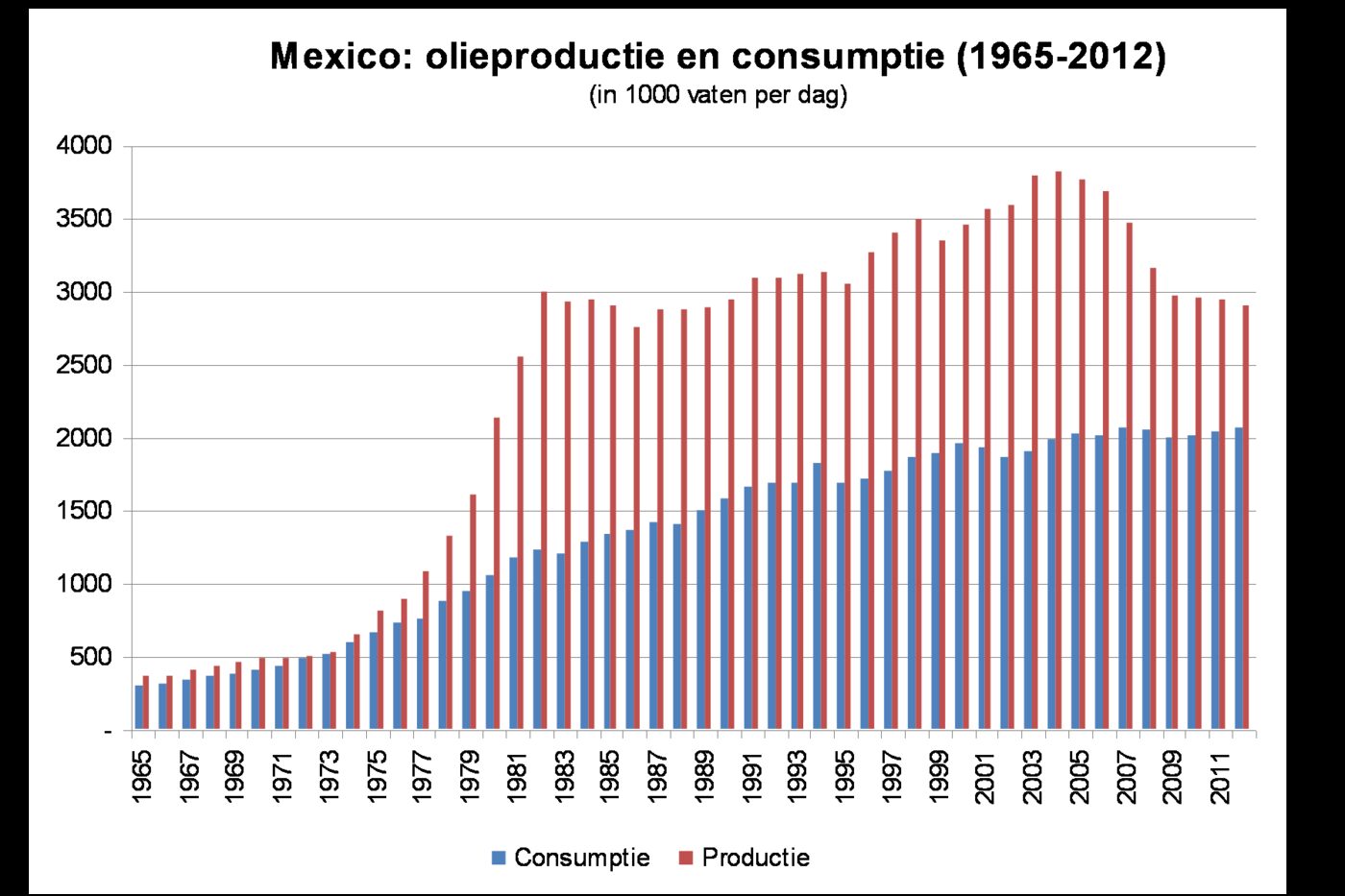
Pemex closed 2025 producing about 1.635 million barrels a day of crude plus condensates, down roughly 7% from 2024 and the lowest annual output in 46 years. That number tells you almost everything about the year Mexico's state oil company just had. A rescue plan was launched in August, billions were promised for supplier debt, and a fresh 10-year strategy set a floor of 1.8 million b/d. The wells did not cooperate. Production kept falling.
Strip out condensates and the crude picture is worse. Straight crude oil averaged 1.367 million b/d in 2025, a 7.9% drop from the prior year. That is down 24.6% from the 1.813 million b/d Pemex pumped in 2018, the year the current governing party first took office, and close to 40% below the 2.266 million b/d it managed in 2015. Condensates, which the company has leaned on to pad the headline liquids figure, fell 2.3% to about 268,000 b/d, their first annual decline in seven years. The crutch is starting to give.
The number in context
Mexican oil production has been sliding for two decades, ever since the giant Cantarell field peaked in 2004 and began its long collapse. What makes 2025 notable is not that output fell but how far it fell and how quickly. The 1.635 million b/d annual average compares with 1.759 million b/d in 2024. The 2018-2024 stretch averaged roughly 1.773 million b/d, so last year ran about 8% under the recent trend. March 2025 was the trough at 1.607 million b/d, the weakest single month for Pemex since the Morena administration took power in 2018.
To reach 46 years back you have to go to 1979, when Mexico's offshore boom in the Bay of Campeche was just getting started and Cantarell had barely come online. The country's flagship producer is now pumping like the boom never happened.
Why the wells keep drying up
The decline is not a mystery, and it is not one problem. It is several, compounding.
- Aging fields. Pemex's core assets are old and heavily depleted, and the natural decline rate on mature reservoirs is steep. Without constant drilling and workovers, output falls on its own.
- Deferred maintenance. Years of tight budgets left a backlog of upkeep, which drags down uptime and raises the odds of unplanned outages.
- Thin exploration. The government halted upstream auctions that would have brought private operators in alongside Pemex, slowing the pace of new discoveries and delaying the replacement barrels the company badly needs.
- Slow new contracts. A mixed-contracts model meant to pull in private capital arrived in 2025, but negotiations on the first batch of roughly a dozen agreements moved too slowly to move the production needle.
Pemex Director General Victor Rodriguez has been blunt that the age of a few giant fields carrying national output is ending, and that the company has to spread its bets across a broader, smaller portfolio. That is the right diagnosis. It is also an admission that there is no single field waiting in the wings to reverse the trend.
The rescue plan, and what it can and cannot do
President Claudia Sheinbaum unveiled her administration's Pemex strategy on August 5, pitching it as a plan to rescue and transform the company and restore its role at the center of Mexico's energy system. The financial ambitions are real. The plan aims to cut Pemex's financial debt from about $98.8 billion toward roughly $77.3 billion, and it created a new financing vehicle to manage 250 billion pesos, about $13.3 billion, to chip away at the company's large backlog of unpaid supplier debt. On top of the financial debt, Pemex owes suppliers somewhere around $20 billion, and those unpaid bills have been strangling the service companies Pemex depends on to keep drilling.
On production, the plan concentrates spending on a short list of projects with real upside: the offshore Zama and Trion developments, plus existing fields judged to have room to grow. The stated goal is to lift crude output to 1.8 million b/d and to have Pemex standing on its own financially, without federal cash infusions, by 2027.
Here is the tension. Paying down supplier debt is necessary and overdue, because a company that cannot pay its contractors cannot drill. But debt relief does not itself produce a barrel of oil. The production target of 1.8 million b/d is now more than 10% above where the company actually finished 2025. Sheinbaum has framed that figure as a ceiling as much as a goal, a way to cap fossil fuel dependence rather than chase ever-higher output. Whatever the framing, hitting it from a falling base of 1.635 million b/d means not just stopping the decline but reversing it, fast.
Can 2026 turn the corner?
Pemex has told the market it wants 1.794 million b/d in 2026, and the 2025-2035 strategic plan holds the 1.8 million b/d line for the decade. Reaching either would require the new mixed contracts to start delivering barrels, Zama and Trion to stay on schedule, and the supplier-debt cleanup to actually restart stalled field work. That is a lot of things going right at once for a company that has watched targets slip for years.
The base case is more sobering. BBVA Research, which has tracked the decline closely, flagged that even the new fields Pemex is counting on are producing roughly flat, with first-quarter 2025 output from those projects near 518,000 b/d against 521,000 the prior quarter. New barrels are barely replacing the ones the old fields are losing. Until that math changes, the trend line points down.
The bottom line
Mexico spent 2025 announcing a turnaround and living through a decline. The rescue plan attacks the financial rot that has hobbled Pemex for years, and that work matters. But the 46-year low is a reminder that money buys time, not oil. The barrels have to come out of reservoirs that are old, expensive, and shrinking, through contractors who until recently were not getting paid. If the supplier checks clear and the new offshore projects hold their timelines, 2026 could at least flatten the line. If they slip, the record set in 2025 will not stand for long.
Sources
https://mexicobusiness.news/oilandgas/news/pemex-production-hits-decades-lowhttps://mexicobusiness.news/oilandgas/news/2025-marks-pemexs-lowest-output-morena-took-officehttps://www.bbvaresearch.com/en/publicaciones/mexico-pemexs-oil-production-keeps-falling/https://www.spglobal.com/energy/en/news-research/latest-news/crude-oil/080525-mexico-unveils-pemex-rescue-plan-targets-18-mil-bd-crude-output-supplier-reliefhttps://www.bnamericas.com/en/news/mexicos-sheinbaum-launches-plan-to-rescue-pemex-and-revive-oil-production