The Anatomy of an Oil Sanction: How Barrels Get Blacklisted and Still Move
Price caps, dark fleets, and mid-ocean ship-to-ship transfers explain why sanctioned crude almost never vanishes from the market; it just changes hands, changes flags, and changes price.

In September 2025, the European Union did something it had spent nearly three years avoiding. It cut the price ceiling on Russian crude from 60 dollars a barrel to 47.60, and bolted on a formula that keeps the cap 15 percent below the trailing average market price of Urals. The reason was blunt: at 60 dollars the cap had stopped biting. Oil had fallen far enough that Russia was selling under the ceiling anyway, and Western-owned tankers were happily carrying the cargo again. By spring 2025, European ships were back to hauling roughly half of Russia's seaborne exports. A cap that costs nothing to obey is not a sanction. It is a formality.
That episode tells you almost everything about how oil sanctions actually work. They rarely stop barrels. They reroute them, and they reprice them. Understanding why means looking at three machines running at once: the insurance-based price cap, the shadow fleet that exists to defeat it, and the buyers in Asia who turn a political liability into a discount.
The cap runs on paper, not patrol boats
The G7 price cap has almost nothing to do with navies. It works because a small cluster of countries controls the paperwork that makes an oil voyage possible. Insurance is the choke point. Around 95 percent of the world's oil tanker tonnage is covered by protection and indemnity clubs based in the G7, and without that cover a tanker cannot call at most reputable ports or pass most straits without trouble.
So the coalition leaned on the service providers rather than the cargo. Under the mechanism, the firms that make a shipment happen are sorted into tiers. The traders and shippers closest to the deal have to certify the price. Insurers and banks further out are allowed to rely on attestations passed up the chain, a signed promise that the Russian oil moved at or below the cap. Regulators pushed those attestations from annual to per-voyage, and ruled that a ship-to-ship transfer counts as a new voyage needing its own paperwork. The idea was to make lying continuous and specific rather than a one-time box to tick.
The weakness is obvious once you say it out loud. The cap polices only the barrels that still touch Western insurance, banking, and ships. The moment a cargo moves entirely outside that system, the attestation regime has nothing to grip. Which is exactly the exit that Russia and Iran built.
Enter the shadow fleet
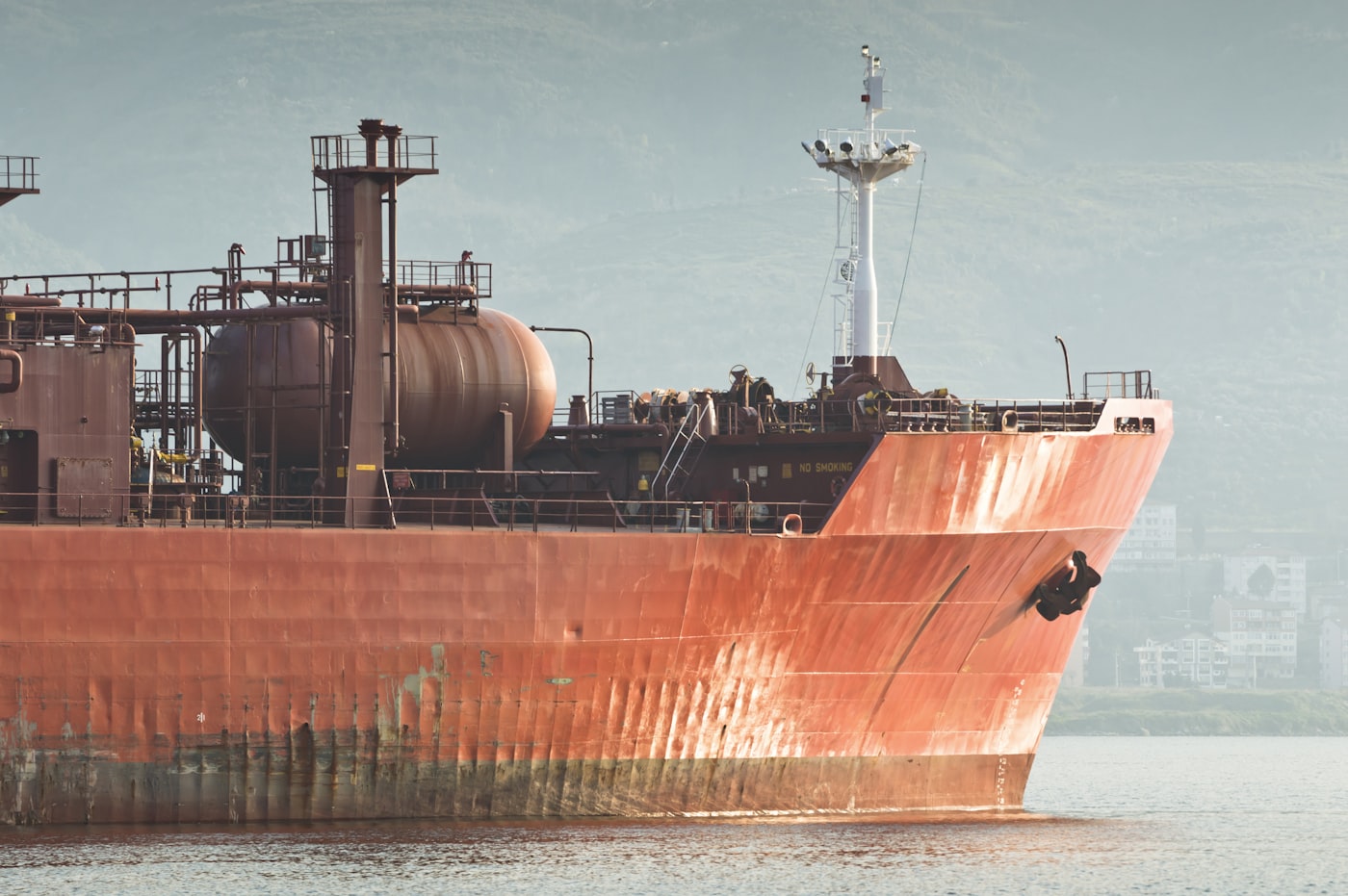
The shadow fleet, or dark fleet, is the answer sanctioned exporters gave to the insurance choke point. These are aging tankers held through opaque shell ownership, insured by non-Western or simply unverifiable providers, and flagged in jurisdictions that ask few questions. Estimates vary by how you count, but by 2025 analysts were tracking somewhere north of 1,900 vessels operating in this gray tier, with several hundred dedicated tankers moving a large share of Russia's crude entirely outside G7 services.
The tradecraft is the point. The most basic tool is the transponder. Every commercial ship broadcasts its position over AIS, the automatic identification system, and dark-fleet tankers routinely go dark by switching it off, or worse, spoof it, broadcasting a false position while the hull is somewhere else entirely. Lloyd's List and maritime-tracking firms logged AIS spoofing incidents climbing well above prior baselines through 2025, concentrated where enforcement is thin. GPS jamming in the Baltic and Black Seas adds a second layer of fog that degrades everyone's tracking, not just the target's.
Then there is reflagging. When a flag state gets embarrassed or pressured into deregistering a suspect tanker, the ship simply reflags. Windward tracked dozens of dark-fleet tankers switching to broadcast Russia itself as their flag through 2025, a number that jumped after the United States, United Kingdom, and France began boarding and detaining falsely flagged vessels. A ship that flies the flag of the sanctioning target's chief adversary is not hiding anymore. It is daring you to do something about it.
The mid-ocean handoff
The most elegant trick is the ship-to-ship transfer, and it is the reason a barrel can be sanctioned and clean at the same time. A dark-fleet tanker loads sanctioned crude at a Russian or Iranian port and sails to a stretch of loosely policed water. There it pumps the cargo into a second tanker that carries no obvious sanctions history and clean-looking papers. On the receiving side, the oil now has a new vessel, sometimes a new stated origin, and a fresh chain of custody. The Gulf of Oman became a workhorse hub for exactly this, and covert STS transfers hit record monthly counts through 2025.
This is where the attestation rule that treats each STS as a new voyage was supposed to help, and where it mostly fails. If neither the mother ship nor the daughter ship touches Western insurance or brokers, there is no Western attestation to falsify, and no Western firm on the hook. The transfer is real, the crude is real, and the paper trail Western regulators can see just stops.
Where the barrels actually go
None of this evasion would matter if there were no buyers. There are, and they are large. After Europe stopped importing Russian crude, the flow bent east. India became the marginal buyer of Urals for a stretch, taking on the order of 1.3 million barrels a day across 2024 and 2025, refining it, and in many cases exporting products that were no longer legally Russian. When sanctions pressure and the threat of secondary measures made Indian refiners nervous through late 2025, the barrels did not disappear. They shifted again, toward China, which absorbed the volumes Indian buyers walked away from.
The mechanism that clears all of it is price. Sanctioned crude sells at a discount that pays buyers to take the legal and logistical risk. Urals discounts against Brent blew out past 20 dollars a barrel at points, and some China-bound cargoes were reported selling far wider, dragging the effective price well under 30 dollars. Iran runs the same play with a different set of props. Its crude reaches China's independent Shandong refiners, the teapots, which take the vast majority of Iranian shipments, at discounts of several dollars a barrel, with the oil frequently rebranded as Malaysian, Omani, or something else on the invoice. China imported more crude from Malaysia in 2024 than Malaysia can physically produce, which is the tell. That gap is relabeled Iranian and Venezuelan oil.
The lesson in the discount
Put the three machines together and the pattern is clear. The price cap does not decide whether sanctioned oil ships. It decides how much of it stays inside the Western-serviced market. The shadow fleet decides how much escapes that market entirely. And the Asian discount decides who profits from the escape. Sanctions did not shut Russia's or Iran's exports. They forced those exports into a parallel plumbing system that is older, less safe, less insured, and cheaper for the buyer.
That is not proof the policy failed. A discount is a cost, and a widening one is a bigger cost, borne every day by the exporter. The dynamic cap the EU adopted is an admission that a fixed number ages badly and needs to chase the market down. But anyone waiting for a sanction to make barrels vanish is watching the wrong number. Watch the spread. In this market, blacklisted crude does not go away. It goes cheap, it goes dark, and it goes east.
Sources
https://oilprice.com/Energy/Oil-Prices/EU-Lowers-Russian-Oil-Cap-Unilaterally.htmlhttps://ofac.treasury.gov/media/931036/download?inline=https://www.lloydslistintelligence.com/thought-leadership/blogs/the-secret-lives-of-the-shadow-fleet-ais-spoofing-vessel-identity-manipulationhttps://www.csis.org/analysis/ghost-busters-options-breaking-russias-shadow-fleethttps://united24media.com/latest-news/china-absorbs-russias-discounted-urals-crude-after-indian-refiners-step-away-15140https://www.unitedagainstnucleariran.com/analysis/uncovering-chinese-purchasers-of-iranian-oil-updated-february-28-2025