Octane Economics: Why Premium Gasoline Costs More Than It Should
The extra 50-plus cents you pay for premium is not really a fuel cost; it is the price of a scarce blendstock pool that a refinery's reformer, alkylation unit and ethanol tank can only stretch so far.

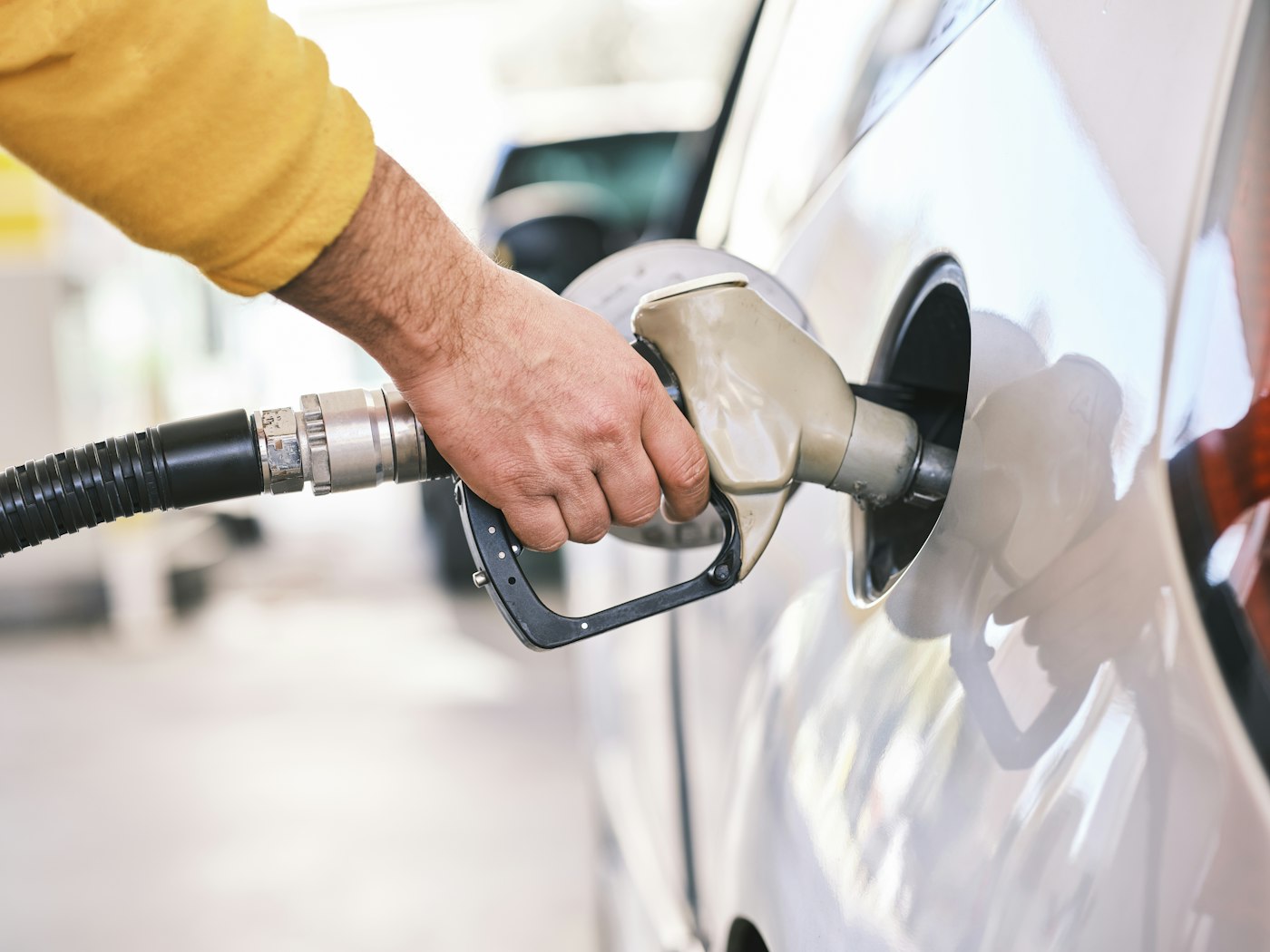
Stand at any pump in the country and the gap stares back at you: regular at one number, premium 50 or 60 cents higher per gallon. Drivers assume they are buying a better, purer, more expensive fuel. They are not. Premium and regular start from the same crude, run through the same distillation towers, and share most of the same molecules. What separates them is a single number on the yellow sticker, the anti-knock index, and inside a refinery that number is the most rationed thing on the property. The octane pool is finite, it is expensive to grow, and its economics run on their own clock, largely detached from the price of a barrel of crude.
Octane is a property, not a product
No refinery has a tank labeled octane. Octane is a blending property, a measure of how much a fuel resists knocking under compression, and a refiner assembles the finished gasoline pool by mixing streams of very different octane values until the blend clears spec. Regular clears at 87 anti-knock index in most of the country; premium sits at 91 to 93. Straight-run naphtha off the crude tower is a low-octane stream, often in the 60s and 70s. To lift the whole pool to spec, the refiner leans on a handful of upgrading units whose entire job is to manufacture octane out of otherwise mediocre hydrocarbons.
That is the part the pump price hides. You are not paying for more gasoline in a premium gallon. You are paying for a larger claim on a scarce internal resource, and when that resource tightens, the premium widens whether or not crude has moved a cent.
Three units carry the octane pool
Three process units do most of the heavy lifting, and understanding them explains almost everything about premium pricing.
The catalytic reformer is the workhorse. It takes low-octane naphtha and, with heat and a platinum catalyst, restructures straight-chain molecules into aromatic ring compounds that resist knocking far better, producing a high-octane stream called reformate. The EIA describes the reformer as the unit that turns low-octane naphtha into a high-octane blending component by converting straight chains into cyclic compounds. But the reformer runs on a hard tradeoff. Push it for more volume and the reformate comes out at lower octane; push it for higher octane and you make less reformate and burn more energy and catalyst doing it. Every refiner lives on that curve, and the marginal octane always costs more than the average octane.
Alkylation is the prized second unit. It combines light isobutane with C3 to C4 olefins to build heavier branched iso-paraffins, a stream called alkylate. Alkylate is close to the ideal blendstock: high octane, low sulfur, no benzene or aromatics, and low vapor pressure, which matters for summer specs. That combination makes it the stream refiners fight to maximize. The trouble is capacity. You cannot conjure an alkylation unit in a quarter, and its feed, the olefins and isobutane, is itself limited.
Isomerization plays the supporting role. It rearranges light straight-chain molecules, n-butane into iso-butane to feed the alkylation unit, and n-pentane and n-hexane into their branched, higher-octane forms. It is the unit that squeezes octane out of the lightest ends of the barrel that would otherwise drag the pool down.
These units, together with any etherification, define what refiners call the octane pool. When the pool is balanced, premium and regular trade close. When any one of these units is constrained, the marginal octane price climbs fast.
The oxygenate switch that reset the math
For years, refiners had an easy octane crutch that was not a process unit at all. Through the late 1990s, much of the country blended MTBE, an oxygenate that also carried a high octane rating, near 110. It let blenders hit octane and oxygen specs cheaply without leaning harder on the reformer and alkylation units. Then MTBE started showing up in groundwater. It leaked from underground storage tanks, dissolved readily in water, and fouled drinking water supplies in numerous states. Beginning in 2000, 19 states banned it, and it was effectively out of the reformulated gasoline pool by 2005 and 2006.
Ethanol filled the gap. Ethanol is a strong octane booster in its own right, rated around 115, and today more than 95 percent of U.S. gasoline is E10, a 10 percent ethanol blend. That was a clean substitution on paper. In practice it capped the crutch. Ethanol's octane help is real but bounded by how much you can put in the tank, and the standard blend sits at 10 percent. Push past that and you run into vehicle warranty limits, infrastructure, and regulatory friction, the so-called blend wall. Once the pool is already carrying its 10 percent of ethanol, additional octane has to come from inside the refinery gate, from the reformer and the alkylation unit, which are the expensive sources.
Demand climbed into a supply that did not
The squeeze got worse from the demand side. Automakers chasing federal fuel-economy standards built more turbocharged, higher-compression engines, and those engines knock on regular. They want premium. Premium's share of total gasoline sales pushed to roughly 11.9 percent by August 2016, close to a 13-year high, while overall gasoline demand had been rising on the order of 1.8 percent a year since 2013.
Supply did not follow. The EIA has flagged that U.S. refineries saw reductions in, or slower expansion of, octane-producing capacity, specifically reformers, relative to crude distillation capacity since around 2007. So you had rising demand for a high-octane product, an ethanol crutch pinned at the blend wall, and reformer capacity that was flat or shrinking against the size of the barrel. The result showed up at the pump. The premium-to-regular spread roughly doubled from about 25 cents a gallon in 2010 to around 50 cents by late 2016 and 2017, and it has generally stayed wide since.
Why the premium moves on crude's off-days
Here is the part traders on my beat watch. The octane premium can move hard while flat crude barely twitches, because the two prices answer to different scarcities. Crude sets the cost of the barrel. The octane premium reflects the internal tightness of the reformer and alkylation units and the blend-wall ceiling on ethanol. When a large reformer or an alkylation unit goes down for a turnaround or an unplanned outage, the marginal octane in that region has to come from somewhere costlier, buying reformate or alkylate on the spot market, or importing high-octane blendstocks. The premium spread widens on that alone. Summer makes it worse, because tighter vapor-pressure specs limit how much butane and cheap light material can go into the pool, leaning even harder on alkylate.
So the widely repeated advice that most cars do not need premium is true and beside the point. If your engine is tuned for 87, buy 87. But the reason premium carries the surcharge it does is not marketing. It is a genuine, physical scarcity of octane inside the refinery, set by three units, a phased-out oxygenate, and a blend wall. Watch reformer and alkylation reliability and the ethanol blending ceiling, and you can call the premium spread more reliably than you can from the crude screen. The pump gap is not the price of better gasoline. It is the price of octane, and octane is the thing refiners cannot simply make more of on demand.
Sources
https://www.eia.gov/todayinenergy/detail.php?id=10731https://fuelsmarketnews.com/growing-octane-needs-widen-the-price-spread-between-premium-and-regular-gasoline/https://www.eesi.org/papers/view/fact-sheet-a-brief-history-of-octanehttps://www.icis.com/explore/resources/news/2006/07/05/1070674/timeline-a-very-short-history-of-mtbe-in-the-us/https://www.digitalrefining.com/article/1001260/the-fastest-route-to-higher-octaneshttps://www.eia.gov/analysis/octanestudy/pdf/phase1.pdf