Why the U.S. Hasn't Built a New Major Refinery in Decades - and What That Means for Fuel Prices
No company has built a full-scale greenfield refinery in the United States since 1977, and the reasons behind that drought now shape how tight fuel supply and diesel margins get.

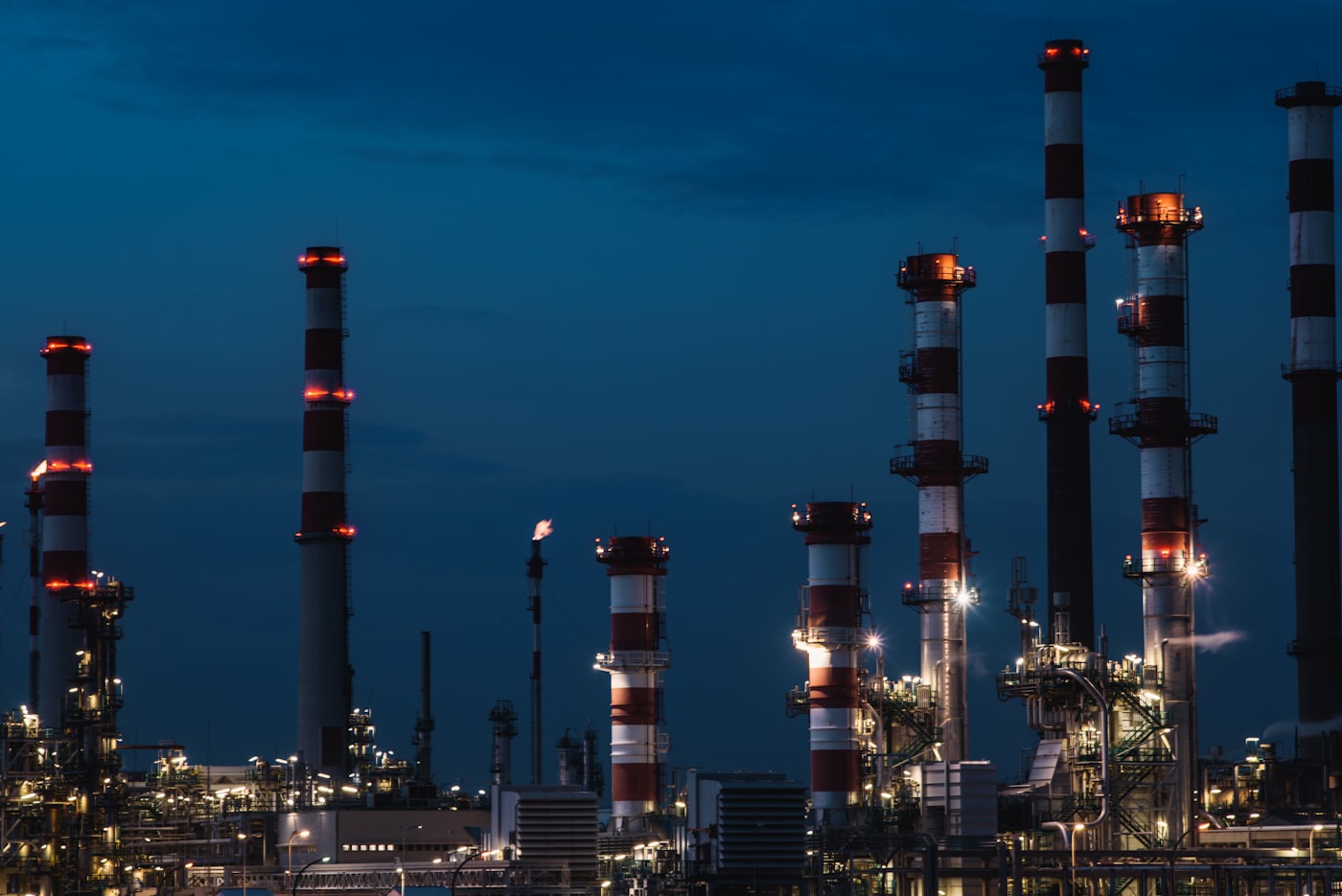
The newest full-scale refinery in the United States started up in Garyville, Louisiana, in 1977. Marathon opened it with 200,000 barrels a day of crude distillation. It has since been expanded to 617,000 barrels a day, making it the third-largest refinery in the country. That single fact tells you almost everything about the last half-century of American refining: nobody has broken ground on a comparable plant since Jimmy Carter's first year in office. Every barrel of added capacity since then has come from bolting more equipment onto sites that already existed.
People hear that and assume the country is running out of fuel-making capacity. The real story is more specific, and more useful to understand if you buy gasoline or diesel.
The last greenfield plant, and the small ones that don't count
When the EIA says no new refinery has been built since 1977, it means no new major refinery. Small plants do get built. The newest is Texas International Terminals' 45,000-barrel-a-day facility in Galveston, which started up in February 2022. Before that, a handful of others opened in Texas between 2015 and 2019, mostly in the 25,000-to-105,000-barrel range, plus a 1,700-barrel asphalt plant in California. These are niche operations. They process condensate or make narrow product slates. None of them is a Garyville, a Baytown, or a Port Arthur, the 400,000-plus-barrel complexes that actually move the national fuel balance.
So the accurate statement is this: for nearly fifty years, the industry has expanded old sites rather than build new ones. And in the last few years it has stopped keeping pace even that way.
Why the money never pencils out
A greenfield refinery is one of the most expensive things a private company can build, and the return on it is uncertain for reasons that have nothing to do with engineering. Industry estimates put the sunk cost of simply reaching the point of breaking ground at somewhere between $500 million and $1 billion, most of it spent on environmental studies, permitting, and the litigation that reliably follows. That is money spent before a single foundation is poured, with no guarantee the project clears its permits at all.
Then there is the compliance drag on the plants that already run. By some estimates, roughly a quarter of capital spending in the refining sector goes to environmental regulatory compliance. That is several billion dollars a year going to maintain existing capacity rather than add new capacity. A CEO deciding where to put the next dollar sees a clear answer: upgrade what you own.
The deeper deterrent is demand. A refinery is a 40-year asset. To justify one, a board has to believe gasoline and diesel demand will hold up for decades. Between electric vehicles, fuel-economy standards, and public commitments to cut oil consumption, that is exactly the belief the industry no longer has. You do not sink billions into a plant whose main product you expect the government and the market to shrink. That single calculation, more than any permit, is why the drawing boards stay empty.
Capacity has held up better than the headlines suggest
Here is the part that gets lost. Despite zero new major plants, total U.S. operable refining capacity has not collapsed. It sat around 18.1 million barrels per calendar day in 2021 and was still near 18.4 million in early 2025, spread across 132 operable refineries. Expansions at surviving sites, Garyville among them, largely offset the plants that closed.
That masks real churn underneath. Between 2017 and 2022, nine refineries with a combined 1.2 million barrels a day of capacity were idled or converted to making renewable fuels. Some of that was replaced by debottlenecking elsewhere. The system stayed roughly flat by running the remaining plants harder and smarter. What flat capacity cannot do is absorb a fresh wave of closures without the balance tightening, and that wave has arrived.
The closures that are tightening diesel
Two big shutdowns bracket 2025. LyondellBasell permanently closed its Houston refinery, roughly 264,000 barrels a day, in the first quarter. Phillips 66 shut its Los Angeles-area operation, about 139,000 barrels a day, by year-end. Together those alone pulled around 400,000 barrels a day out of the domestic system. California is the sharp edge of this: the state keeps losing conventional fuel capacity as plants close outright or convert.
Conversion is the quieter half of the story. Phillips 66's Rodeo plant in California was reworked to produce renewable diesel instead of the full conventional barrel. That shift takes crude-based distillate off the market. It sounds like a wash, more diesel is more diesel, but the timing and volumes do not line up. The EIA has pointed to reduced supply of renewable diesel and biodiesel, from both lower production and lower imports, as a primary reason distillate inventories drew down hard in the first half of 2025. When the renewable barrel falls short, buyers reach back for the petroleum barrel, and there is now less of that being made too.
What it means at the pump and the truck stop
The EIA expects total transportation-fuel inventories, gasoline, distillate, and jet combined, to fall to about 375 million barrels by the end of 2026, the lowest since 2000. Distillate specifically is forecast to end both 2025 and 2026 at multi-year lows, pressured by strong export demand and falling domestic production from these closures. Biofuels help at the margin, projected to make up roughly 9 percent of distillate consumption, up from 5 percent in 2021, but that is a cushion, not a replacement.
Low inventories do not automatically mean high prices. They mean fragility. When supply and demand run this close, the system loses its shock absorber. A refinery fire, a cold snap that spikes heating-oil demand, a hurricane on the Gulf Coast, an unplanned outage at one of the surviving giants, any of these translates faster and harder into diesel and gasoline prices than it would have a decade ago. Diesel is the one to watch, because trucking, rail, farming, and construction all run on it, and its price feeds straight into the cost of everything that moves.
The absence of new refineries is not a scandal or a conspiracy. It is a rational answer to bad economics: enormous upfront cost, heavy compliance overhead, and a product the market expects to shrink. That logic kept the fleet stable for years. What has changed is that closures and conversions are now outrunning the quiet expansions that used to fill the gap. The plants that remain are being asked to do more with less slack, and the price of fuel will increasingly reflect how little room for error is left.
Sources
https://www.eia.gov/tools/faqs/faq.php?id=29&t=6https://www.eia.gov/dnav/pet/pet_pnp_cap1_dcu_nus_a.htmhttps://www.eia.gov/todayinenergy/detail.php?id=64644https://www.hydrocarbonprocessing.com/news/2024/11/lyondellbasell-to-close-houston-refinery-us-in-q1-2025/https://mansfield.energy/2025/03/10/what-u-s-refinery-closures-mean-for-fuel-prices-supply-and-exports/https://www.instituteforenergyresearch.org/fossil-fuels/gas-and-oil/will-any-new-refineries-be-built-in-the-united-states/