The Nelson Complexity Index: How to Read a Refinery Like a Balance Sheet
One number tells you whether a plant can turn cheap, heavy, sour crude into high-value diesel and jet, or whether it's stuck skimming the light fraction and selling the rest as fuel oil.

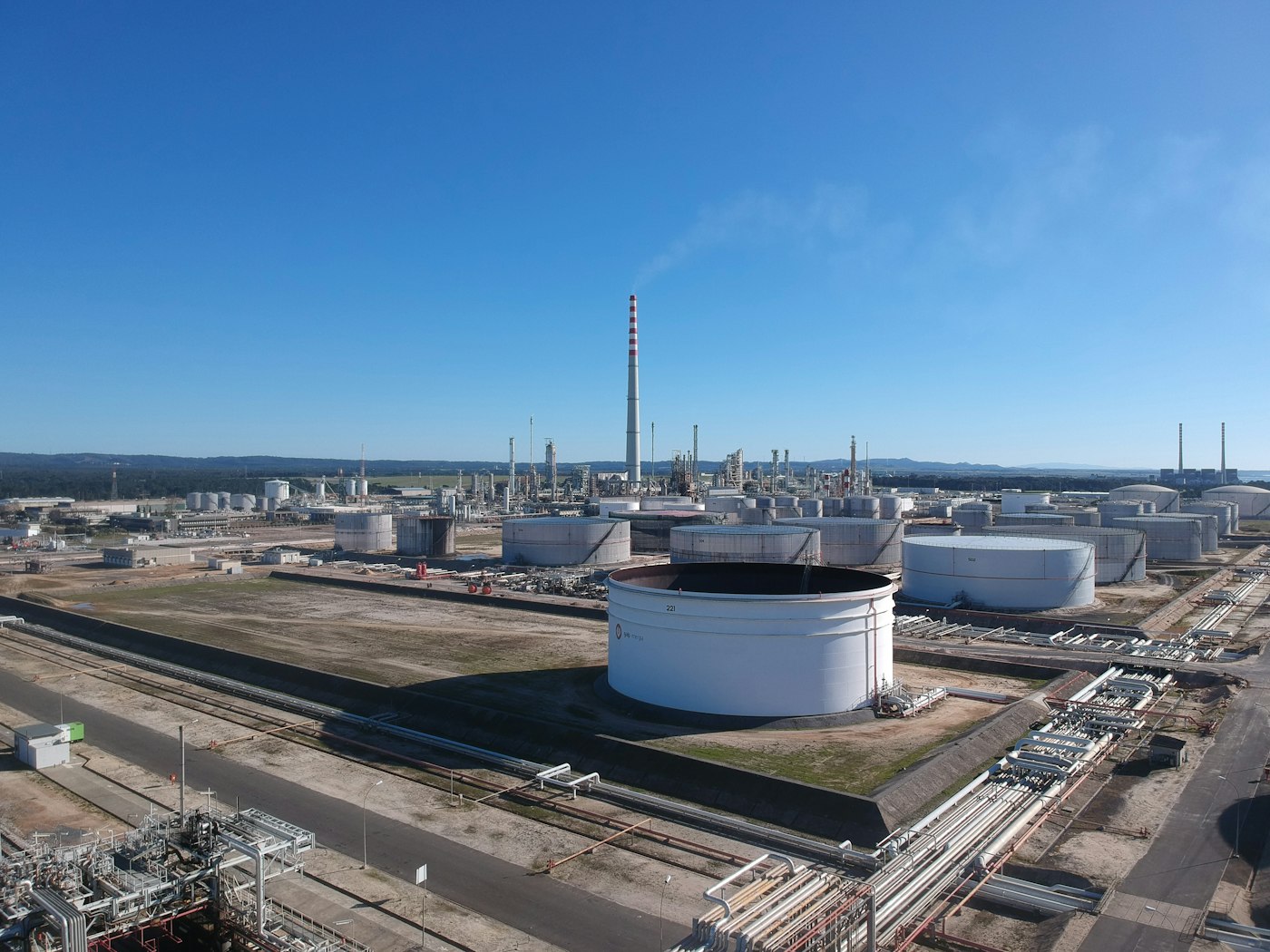
When Valero or Phillips 66 buys a refinery, the first thing the deal team scribbles down isn't the crude capacity. It's a single decimal number that tells you almost everything about what the plant can earn. Phillips 66's Los Angeles refinery scores 14.1 on the Nelson Complexity Index. Its Ferndale plant up in Washington scores 7.0. Same company, similar barrels of crude going in the front door, but the LA plant carries roughly twice the processing machinery per barrel and, when the differentials cooperate, wrings far more money out of each one. That gap is the whole story of modern refining, and the Nelson index is how you read it at a glance.
What the number actually measures
Wilbur L. Nelson built the index in a series of Oil & Gas Journal articles between 1960 and 1961, with a full elaboration in 1976. He wasn't trying to rank refineries for glamour. He was trying to compare construction costs. The index is, at bottom, a cost yardstick: it tells you how much secondary processing a refinery has bolted on relative to the one unit every refinery has, the atmospheric crude distillation column.
That column is the baseline, assigned a complexity factor of 1.0. Every other unit gets a factor scaled to its cost and sophistication relative to that column. Fluid catalytic cracking and hydrocracking sit around 6.0. Catalytic reforming is 5.0. Alkylation is roughly 10.0. Exotic units like isomerization and aromatics extraction run higher still. You then weight each factor by that unit's throughput as a share of the crude column's capacity, and add it all up.
A worked example makes it concrete. Take a plant with a 100,000 barrel-per-day crude unit, a 60,000 b/d vacuum still, and a 30,000 b/d reformer. The math is 1.0 times (100/100), plus 2.0 times (60/100), plus 5.0 times (30/100). That lands at 3.7. A simple topping-and-reforming plant like that sits at the bottom of the ladder. Bolt on a cat cracker, a coker, a hydrocracker and an alky unit at meaningful throughput, and the same crude capacity can carry a Nelson score north of 12.
Why the coker and hydrocracker do the heavy lifting
The two units that separate a real conversion refinery from a glorified still are the coker and the hydrocracker. Both attack the bottom of the barrel, the thick residual fraction that a simple plant can only sell cheap as fuel oil or asphalt.
A delayed coker takes vacuum residue and thermally cracks it, spitting out lighter gas oils that feed downstream units plus solid petroleum coke. A hydrocracker does its cracking under high hydrogen pressure, breaking heavy gas oil into diesel and jet with the sulfur and nitrogen scrubbed out along the way. Hydrocracking carries a complexity factor around 6.0 for a reason: the reactors, the hydrogen plant, the metallurgy and the catalyst are all expensive. That cost is exactly what Nelson set out to capture.
The payoff is yield. The EIA notes that these deep-conversion units exist to turn larger, low-value hydrocarbons into smaller, high-value ones. In practice, a simple topping refinery pulls only about 50 to 60 percent light products out of a barrel. A full-conversion plant gets 85 to 90 percent into gasoline, diesel and jet. Everything above that fuel-oil line is margin, and the coker plus hydrocracker are what push you there.
Why the Gulf Coast out-earns a hydroskimmer
Call the simplest plants what the trade calls them: hydroskimmers. Crude distillation, a naphtha hydrotreater, a reformer, not much else. They separate crude into fractions and clean up the light ends, but they can't break heavy molecules. Their Nelson score sits low, often in the 2 to 5 range, and their economics are brutal. They pay full price for light, sweet crude because it's the only feed they can run, and they still dump a big slice of the barrel as low-value residual.
Now look at the other end. U.S. refineries average roughly 9.5 to 11 on the index, the highest of any major refining region; Europe sits closer to 6.5. Along the Gulf Coast the average runs 12 to 13, and the standout assets go higher. Valero's St. Charles plant is cited around 16.0, its Corpus Christi complex around 15.4. India's Jamnagar, the global benchmark, hits 21.1. Those numbers aren't bragging rights. They're the reason a Gulf Coast operator can buy the cheapest, ugliest crude on the market and still fill its trucks with diesel.
The earnings gap shows up in how the industry prices deals. Buyers don't pay per barrel of crude capacity; they pay per complexity barrel, which is capacity multiplied by the Nelson score. That normalizes a simple plant against a sophisticated one. Older, low-complexity assets change hands cheaply. Premium conversion refineries command several times as much per complexity barrel, because every point of Nelson score is a claim on future margin.
Complexity is a license to run cheap crude
Here is the part traders live and die on. Your Nelson score decides which crude slate you can profitably run, and the crude slate is where a huge chunk of the margin is made or lost.
Light, sweet crude is easy to process and priced accordingly. Heavy, sour crude is thick, high in sulfur, and loaded with the residual fraction only cokers and hydrocrackers can upgrade. Because fewer refineries can handle it, it trades at a discount. Western Canadian Select ran roughly 13 to 15 dollars per barrel below WTI in early 2025. A complex plant that can swallow that heavy grade captures the discount as gross margin; a hydroskimmer can't touch it. On a 300,000 b/d operation, a differential that size is on the order of 1.4 to 1.6 billion dollars a year in incremental gross margin, before you even look at the crack spread on the products coming out.
That's the mechanism behind every complexity investment. A coker and a hydrocracker are enormous capital outlays, which is precisely why they carry high Nelson factors. But they buy you two things at once: access to discounted heavy crude on the feed side, and a heavier tilt toward diesel and jet on the product side. When the light-heavy differential is wide, high-complexity plants print money and hydroskimmers get squeezed. When the differential collapses, the advantage narrows and the simple plants briefly stop bleeding.
Reading the number in the wild
None of this means a high Nelson score is a guarantee. The index is a cost and capability measure, not a live profit-and-loss statement. A 15-complexity refinery running the wrong crude at the wrong crack spread can still lose money, and complexity itself costs money to maintain, staff and turn around. What the number gives you is the ceiling: what the plant is physically built to do with a barrel.
So when you see a refinery quoted at 7.0 versus 14.1, read it the way you'd read a balance sheet. The low number is a plant that needs the market to hand it cheap light crude and a fat gasoline crack to survive. The high number is a plant that manufactures its own edge by eating the barrels nobody else can. In a downstream business where the feedstock is most of the cost, that edge is the whole game, and it's sitting right there in one decimal.
Sources
https://en.wikipedia.org/wiki/Nelson_complexity_indexhttps://www.eia.gov/todayinenergy/detail.php?id=8330https://www.ogj.com/home/article/17234421/refining-report-complexity-index-indicates-refinery-capability-valuehttps://ibinterviewquestions.com/guides/energy-investment-banking/nelson-complexity-index-refinery-valuationhttps://link.springer.com/article/10.1007/s12182-016-0137-y