Jet Fuel Demystified: Why Jet-A Is Really Kerosene, and How Its Spec Keeps Planes Safe
Strip away the branding and Jet-A is a tightly controlled cut of kerosene, and three numbers on its spec sheet, freeze point, flash point, and energy density, are what let a jet burn it safely at 40,000 feet.

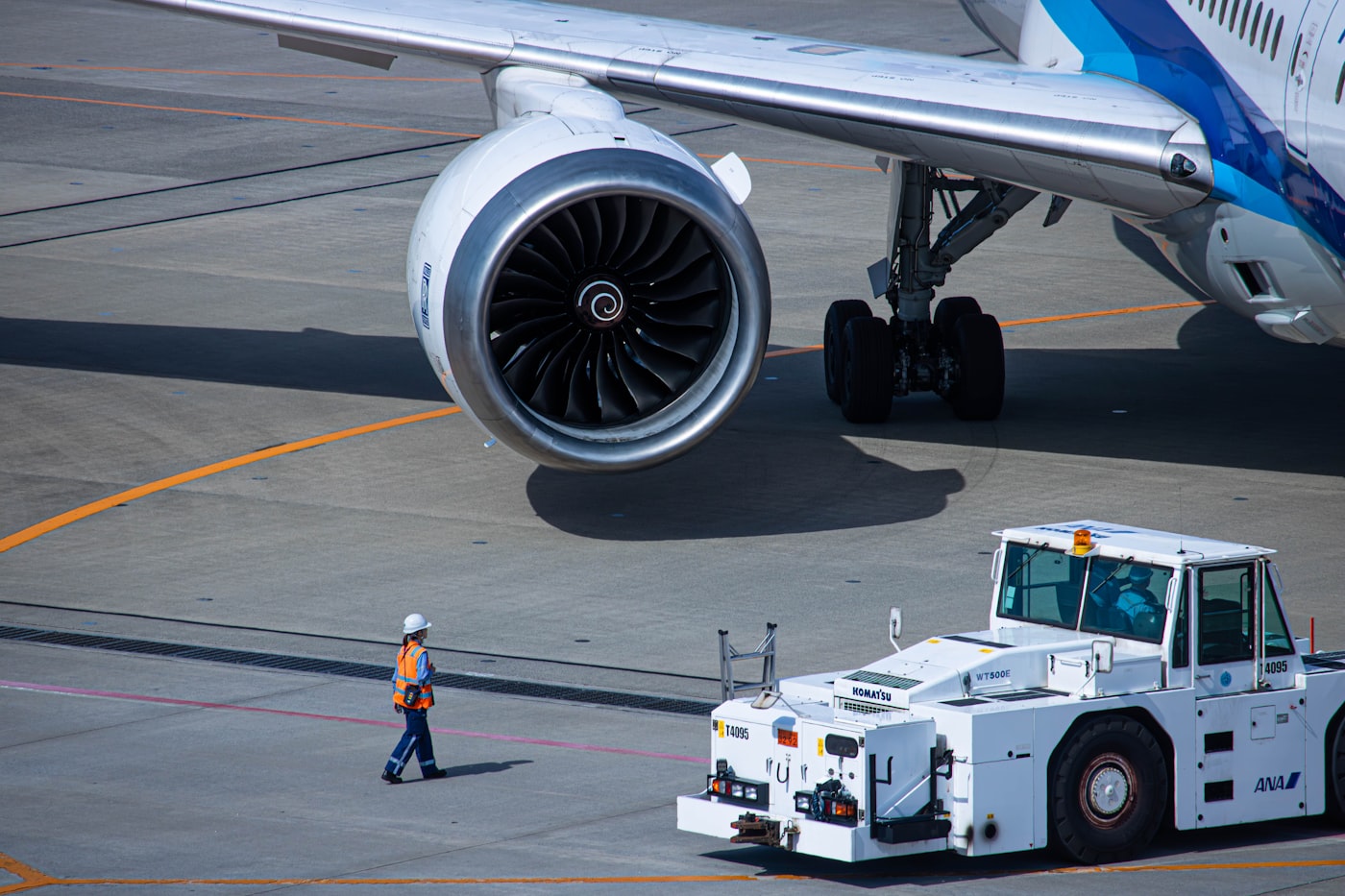
Pour a sample of Jet-A into a glass and it looks like nothing special: a clear, faintly straw-colored liquid that smells like a lamp wick. That resemblance is not an accident. The fuel feeding the turbines on a Boeing or an Airbus is kerosene, the same distillate family that lit homes in the nineteenth century, refined to a far tighter recipe. The truck says Jet-A. The chemistry says kerosene. What separates aviation fuel from lamp oil is not the base molecule but the specification wrapped around it, and that spec is where flight safety actually lives.
Kerosene, With A Rulebook
Jet fuel is a middle distillate made up mostly of hydrocarbons in the C8 to C16 range, molecules with roughly eight to sixteen carbon atoms strung together. That puts it squarely in the kerosene band. Commercial jet fuel in North America is graded as Jet-A and is written to the ASTM D1655 standard; the international grade, Jet-A1, is written to the same ASTM document and to the British DEF STAN 91-091 defense standard. The base fluid in both is the same kerosene cut. The differences that matter are the numbers the standard pins on it.
Three of those numbers do most of the work. Freeze point controls whether the fuel stays liquid where the airplane operates. Flash point controls how easily it can ignite where you do not want it to. Energy density controls how far the airplane can go on a tank. Everything else on the certificate of analysis, thermal stability, sulfur, acidity, water content, exists to protect those three properties or the hardware that handles them.
Freeze Point: The Number That Separates Jet-A From Jet-A1
The single spec line that distinguishes the two commercial grades is freeze point. Jet-A carries a maximum freeze point of minus 40 degrees Celsius. Jet-A1 is tighter, at minus 47 degrees Celsius. As Alisdair Clarke of Air BP put it, "The only difference between the ASTM grades is the freezing point, which is minus 40 degrees Celsius maximum for Jet A and minus 47 degrees C maximum for Jet A-1."
Freeze point here does not mean the fuel turns into a solid block. It means the temperature at which wax crystals begin to drop out of solution and the fuel stops flowing cleanly through filters and pumps. That matters because a long-haul jet cruising at altitude sits in air that can run below minus 50 Celsius, and fuel that lingers in cold wing tanks for ten or twelve hours cools toward that soak temperature. Waxed-up fuel that will not feed the engines is not a theoretical problem; it is why the tighter minus 47 grade exists for long-range and polar routes. Jet-A survives in the U.S. domestic market largely because most flights are shorter and the fuel never gets that cold, and the looser limit is easier and cheaper for refiners to hit.
Flash Point: Safe To Handle, Reliable To Burn
Flash point is the lowest temperature at which a fuel gives off enough vapor to form an ignitable mixture with air. Both Jet-A and Jet-A1 require a minimum flash point of 38 degrees Celsius, about 100 degrees Fahrenheit. That is deliberately well above normal ground temperatures, which is what lets ground crews pump thousands of gallons around a ramp without the fuel throwing off a flammable cloud at ambient conditions.
The contrast is the old wide-cut fuel, Jet-B, which extends down into the gasoline range and carries a freeze point near minus 50 but a flash point that can sit below ambient temperature, meaning its vapors are essentially always flammable. That is exactly the tradeoff that pushed the U.S. military off wide-cut JP-4 and onto a kerosene-based fuel in the 1990s. A high flash point costs you nothing in the combustor, where an atomized spray and an igniter do the work regardless, and it buys you a large safety margin everywhere else the fuel is stored, trucked, and loaded.
Energy Density, And Why It Is Measured Two Ways
An airplane cares about how much energy it carries for a given weight and for a given volume. Jet-A and Jet-A1 land around 42.8 to 43.2 megajoules per kilogram of gravimetric energy, with kerosene fuels generally cited in the 43 range. Because the fuel has a density between roughly 775 and 840 kilograms per cubic meter at 15 Celsius, that works out to something near 35 megajoules per liter volumetrically.
Both numbers constrain the airplane. Weight limits how much a given aircraft can lift; volume limits how much fits in the wings and center tanks. Kerosene sits in a sweet spot on both counts, which is a large part of why aviation never moved off it. The usual comparison is hydrogen: it beats kerosene badly on energy per kilogram, around 120 megajoules per kilogram against jet fuel's 43, but it is roughly a quarter of kerosene's energy per liter, near 8.9 megajoules per liter versus about 35. That volumetric gap is the tank-size problem that keeps hydrogen airframes on the drawing board, and it is the reason a dense, energy-rich liquid distillate remains the incumbent.
Where Jet Fuel Sits On The Distillation Ladder
Inside a refinery's atmospheric column, products separate by boiling range. Jet fuel and kerosene occupy the middle of the tower, boiling roughly between 138 and 300 degrees Celsius, lighter than diesel and heating oil and heavier than naphtha and gasoline. Diesel and heating oil come off just below the jet cut and run heavier, deeper into the middle-distillate band. That is why the whole group, jet, kerosene, diesel, and heating oil, gets lumped together as middle distillates: they are neighbors on the boiling curve, drawn from overlapping slices of the same crude barrel.
Being neighbors is what gives refiners room to maneuver. Jet fuel and diesel are cut from adjacent, partly overlapping fractions and finished with different fractionation and treating steps, so a refiner can shift yield from one to the other by adjusting distillation cut points, rerouting heavier kerosene-range material toward the gasoil pool, or vice versa, on a timescale of days to weeks. When the jet crack, the margin over crude for jet fuel, runs strong against diesel, refiners push toward jet; when diesel leads, they pull back toward diesel. Industry trackers noted U.S. refiners tilting hard toward jet production earlier in 2026 as distillate markets tightened.
The flexibility has a ceiling. A given crude yields a fixed slice of middle distillate set by its molecular makeup; a Persian Gulf sour barrel runs on the order of 20 to 25 percent middle distillates by volume, and no cut-point change conjures more molecules than the crude contains. Refiners flex the mix inside that envelope. They cannot flex the envelope itself. That is why a demand surge for both jet fuel and diesel at once, summer flying stacked on top of winter heating pull, shows up as a fight over the same barrels rather than more barrels.
The Military Cousin, And What It Adds
The armed forces of the United States and NATO run JP-8, and its NATO designation F-34. It is Jet-A1 at the core, the same kerosene cut and the same freeze point behavior, with a mandated additive package layered on. That package includes a corrosion inhibitor to protect fuel-system metals, a static dissipator to bleed off charge that builds as fuel moves through pipes and filters, and a fuel system icing inhibitor, FSII, typically specified around 0.10 to 0.15 percent by volume, which suppresses ice formation from trace water. Commercial operators can and sometimes do inject the same additives, but on the military side they are baked into the grade so that one fuel serves aircraft, ground vehicles, and generators across a theater.
Pull it all together and the picture is simple. Jet fuel is kerosene that has to keep flowing at minus 47, refuse to throw flammable vapor below 38 Celsius, and pack a hard 43 megajoules into every kilogram. Hit those three numbers plus the cleanliness and stability limits around them and you have a fuel that a turbine can burn continuously at altitude for hours without surprises. Miss them and you have lamp oil. The spec is the whole difference, and it is doing quiet work on every flight you have ever taken.
Sources
https://www.aopa.org/news-and-media/all-news/2018/january/pilot/turbine-jet-fuelhttps://blog.ansi.org/ansi/jet-fuel-specifications-astm-d1655-aviation/https://en.wikipedia.org/wiki/JP-8https://www.kpler.com/blog/refiners-flip-the-barrel-as-distillate-markets-tightenhttps://tanktransport.com/2026/05/global-refinery-crunch/https://www.fzt.haw-hamburg.de/pers/Scholz/GF/GF_Paper_DLRK_09-09-08.pdf