The Iran Sanctions Playbook: How Oil Keeps Moving Under Maximum Pressure
American sanctions have never actually stopped Iranian barrels; they have simply pushed them onto an aging shadow fleet, through ship-to-ship transfers off Malaysia, and into the tanks of Chinese teapot refiners hunting the biggest discount they can find.

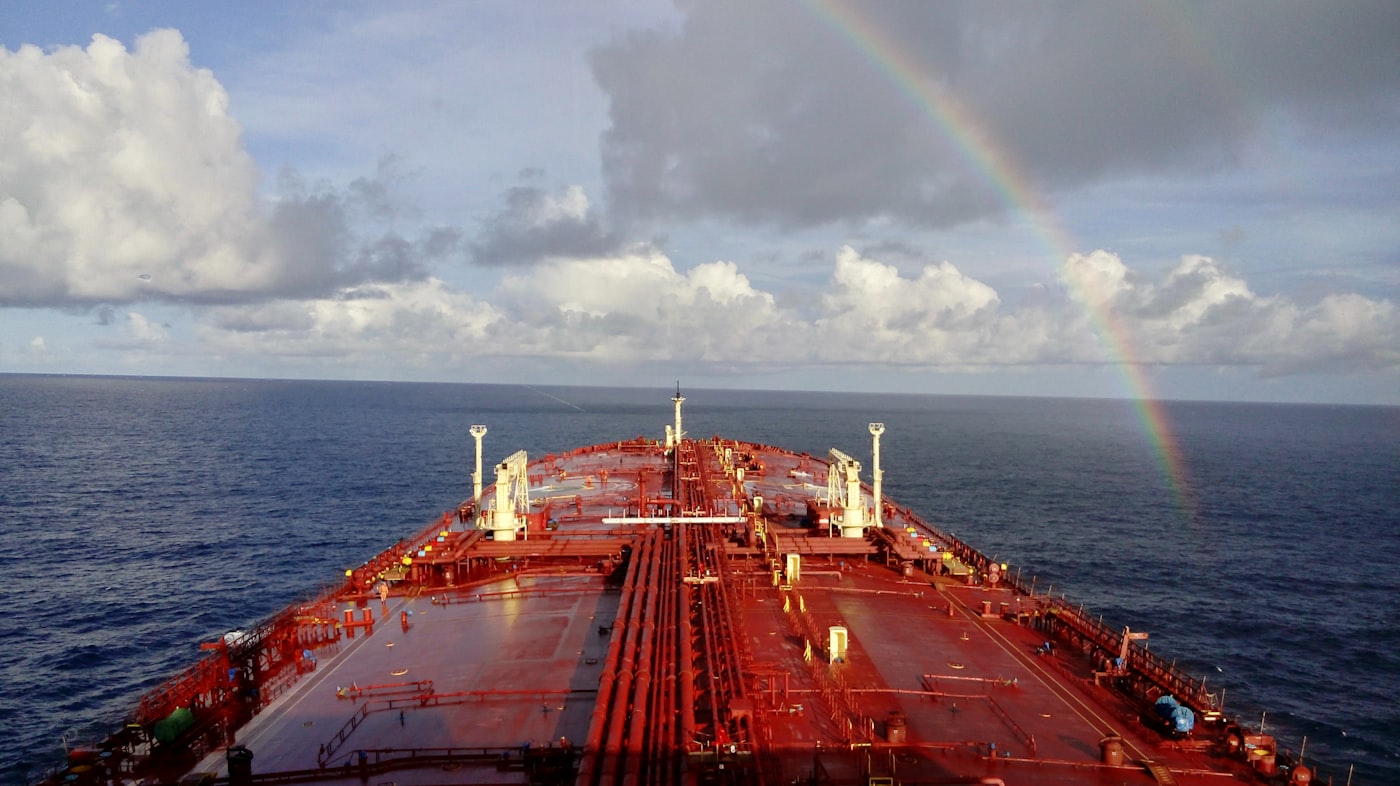
Somewhere off the coast of Malaysia, in the anchorages near Tanjung Pelepas and the eastern outer port limits, two tankers sit hull to hull with fenders squeezed between them and a hose running from one deck to the other. One ship left Kharg Island weeks ago and has been dark for most of the voyage. The other will sail into Shandong carrying what its paperwork calls Malaysian blend. No refinery in Malaysia produced a drop of it. This is the whole Iranian export machine in miniature, and it runs day and night.
Washington has spent the better part of a decade promising to take Iranian oil exports to zero. It never happened. Sanctions rarely halt a barrel outright. They reroute it. What maximum pressure actually produces is a longer, dirtier, more expensive supply chain and a fat discount for whoever is willing to buy on the wrong side of the sanctions line. Right now that buyer is almost always China.
The volume never went to zero
The analytics firm Kpler put China's imports of Iranian crude at roughly 1.4 million barrels per day in 2025, about 12 percent of everything China imported that year. Estimates for total Iranian exports in early 2026 run between 1.4 and 1.8 million barrels a day once condensate is counted. That is not a country cut off from the market. That is a country selling most of what it can lift.
The destination is remarkably concentrated. By 2026, China accounted for the overwhelming majority of Iranian exports, and the buyers are not the big state refiners. Sinopec and PetroChina stay away from cargoes that could expose their dollar business and their overseas assets. The oil goes to the small private plants in Shandong province known as teapots, which handle around 70 percent of China's independent refining and have built their margins on cheap, sanctioned feedstock.
How the barrels get relabeled
The mechanics are well documented at this point, largely because the U.S. Treasury keeps writing them into sanctions designations. A cargo loads at Kharg Island, Iran's main export terminal. The tanker sails the Indian Ocean with its transponder off or broadcasting a false position, a practice called AIS spoofing that hides the ship from the tracking databases everyone else relies on. Somewhere past the Malacca and Singapore straits it meets a second vessel and hands off the oil in a ship-to-ship transfer. The receiving ship then completes the run into China.
The point of the transfer is to break the paper trail. By the time the cargo reaches port, it has been rebranded. Iranian crude routinely shows up on documents as Malaysian or Indonesian blend, sometimes as Omani, Iraqi, or a generic bitumen mix. The tell is arithmetic: China's reported imports from Malaysia have for years run far above what Malaysia is physically capable of exporting. Analysts treat that gap as a direct proxy for disguised Iranian oil.
- Load at Kharg Island, then go dark or spoof the tracking signal.
- Cross to anchorages off Malaysia for a ship-to-ship transfer.
- Relabel the cargo as third-country crude with fresh paperwork.
- Discharge at a Shandong teapot, settle in renminbi through Chinese banks.
By industry estimates, a large share of all sanctioned ship-to-ship transfers happen in Malaysian waters. It has become the laundromat of the trade for a simple reason: it sits on the sea lane between the Gulf and China, and enforcement there is thin.
The dark fleet and the insurance problem
None of this works without ships that no one respectable will touch. The Iranian dark fleet is generally counted somewhere between 300 and 500 tankers, mostly Aframax and Suezmax hulls, with an average age north of 20 years against roughly 12 for the mainstream market. These are vessels near the end of their working lives, bought cheap and run hard precisely because they are expendable.
The binding constraint is insurance, not steel. The International Group of P&I Clubs, the mutual insurers that cover the vast majority of legitimate tanker tonnage, will not underwrite sanctioned trade. Studies of the global tanker fleet have found that the International Group covers well over half of all tankers, while a large slice of vessels tied to sanctioned oil have no identifiable insurer at all. For ships carrying Russian oil, only a small minority had verifiable coverage. Iran's fleet operates in the same gray water.
What fills the gap is a shadow insurance market: cheap flag-and-cover policies from opaque underwriters, often paired with flags of convenience from registries like Gabon or Cameroon. Analysts have flagged that these insurers frequently lack the capital or legal standing to pay out on a serious claim. That matters beyond compliance. A 20-year-old tanker carrying two million barrels, uninsured in any meaningful sense, is a spill waiting to happen. The 2018 Sanchi collision dumped an estimated 960,000 barrels into the East China Sea. The dark fleet is running that risk on a daily basis.
The discount is the whole business model
Sanctions don't kill the trade because they make it more profitable for the buyer, not less. Iranian crude has traded at steep discounts to Brent to compensate teapots for the legal and logistical risk of handling it. Reported spreads have ranged from a few dollars a barrel to figures in the double digits depending on the moment and how hot enforcement is running. For a small refiner working on thin margins, a discount of ten dollars a barrel is the difference between losing money and printing it.
That discount reshapes trade flows well beyond Iran. Russian crude, pushed out of Europe after 2022, competes for the same discount-hungry Chinese and Indian buyers using the same shadow fleet and the same tricks. The two sanctioned barrels effectively bid against each other for teapot demand, and the teapots pocket the spread. Even with all the rerouting, Iran's oil sales still generate tens of billions of dollars a year. The regime takes a haircut on price and a premium on freight, and it keeps the cash flowing.
Why enforcement keeps chasing its tail
Since March 2025, OFAC has designated a string of Shandong teapot refineries along with hundreds of tankers, front companies, and traders. The total on the sanctions list runs well past 600 entities connected to the trade. There have been vessel seizures, including cargoes worth an estimated combined 150 to 200 million dollars over 2025 and 2026. These are real actions with real bite.
They also demonstrate the ceiling. Sanction a refinery and its cargoes move to a shell next door. Designate a tanker and it changes name, flag, and registered owner and keeps sailing. The fleet is large enough and cheap enough to absorb losses that would sink a normal operator. The economics are simply too good for the buyer, and the enforcement is too slow and too discrete to change them at scale.
The lesson of the Iran playbook is one every oil trader already understands. Sanctions are a tax on a barrel, not a wall in front of it. Raise the friction and the price adjusts, the route lengthens, the ships get older, and someone in Shandong decides the discount is worth the risk. Until the buyer's calculus changes, the oil keeps moving. It always has.
Sources
https://www.middleeasteye.net/explainers/war-iran-china-oil-sanctions-shadow-fleethttps://themiddleeastinsider.com/2026/04/20/iran-dark-fleet-2026-oil-exports-sanctions/https://home.treasury.gov/news/press-releases/sb0476https://www.unitedagainstnucleariran.com/blog/uncovering-chinese-purchasers-of-iranian-oilhttps://www.cnn.com/2026/04/27/asia/eopl-oil-iran-shadow-fleet-war-intl-hnkhttps://sanctions.kse.ua/en/oil-spill-insurance-and-the-shadow-fleet/