Octane Explained: What the Numbers on the Pump Actually Mean and Why They Cost More
The yellow stickers reading 87, 89, and 93 measure knock resistance, not power or purity, and the gap in their prices comes straight out of the refinery unit that makes high-octane blendstock.

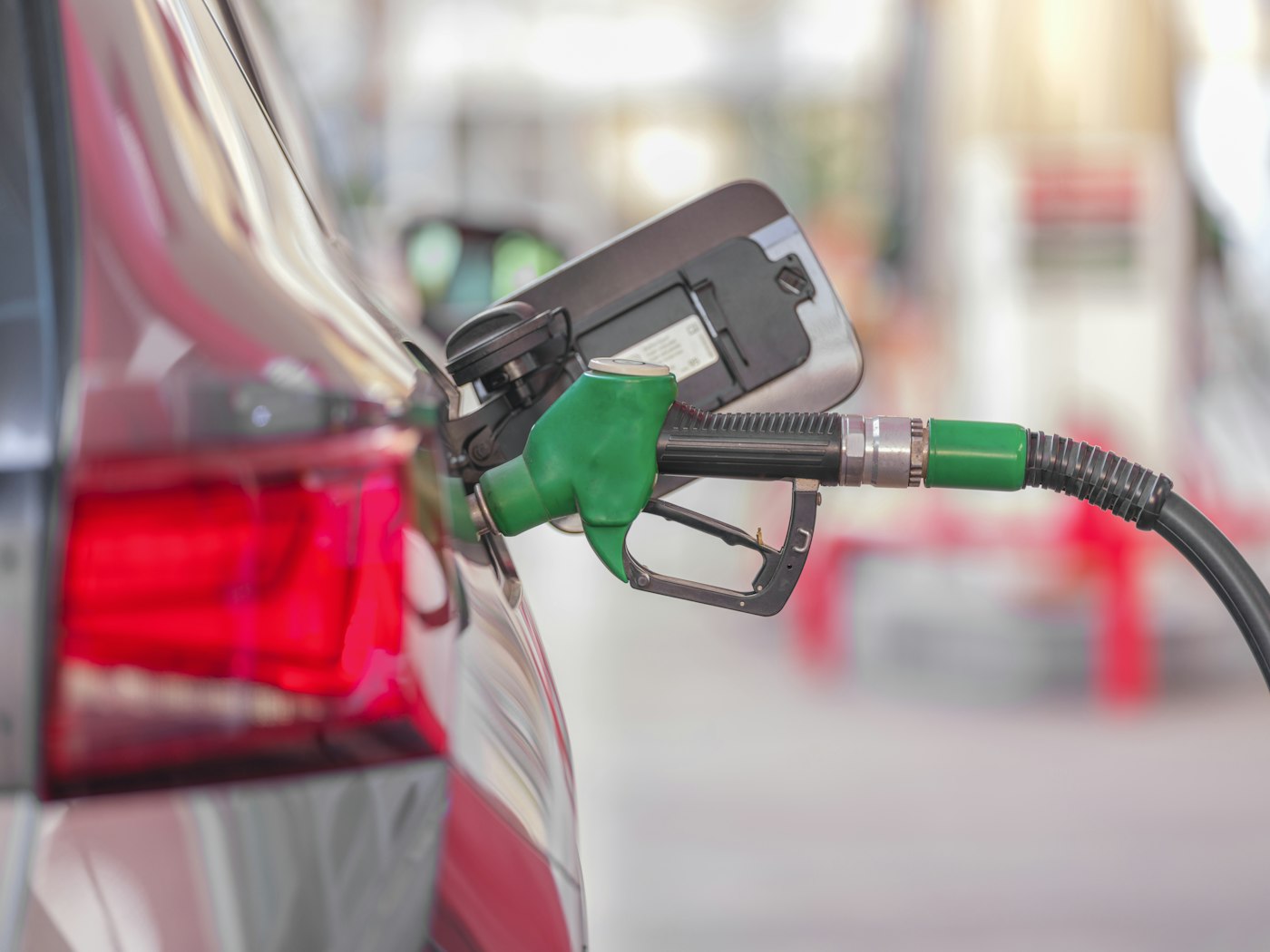
Stand at any pump and you get the same three-choice ritual: 87, 89, 93, with prices climbing left to right. Most drivers read those as good, better, best. They are not. That number is a single measurement of one thing, how well the fuel resists igniting before the spark plug tells it to. It says nothing about cleanliness, energy content, or how fast your car will go. Once you understand what the number tests and where the cost comes from, the pump stops looking like a quality ladder and starts looking like what it is: a knock-resistance rating with a refinery bill attached.
What the number actually measures
Octane rating is a measure of resistance to knock. Knock, also called detonation or pinging, happens when the air-fuel mixture in a cylinder ignites on its own, from heat and pressure, before the spark plug fires. Instead of one clean flame front spreading across the chamber, you get a second uncontrolled ignition slamming into it. The colliding pressure waves make the metallic rattle you can sometimes hear, and sustained knock damages pistons and rings.
The rating comes from two lab tests run on a single-cylinder engine with a variable compression ratio. The Research Octane Number (RON) runs at low speed, around 600 rpm, under gentler conditions. The Motor Octane Number (MON) uses a preheated fuel charge, higher engine speed, and more aggressive ignition timing to stress the fuel harder. Because MON is the tougher test, it runs lower: for a modern gasoline, MON is typically 8 to 10 points below RON.
Here is the part that confuses people who have driven in Europe. The big number on a U.S. pump is not RON. It is the Anti-Knock Index, or AKI, the simple average of the two: (R+M)/2. That is exactly what the little formula printed on the yellow sticker means. So U.S. 87 AKI is roughly equivalent to about 91 or 92 RON on a European pump. American ratings look lower not because the fuel is worse but because we publish the average of the easy test and the hard test, while much of the world publishes RON alone.
Why compression ratio decides what your car needs
Whether you need a high number depends on your engine, specifically its compression ratio and, on modern cars, its boost and timing strategy. Squeeze the air-fuel mixture harder and its temperature rises. Higher compression means more heat in the chamber and a greater chance the mixture lights off on its own before the spark. High-compression and turbocharged engines run closer to that edge, so they call for higher-octane fuel that can take the heat without pre-igniting.
That is the whole logic of the sticker inside your fuel door. An engine designed around regular fuel is built with a compression ratio and timing map that stay comfortably clear of knock on 87. Pouring 93 into it does not unlock hidden compression. The fuel simply resists an ignition event that was never going to happen anyway. Higher octane is not more energy or more power. It is more headroom against a specific failure mode, and headroom you do not use is headroom you paid for and threw away.
The nuance is the word on the sticker. "Required" and "recommended" are different. On an engine that requires premium, the manufacturer tuned it to lean on that knock resistance, and feeding it regular can force the knock sensor to pull timing, costing power and efficiency. On an engine that merely recommends premium, the computer can adapt to regular with a smaller penalty.
Where the octane in your tank comes from
Crude oil does not arrive with octane. Refiners build it, and the components they blend are not created equal. Straight-run naphtha, a useful light stream for making regular gasoline, actually suppresses octane, which limits its value in a premium blend. To lift the pool, refiners reach for high-octane blendstocks.
- Reformate comes from the catalytic reformer, which processes naphtha into an aromatic-rich, high-octane stream. Its blending octane runs roughly 87 to 100 AKI depending on how hard the unit is pushed.
- Alkylate is a prized clean blendstock, low in sulfur and aromatics, with blending octane around 93 to 95 AKI. It makes up roughly 12 percent of the U.S. gasoline pool.
- Ethanol carries high octane of its own and is blended into nearly all U.S. gasoline, though its overall contribution to octane in the pool has been limited in recent years relative to the growing need.
The reformer is where the economics bite. Running it involves a direct tradeoff: push for more volume and you get more reformate at lower octane; push for octane and you get less reformate at higher octane. When gasoline demand rose and refiners expanded crude distillation, capacity for these octane-making units did not grow in step. Squeeze harder for octane and you make less product, or you have to buy costlier octane from elsewhere. That constraint is the mechanical reason premium costs more to produce, not a marketing markup.
What the price gap has actually looked like
You can see that constraint show up in real numbers. By late 2016, the U.S. average retail difference between premium and regular reached about 50 cents per gallon, roughly double the spread from a few years earlier, according to the U.S. Energy Information Administration. The blendstock market moved the same direction. Platts data cited by EIA showed alkylate averaging $1.46 a gallon in the first week of 2016, $1.83 in early 2017, and $1.97 in early 2018. When the clean, high-octane component gets more expensive and scarcer, the fuel that leans on it does too.
None of these are prices to quote at today's pump; they are a sourced snapshot of how the spread behaves. The mechanism is durable even when the exact cents move: premium's premium tracks the cost and availability of octane-making capacity, and that capacity has not kept pace with demand.
Does premium help a car that does not need it
This is the question that costs Americans real money, and it has been tested directly. AAA, working with the Automobile Club of Southern California's Automotive Research Center, ran 87-octane against 93-octane in V-8, V-6, and I4 engines designed for regular fuel. Across horsepower, fuel economy, and tailpipe emissions, they found no significant benefit from the premium fuel in engines built for regular. The Federal Trade Commission has said the same thing more bluntly for years: regular octane is recommended for most cars, and higher octane does nothing for a vehicle that does not need it.
The waste adds up. AAA estimated that in a single year, roughly 16.5 million U.S. drivers put premium in a car built for regular at least once, making more than 270 million unnecessary premium purchases and spending over $2.1 billion for no measurable return. For the separate group of cars that recommend premium, AAA did find gains under demanding conditions, averaging about 2.7 percent better fuel economy and 1.4 percent more horsepower, but those improvements did not offset the higher fuel cost.
The bottom line at the pump
Octane is knock resistance, full stop. The pump number is the average of two lab tests, and the right one for your car is printed inside the fuel door, not implied by the word premium. If your manual says regular, buying 93 does not clean your engine, add power, or stretch your mileage. It buys protection against an ignition event your engine was engineered to avoid. The extra cost is real and it is earned honestly in the refinery, where the units that make high-octane blendstock are the bottleneck. Match the fuel to the engine that needs it, and let everyone else's overpaying stay everyone else's problem.
Sources
https://pei.org/wiki_pei/octane-number/https://www.eurasiareview.com/15062017-growing-octane-needs-widen-price-spread-between-premium-and-regular-gasoline-analysis/https://rbnenergy.com/daily-posts/blog/skipping-alkylate-fandango-octane-boost-gasoline-blendinghttps://spglobal.com/platts/en/market-insights/latest-news/oil/012218-analysis-us-premium-regular-gasoline-spread-widens-in-2017-likely-to-grow-in-2018https://newsroom.aaa.com/2016/09/u-s-drivers-waste-2-1-billion-annually-premium-gasoline/https://www.sciencedirect.com/science/article/pii/S0360128516300764