The Coker at the Bottom of the Barrel: Turning Tar Into Profit
The delayed coker is the unglamorous drum farm that lets a Gulf Coast refinery buy the world's cheapest, ugliest crude and still sell you a tank of gasoline.

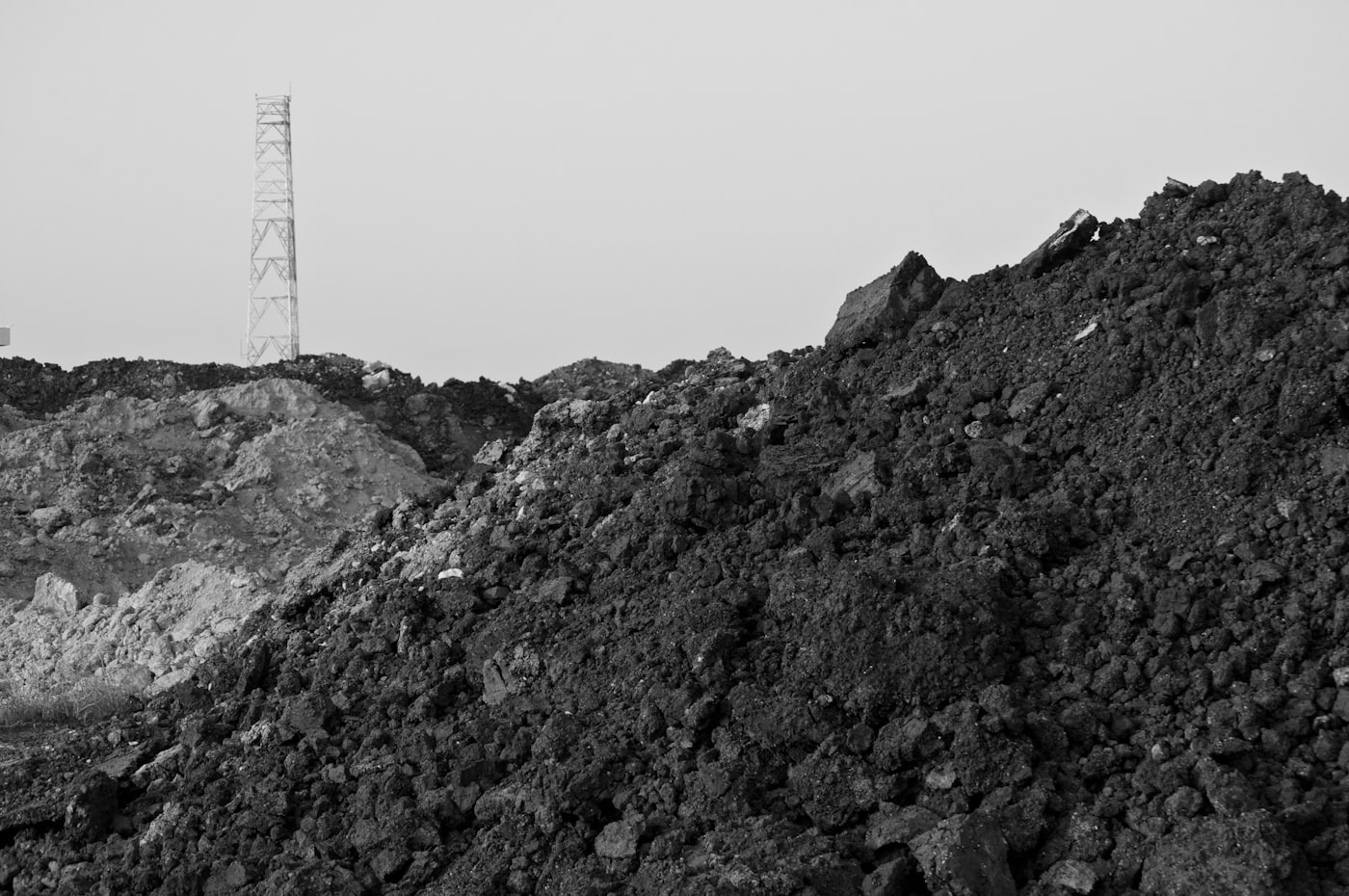
Walk the fence line of a complex Gulf Coast refinery and the coker is easy to spot: a pair or a quartet of tall steel drums, a crane, and, on a bad day, a plume of coke dust and the smell of a struck match. It is the least photogenic unit in the plant and one of the most important. The delayed coker is where the part of the barrel nobody else wants gets turned into gasoline, diesel, and jet. Take it out of the flow diagram and the whole economic case for running heavy Canadian and Venezuelan crude collapses.
Every barrel of crude has a bottom. After the atmospheric column and then the vacuum column have pulled off everything that will boil, what's left is vacuum residue: thick, sour, metal-laden tar that won't flow at room temperature and has almost no value as a finished product. On a light sweet crude that bottom is small. On a heavy sour grade it can be a third of the barrel or more. The coker's entire job is to attack that residue and drag it back up into the useful part of the barrel.
Carbon rejection, drum by drum
The chemistry is old and blunt. Delayed coking is thermal cracking with no catalyst and no hydrogen. You heat vacuum residue hard enough that the long, tangled asphaltene molecules break apart, and you let them break the only way they can when you refuse to add hydrogen: some of the carbon is thrown overboard as solid coke, and the lighter fragments escape as vapor. Refiners call this carbon rejection, as opposed to the hydrogen-addition route of a hydrocracker. It is the cheaper, cruder way to upgrade a bottom, and for the ugliest crudes it is often the only way that pays.
The "delayed" in the name is a piece of process design, not a description of the pace. Residue is pushed through a fired heater and comes out around 475 to 505 degrees C. The trick is that the actual coking is not allowed to happen in the furnace tubes, where a plug of solid coke would be a very expensive mistake. Steam is injected to keep velocity up and hold the reaction off, and the hot feed is routed into a large insulated coke drum where the cracking is deliberately delayed until it can play out safely. The drum fills over roughly 16 to 18 hours. Vapor rises off the top and goes to the fractionator; solid coke stays behind, building up inside the drum.
Because coke has to be dug out physically, a coker always runs at least two drums. One is filling while the other is being cooled, opened, and drilled clean with a high-pressure water cutter that bores through the coke and blasts it out the bottom into a pit. Then the drums swap. Feed never stops; the vapor products never stop; only the solids come off in batches. It is a semi-continuous operation dressed up to look continuous, and the drum-switching cycle is the heartbeat of the unit.
What comes off the top
Run vacuum residue through a delayed coker and a typical slate is roughly 13 percent gas, around 11 percent coker naphtha, close to 45 percent middle distillate range material, and something like 20 to 31 percent green petroleum coke, with the exact split depending on how heavy and how contaminated the feed is. The naphtha and the light and heavy coker gas oils are not finished products straight off the drum. They are cracked, olefinic, and dirty with sulfur and nitrogen, so they get routed to hydrotreaters and on into the FCC and hydrocracker to be reshaped into gasoline, ultra-low-sulfur diesel, and jet blendstock.
That's the punchline for anyone watching crack spreads. The coker doesn't sell much of anything at its own battery limits. What it does is convert a near-worthless bottom into more feed for the units that make the products the market actually pays for. A refinery with a coker gets to count almost the whole barrel as potential gasoline and diesel. A refinery without one is stuck selling that bottom as cheap high-sulfur fuel oil or asphalt.
Why refiners built drums to chase heavy barrels
This is where the coker stops being a chemistry lesson and starts being a trade. Heavy sour crudes trade at a discount to light sweet grades because they yield less of the good stuff and more of the bottom, and because that bottom is loaded with sulfur and metals. Western Canadian Select runs about 20.9 degrees API and roughly 3.5 percent sulfur, deep into heavy-and-sour territory. Venezuelan Merey and Mexican Maya sit in the same neighborhood. These barrels are cheap precisely because they're hard.
A coker turns that difficulty into margin. If you can profitably process the bottom that everyone else discounts, the light-heavy differential is your gross profit before you've done anything clever. The size of that prize moves around a lot. WCS is chronically depressed partly on quality and partly because it is stranded inland at Hardisty, Alberta, far from the Gulf Coast, so pipeline and rail economics pile onto the quality discount. Through 2025 the WCS discount at Cushing ran fairly narrow, in the low single digits per barrel against the calendar-month average, but forecasters expect it to widen back out toward 12 to 13 dollars as Canadian production climbs. Every dollar of that spread is a dollar the coker owner can chase and the simple refiner cannot.
That's why coking capacity got built. Less than half of U.S. refineries have a coker; the ones that do cluster on the Gulf and East Coasts, exactly where heavy Canadian, Venezuelan, and Middle Eastern barrels land. U.S. delayed coking capacity crossed roughly 3 million barrels per day by around 2019. The heavy residuum those drums are fed comes almost entirely from Venezuela, Canada, and the Middle East. When Washington tightens or loosens sanctions on Venezuelan crude, it's this specific subset of coking refiners that feels it first, because only they are plumbed to run Merey-grade tar all the way to gasoline.
The coke nobody talks about, and the coke that pays
Then there's the solid at the bottom of the drum. Petroleum coke is not a rounding error. In 2011 U.S. refiners produced about 132 million barrels of it, and petroleum coke has accounted for close to a fifth of the nation's finished petroleum product exports in some years, much of it moving to China and other Asian buyers as cheap solid fuel.
The market splits hard in two. Fuel-grade petcoke is the high-sulfur, high-metals material that comes off when you run dirty heavy crude. It burns like a filthy coal, and it's sold as a bottom-dollar fuel into cement kilns and power plants that can tolerate the sulfur. It is a byproduct the refiner mostly wants to get rid of, and its low price is baked into the coker's economics as a disposal cost dressed up as a sale.
Anode-grade coke is the other animal. Low in sulfur and metals, it gets calcined and turned into the carbon anodes that aluminum smelters consume, and the cleanest needle coke goes into graphite electrodes for steelmaking arc furnaces. It sells for a real premium. The catch is that anode-grade coke demands a cleaner feed, which is the opposite of the cheap dirty crude that makes the coker attractive in the first place. So there's a genuine tension in coker planning: chase the biggest crude discount and you're likely making low-value fuel coke; protect your anode-coke revenue and you may have to pay up for cleaner residue. Most heavy-crude coking refineries land on fuel-grade and treat the coke as ballast rather than a profit center.
The unglamorous engine of the modern barrel
None of this shows up when you fill your tank. But the reason a refiner can buy a barrel of Canadian bitumen blend or Venezuelan heavy at a stiff discount, and still turn most of it into salable fuel, is those steel drums getting drilled out every 18 hours behind the fence. The coker is carbon rejection in its bluntest form: throw away the worst of the barrel as coke, keep the rest, and let the light-heavy spread be your margin. When that spread is wide, the drum farm is the most profitable unit on the site. When sanctions or pipelines choke off the heavy barrels it was built to eat, it's the first place the pain lands. Either way, the bottom of the barrel is where a lot of the money in refining actually gets made.
Sources
https://www.eia.gov/todayinenergy/detail.php?id=9731https://courses.ems.psu.edu/fsc432/node/699https://www.oilsandsmagazine.com/technical/western-canadian-select-wcshttps://oilprice.com/Energy/Crude-Oil/Venezuelan-Oil-and-the-Limits-of-US-Refining-Capacity.htmlhttps://www.eia.gov/todayinenergy/detail.php?id=42936https://www.intechopen.com/chapters/82959