Aramco Q3 Adjusted Income Rises to $28 Billion on Higher Volumes, Raises Gas Targets
The Saudi oil giant leaned on production gains to lift adjusted profit, held its base payout steady at $21.1 billion, and pushed its 2030 gas ambition to roughly 80 percent above 2021 levels.

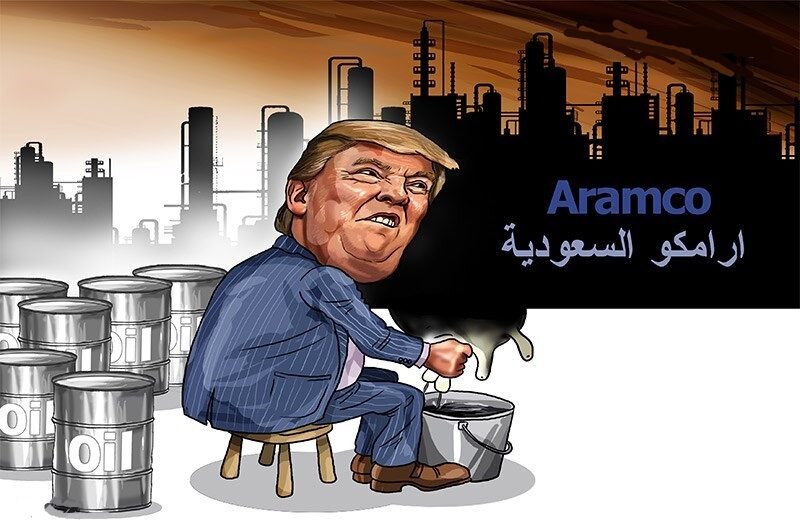
Saudi Aramco reported adjusted net income of about $28 billion for the third quarter of 2025 on Tuesday, edging up from $27.7 billion a year earlier as higher production offset softer oil prices. The company kept its base dividend at $21.1 billion, added a $0.2 billion performance-linked payout, and raised its long-term gas ambitions, telling investors it now aims to grow sales gas capacity by roughly 80 percent by 2030 rather than the 60 percent it had targeted before.
The headline that mattered to the market was not the profit line itself but how Aramco got there. With Brent trading well below its 2024 average for much of the quarter, the company answered lower realized prices with more barrels, and it used its earnings call to reframe the story around gas.
The numbers behind the beat
Adjusted net income of $28 billion came in slightly ahead of the same quarter last year. Reported net income was softer, landing near $26.9 billion versus roughly $27.6 billion in the third quarter of 2024, a decline of a little over 2 percent that Aramco pinned on weaker crude prices. Revenue fell to about $111.5 billion from $123.9 billion a year earlier.
Cash generation held up. Cash flow from operating activities came in at $36.1 billion, up from $35.2 billion, and free cash flow rose to $23.6 billion from $22.0 billion. Operating costs dropped sharply to about $59.9 billion from $72.5 billion, a swing that helped protect the bottom line even as the top line shrank. Capital expenditure ran around $12.6 billion for the quarter.
Chief Executive Amin Nasser framed the quarter as proof the company can operate through a lower price band. "Aramco's ability to adapt to new market realities has once again been demonstrated by our strong third quarter performance," he said, pointing to higher throughput and reliable supply.
Volume over price
The mechanism here is straightforward. When a barrel sells for less, the way to defend earnings is to move more of them, and Aramco has the spare capacity to do exactly that. OPEC and its allies spent much of 2025 unwinding voluntary supply cuts, and Saudi Arabia, holding the largest cushion of idle capacity in the group, was positioned to lift output as those curbs eased.
That is why the reported and adjusted figures diverged. Adjusted income, which strips out certain items, rose year over year, while the reported number fell. The gap is a clean illustration of the quarter: pricing pulled earnings down, volumes and cost discipline pulled them back up, and the net result was a small step forward on the measure management prefers to highlight.
The dividend math
Aramco declared a base dividend of $21.1 billion for the quarter, unchanged, plus a performance-linked dividend of $0.2 billion, both payable in the fourth quarter. That performance component has shrunk dramatically over the past year as prices came off their highs, and it remains the variable the market watches for a read on how confident management is in near-term cash flows.
The base payout is the anchor. It funds the Saudi state, which owns the overwhelming majority of the company, and it underwrites the kingdom's spending plans at a time when the government is running a budget deficit. Free cash flow of $23.6 billion did not fully cover the roughly $21.3 billion total distribution for the quarter, a gap Aramco can bridge with its balance sheet but one worth tracking if prices stay soft.
Betting bigger on gas
The most forward-looking piece of Tuesday's report was the upgraded gas target. Aramco now expects to grow its sales gas production capacity by about 80 percent between 2021 and 2030, up from a prior goal of more than 60 percent. Management said that would translate into total gas and associated liquids of roughly six million barrels of oil equivalent per day.
That is a meaningful reset. Gas is central to Saudi Arabia's plan to burn less crude for domestic power and free up more barrels for export, and it feeds the kingdom's push into petrochemicals, hydrogen, and blue ammonia. The centerpiece is Jafurah, the largest unconventional gas development in the region, where Aramco raised money earlier in the year through an $11.1 billion midstream deal that brought in outside investors while keeping operational control in house.
Raising the target signals confidence that Jafurah and the associated infrastructure are on track. It also gives Aramco a growth narrative that does not depend on the crude price, which is precisely what shareholders want to hear in a quarter where oil did the earnings no favors.
What to watch next
The near-term question is prices. If OPEC continues to add supply into a market that is not obviously short of it, realized prices could stay under pressure into 2026, and Aramco would again be leaning on volume and cost control to hold the line. The performance-linked dividend is the early warning light; if it disappears entirely, that is management telling the market cash is tight relative to the payout.
The longer game is gas. Hitting an 80 percent capacity increase by 2030 requires Jafurah to ramp on schedule and the export and downstream infrastructure to come together with it. For now, Aramco delivered a quarter that did what it needed to do: more barrels, tight costs, a steady base dividend, and a bigger bet on the fuel the kingdom is counting on to reshape its economy. The execution risk moves to the years ahead.
Sources
https://www.aramco.com/en/news-media/news/2025/aramco-announces-third-quarter-2025-resultshttps://www.offshore-technology.com/news/saudi-aramco-q3-income-drops/https://www.indianchemicalnews.com/general/aramco-reports-q3-2025-adjusted-net-income-at-28-billion-28045https://finance.yahoo.com/news/saudi-aramco-q3-2025-net-150732284.htmlhttps://www.cnbc.com/2025/11/04/saudi-aramco-q3-net-profit-oil-.html